.webp&w=384&q=75)

Loading, please wait...
Loading, please wait...
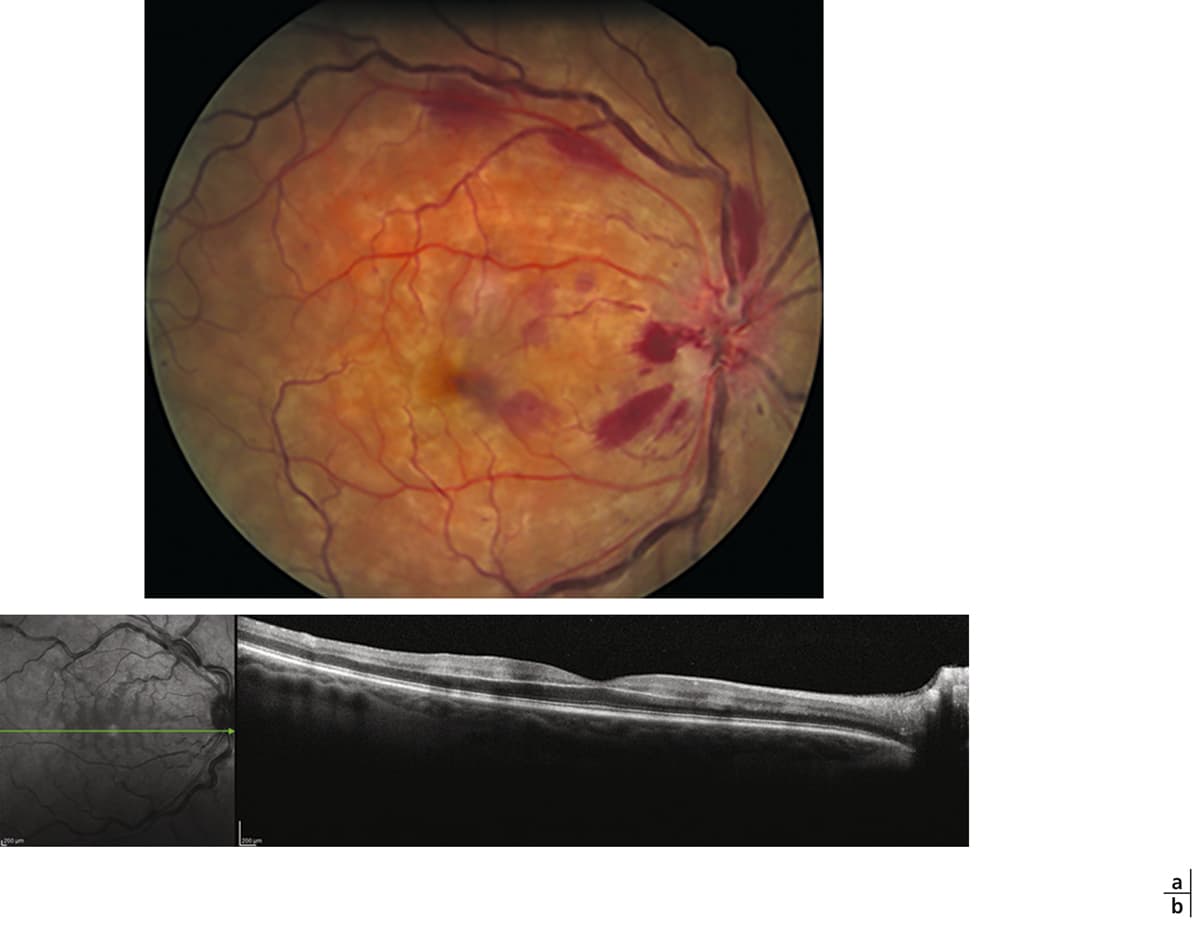
A 2026 post hoc analysis of phase 3 retinal vein occlusion trials examined whether the time between diagnosis of macular edema and the first intravitreal aflibercept injection influenced visual and anatomic outcomes. Patients were grouped by treatment delay, allowing comparison across central and branch retinal vein occlusion populations. The analysis reflects an important practical principle in retinal vascular disease: prolonged edema can lead to structural damage that limits visual recovery even when effective therapy is eventually started. Although post hoc studies cannot prove causation and treatment timing may be influenced by baseline disease severity or healthcare access, the findings support the value of timely diagnosis, OCT assessment, and treatment initiation. For HCPs, this is especially relevant in systems where referral or access to intravitreal therapy may create delays. The paper also highlights why baseline vision should be considered when setting expectations. Patients presenting early with better starting acuity may have different absolute gains than those presenting after substantial visual loss. Overall, the evidence supports minimizing avoidable treatment delays while tailoring anti-VEGF plans to disease severity and response.

Read summarized clinical updates, watch expert medical content, and earn CME certifications right from your smartphone.
Open your smartphone camera to scan and install.





A 2026 post hoc analysis of phase 3 retinal vein occlusion trials examined whether the time between diagnosis of macular edema and the first intravitreal aflibercept injection influenced visual and anatomic outcomes. Patients were grouped by treatment delay, allowing comparison across central and branch retinal vein occlusion populations. The analysis reflects an important practical principle in retinal vascular disease: prolonged edema can lead to structural damage that limits visual recovery even when effective therapy is eventually started. Although post hoc studies cannot prove causation and treatment timing may be influenced by baseline disease severity or healthcare access, the findings support the value of timely diagnosis, OCT assessment, and treatment initiation. For HCPs, this is especially relevant in systems where referral or access to intravitreal therapy may create delays. The paper also highlights why baseline vision should be considered when setting expectations. Patients presenting early with better starting acuity may have different absolute gains than those presenting after substantial visual loss. Overall, the evidence supports minimizing avoidable treatment delays while tailoring anti-VEGF plans to disease severity and response.
4 weeks back

Discover how catalytic nanozymes redefine autoimmune disease therapy by establishing a physiological redox set-point to restore immune tolerance without broad immunosuppression.
Last week

Recent research reveals that downregulating YAP1/TAZ-TEAD via Hippo signaling triggers spontaneous human trophoblast syncytialization in 3D cultures, illuminating placental biology and preeclampsia.
3 weeks back

A landmark comparative study evaluates atrial electrophysiology across humans, swine, and rodents. By linking cellular recordings with transcriptomics and in silico modeling, researchers resolve cross-species gaps, explaining translational failures to advance targeted therapies for atrial arrhythmias.
3 weeks back

A novel pathology-adaptive surface engineering strategy uses functionalized plasma polymer coatings to selectively modulate AGE adsorption, reducing oxidative stress and restoring bone formation in diabetic and aging microenvironments.
last month

Researchers have developed an innovative ultrasound-responsive nano-contrast agent that co-delivers CIITA-siRNA and rapamycin directly to inflamed thyroid tissue, significantly reducing autoimmune injury and thyroid autoantibodies in preclinical models of Hashimoto thyroiditis.
3 weeks back
