.webp&w=384&q=75)

Loading, please wait...
Loading, please wait...

This systematic review analyzed 87 studies on biomarkers in human angiosarcoma (AS), a rare vascular malignancy with poor prognosis. Key findings include recurrent mutations (TP53, POT1, MYC), disrupted signaling pathways (VEGF, PI3K/Akt/mTOR), and diagnostic protein markers (CD31, ERG). These molecular insights highlight potential avenues for improving AS diagnosis, prognosis, and targeted therapies.

Read summarized clinical updates, watch expert medical content, and earn CME certifications right from your smartphone.
Open your smartphone camera to scan and install.





This systematic review analyzed 87 studies on biomarkers in human angiosarcoma (AS), a rare vascular malignancy with poor prognosis. Key findings include recurrent mutations (TP53, POT1, MYC), disrupted signaling pathways (VEGF, PI3K/Akt/mTOR), and diagnostic protein markers (CD31, ERG). These molecular insights highlight potential avenues for improving AS diagnosis, prognosis, and targeted therapies.
2 months ago

Depemokimab offers twice-yearly dosing for severe eosinophilic asthma and chronic rhinosinusitis with nasal polyps, significantly cutting exacerbations and hospital admissions.
4 days back

A novel copper metal-organic framework hydrogel remodels the uterine microenvironment to stimulate robust endometrial regeneration, reduce intrauterine fibrosis, and restore reproductive fertility, offering a groundbreaking strategy for managing refractory endometrial damage and Asherman syndrome.
4 days back

New research reveals that non-ablative radiotherapy suppresses ventricular tachycardia by increasing conduction velocity via NaV1.5 upregulation and action potential prolongation. However, sustained sodium current elevation and depressed calcium handling highlight the need for careful clinical translation.
6 days back

A single-cell transcriptomic atlas reveals how peripheral nerve injuries cause dorsal root ganglion remodeling. By evaluating proximal nerve crush and resection, researchers identify distinct glial and immune programs that resolve neuropathic pain and promote regeneration.
4 days back
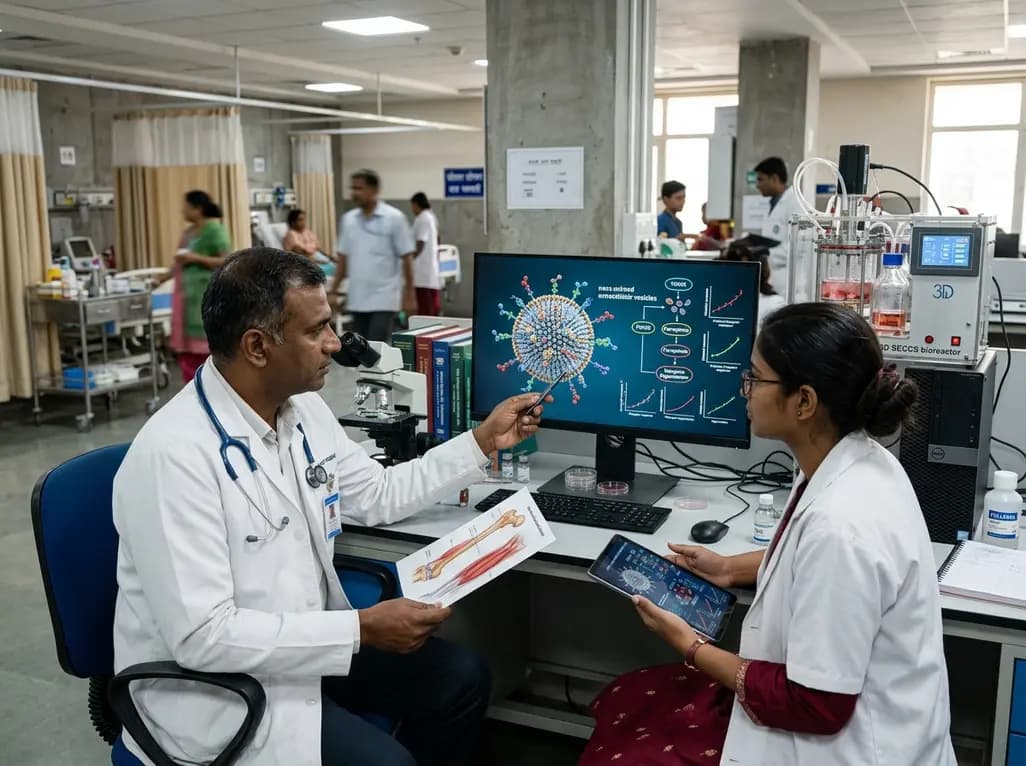
A breakthrough study demonstrates that fullerol-primed extracellular vesicles generated in a 3D SECCS bioreactor attenuate ferroptosis and restore myogenic regeneration in diabetes via the FOXO3 pathway, offering a cell-free therapeutic strategy for diabetic musculoskeletal degeneration.
4 days back
