.webp&w=384&q=75)

Loading, please wait...
Loading, please wait...
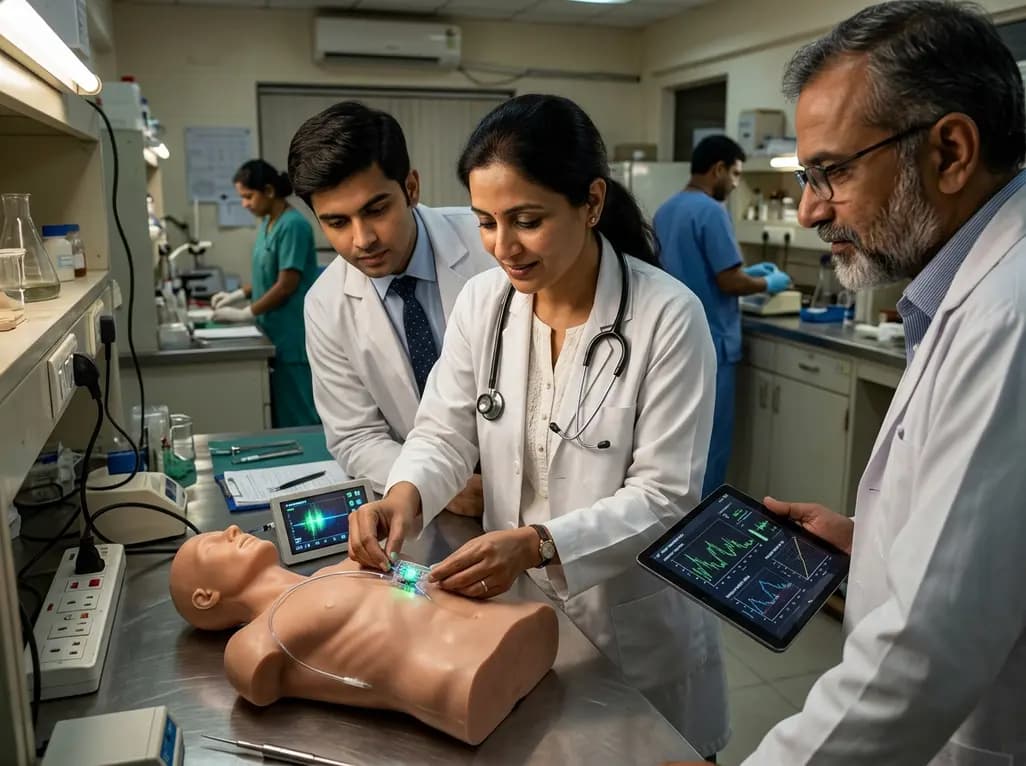
Modern bioelectronics rely heavily on temporary implantable devices for postoperative monitoring, tissue regeneration, and cardiac pacing. However, powering these transient electronics remains a significant clinical challenge. Traditional batteries add bulky footprints and require secondary surgical interventions for retrieval after completing their functional duration. Consequently, researchers have focused on self-powered systems capable of converting biomechanical energy into electricity. A biodegradable hybrid nanogenerator offers a promising strategy by generating transient electrical power directly inside the body. Nevertheless, early bioresorbable energy harvesters exhibited low energy conversion efficiency and insufficient charge output. Consequently, clinical translation stalled because the generated power failed to drive standard medical sensors. Enhancing output charge density while maintaining full bioresorption remained a critical engineering hurdle. Recent breakthroughs in nanostructured materials and dielectric modulation now offer an innovative pathway to resolve this clinical challenge. By combining advanced nanomaterials with bioresorbable polymers, biomedical engineers can safely power transient implants without secondary surgical retrieval.
Implantable electronic devices play a pivotal role in contemporary clinical medicine, facilitating temporary diagnostics and targeted therapeutic deliveries. However, standard implants present substantial drawbacks because they depend on rigid power units or percutaneous wires. External tethers increase infection risks, while finite battery lifespans necessitate invasive surgical extractions once therapy concludes. Transient bioelectronics solve this clinical dilemma by performing necessary functions over a designated timeframe before undergoing safe biological dissolution. Mechanical energy harvesting using kinetic motion from organ movements, vascular pressure waves, or muscle flexing presents an ideal power source. Triboelectric and piezoelectric nanogenerators convert these physiological displacements into continuous electrical currents. Furthermore, selecting fully bioresorbable elements ensures that the device safely dissolves without toxic residues. This approach eliminates surgical removal risks while providing robust energy for diagnostic and therapeutic sensors. Ultimately, developing efficient bioresorbable harvesters represents a major paradigm shift in transient medical technology, bridging the gap between temporary bioelectronic function and patient safety.
To enhance energy conversion efficiency, researchers incorporated molybdenum nanofillers into a poly(lactic-co-glycolic acid) triboelectric matrix. Molybdenum acts as an absorbable metal that undergoes complete physiological dissolution over time. By distributing these nanoparticles throughout the polymer, engineers achieved significant dielectric modulation. Specifically, the addition of molybdenum nanofillers substantially increased the dielectric constant, electronegativity, and surface roughness of the triboelectric layer. Consequently, the material captures and holds electrostatic charges much more effectively during biomechanical contact. Furthermore, this structural tuning increases charge density without compromising structural integrity or biocompatibility. Molybdenum offers excellent metallic conductivity while maintaining a predictable degradation rate in physiological fluid environments. Therefore, it serves as an ideal functional additive for transient electronic platforms. As a result, this dielectric modulation strategy addresses the historical output limitations of transient triboelectric devices. By converting bodily motion into actionable electrical power, the enhanced polymer matrix establishes a robust foundation for self-powered bioresorbable implants.
To maximize energy extraction, the engineered triboelectric layer was combined with a piezoelectric heterostructure film. This heterostructure consists of a self-assembled polyvinyl alcohol, glycerol, and polyvinyl alcohol composite. By integrating triboelectric and piezoelectric mechanisms into a single architecture, the synergistic device captures multiple forms of mechanical deformation simultaneously. Consequently, the hybrid device achieved an unprecedented output charge density of 9.6 nC/cm² in testing. This value represents a record output among fully bioresorbable nanogenerators reported to date. Furthermore, the combination of distinct energy harvesting modalities compensates for subtle physiological movement variations. For example, cardiac micro-vibrations, arterial pulsations, and muscular contractions can all trigger reliable power generation. Moreover, the self-assembled heterostructure maintains excellent flexibility, matching the mechanical compliance of soft biological tissues. In addition, the enhanced charge density provides sufficient voltage to drive transient sensors, wireless transmitters, and localized electrotherapy modules. Ultimately, this synergistic heterostructure strategy solves the energy deficit that previously constrained bioresorbable implant design.
Clinical translation of implantable bioelectronics requires rigorous biosafety evaluations and predictable degradation kinetics. The entire hybrid nanogenerator consists exclusively of fully bioresorbable materials, including the absorbable molybdenum metallic components. Both in vitro cell culture studies and in vivo animal models confirmed the device's exceptional biocompatibility. Specifically, histological analysis showed no signs of local tissue inflammation, necrosis, or systemic organ toxicity during functional operation. Furthermore, after completing its designated energy harvesting operational lifespan, the entire device undergoes complete dissolution. Water molecules penetrate the polymer layers, breaking down the synthetic and natural matrices into harmless metabolic byproducts. Simultaneously, the molybdenum nanoparticles oxidize into soluble, non-toxic molybdate ions that the kidneys excrete naturally. Consequently, no foreign material remains inside the biological tissue, eliminating chronic foreign body reactions. Moreover, adjusting the chemical composition and layer thickness enables precise customization of the operational lifespan. Consequently, this complete bioresorption profile provides a safe and practical platform for temporary internal medical monitoring.
The development of high-output bioresorbable nanogenerators opens transformational possibilities across multiple clinical specialties. In cardiovascular surgery, these harvesters can power temporary epicardial pacemakers or blood pressure sensors following open-heart procedures. Similarly, orthopaedists can utilize self-powered bone growth stimulators to accelerate fracture healing without requiring device retrieval. Furthermore, in postoperative monitoring, transient sensors powered by bodily motion can continuously transmit real-time infection or temperature data. Consequently, clinicians gain immediate insights into patient recovery without relying on heavy internal batteries or external tethered wires. In addition, localized electrotherapy powered by these harvesters can facilitate peripheral nerve regeneration and targeted drug delivery. Because the device completely degrades after fulfilling its clinical objective, patient comfort improves significantly. Moreover, eliminating secondary explantation surgeries reduces overall healthcare costs, hospital stays, and surgical infection risks. Therefore, this technology directly addresses major operational and safety challenges in contemporary surgical management.
The device combines triboelectric and piezoelectric mechanisms to harvest biomechanical energy. Body movements, such as muscle contractions, arterial pulsations, or organ motion, induce mechanical contact and deformation within the nanogenerator layers. Molybdenum nanoparticles enhance the dielectric constant and electronegativity of the triboelectric film. Simultaneously, the flexible piezoelectric heterostructure converts mechanical strain into electrical voltage, yielding a record charge output density to power transient implantable electronics efficiently.
Molybdenum nanoparticles undergo gradual physiological oxidation and dissolution after fulfilling their energy harvesting lifespan. They convert into water-soluble molybdate species, which are naturally processed and excreted through the renal system. Comprehensive in vitro and in vivo biosafety assessments confirm that these degradation byproducts do not cause systemic toxicity, localized tissue inflammation, or foreign body reactions, ensuring complete biocompatibility and full clearance from the body.
Traditional implantable devices rely on non-degradable batteries or external wiring, which increase infection risks and necessitate secondary surgeries for device removal. In contrast, this fully biodegradable nanogenerator provides continuous transient power from physiological motion and completely dissolves after its operational lifetime. This eliminates surgical explantation, minimizes patient discomfort, lowers healthcare costs, and enables self-powered, wireless monitoring for temporary postoperative care.
Disclaimer: This content is for informational and educational purposes only and does not constitute medical advice, diagnosis, or treatment. Refer to the latest local and national guidelines for clinical practice.
References

Read summarized clinical updates, watch expert medical content, and earn CME certifications right from your smartphone.
Open your smartphone camera to scan and install.





A fully biodegradable hybrid nanogenerator using molybdenum nanoparticles achieves record charge density to power transient implantable medical devices without secondary surgical removal.
last month

A randomized trial shows oral DL-3-n-butylphthalide (200 mg thrice daily) significantly slows functional decline in spinocerebellar ataxia type 3 over 12 months, improving SARA and SCAFI scores with favorable safety and zero serious adverse events.
Last week

Recent research reveals that downregulating YAP1/TAZ-TEAD via Hippo signaling triggers spontaneous human trophoblast syncytialization in 3D cultures, illuminating placental biology and preeclampsia.
2 weeks back

A landmark comparative study evaluates atrial electrophysiology across humans, swine, and rodents. By linking cellular recordings with transcriptomics and in silico modeling, researchers resolve cross-species gaps, explaining translational failures to advance targeted therapies for atrial arrhythmias.
2 weeks back

A novel pathology-adaptive surface engineering strategy uses functionalized plasma polymer coatings to selectively modulate AGE adsorption, reducing oxidative stress and restoring bone formation in diabetic and aging microenvironments.
last month

Researchers have developed an innovative ultrasound-responsive nano-contrast agent that co-delivers CIITA-siRNA and rapamycin directly to inflamed thyroid tissue, significantly reducing autoimmune injury and thyroid autoantibodies in preclinical models of Hashimoto thyroiditis.
2 weeks back
