.webp&w=384&q=75)

Loading, please wait...
Loading, please wait...
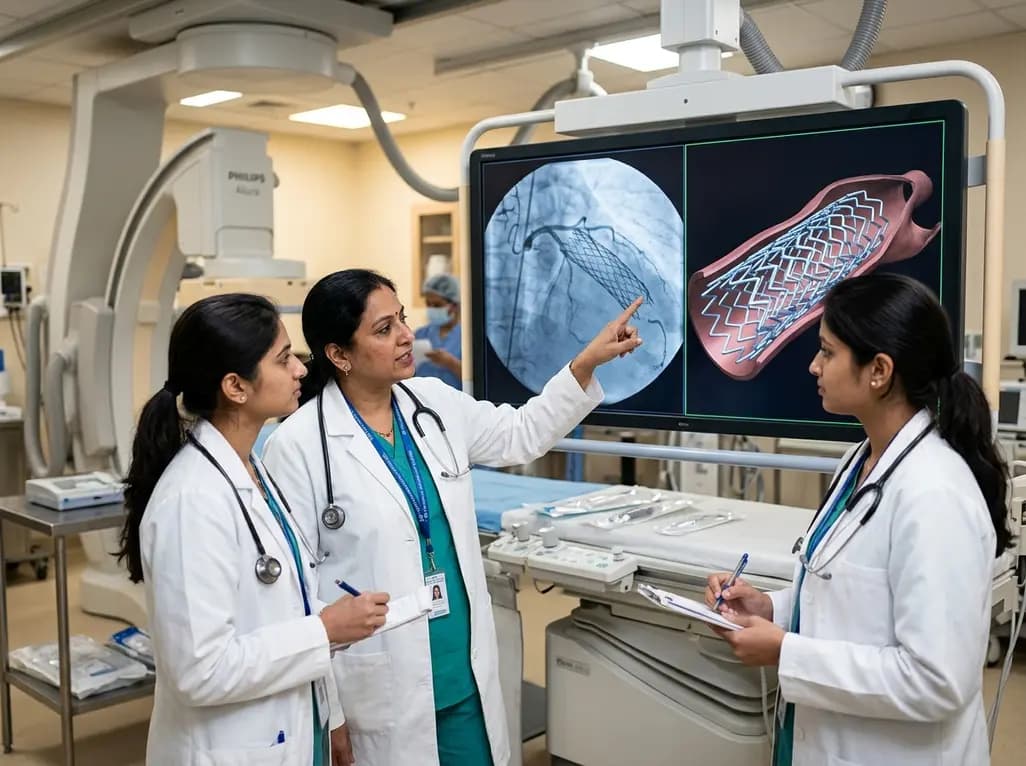
Atherosclerosis remains a formidable global health challenge, significantly contributing to morbidity and mortality. In India, the prevalence of coronary and peripheral artery diseases continues to rise, necessitating advanced interventional strategies. While endovascular stenting is the gold standard for restoring vessel patency, traditional metal-mesh stents face persistent clinical hurdles. These complications primarily include in-stent restenosis, late-stage thrombosis, and mechanical failures. Researchers have identified that these adverse outcomes often stem from the fundamental structural design of conventional stents. Specifically, these devices possess a positive Poisson’s ratio. Consequently, when a clinician expands the stent radially using a balloon, the device shortens axially. This phenomenon, known as foreshortening, causes inaccuracies in placement and creates a mechanical mismatch between the implant and the native vessel. Moreover, the resulting dog-boning effect damages healthy arterial tissue at the stent edges. To address these limitations, a paradigm shift is occurring. Scientists are now investigating auxetic stents as a next-generation solution. These innovative structures represent a move away from simple material changes toward sophisticated, structure-driven engineering that aligns more closely with human vascular biomechanics.
The defining feature of an auxetic stent is its negative Poisson’s ratio, a property that defies conventional mechanical intuition. In standard materials, stretching a substance in one direction causes it to thin out in the perpendicular direction. However, auxetic structures behave differently; they expand in all directions when stretched. This unique deformation behavior arises from the specific geometric arrangement of their internal unit cells, such as re-entrant hexagons or chiral patterns. When a cardiologist deploys an auxetic stent, it expands radially and axially simultaneously. Therefore, the device does not suffer from foreshortening. This simultaneous expansion ensures that the stent covers the entire intended lesion length without shifting during deployment. Furthermore, the auxetic geometry provides superior flexibility and conformability. This allows the stent to navigate tortuous vascular pathways without losing structural integrity. By utilizing this negative Poisson’s ratio, engineers can create implants that mimic the natural expansion and contraction of blood vessels. Consequently, this structural innovation offers a way to minimize the mechanical trauma associated with conventional stent placement, laying the groundwork for improved long-term clinical safety and patient stability.
Mechanical failure in traditional stents often leads to catastrophic clinical events. Conventional designs frequently exhibit significant radial recoil after balloon deflation, which compromises the lumen diameter and restricts blood flow. In contrast, auxetic stents demonstrate enhanced radial strength and significantly reduced recoil. By optimizing the topological design, researchers have developed hybrid auxetic structures that maintain a high opening percentage. These designs distribute mechanical stress more uniformly across the arterial wall. Furthermore, the absence of foreshortening means that the stent does not slide against the vessel wall during expansion. This reduction in sliding friction minimizes endothelial denudation and subsequent inflammatory responses. Additionally, auxetic materials provide better energy absorption and fracture toughness. These properties are critical for stents placed in high-flexion zones, such as the popliteal or carotid arteries, where mechanical fatigue is a common cause of implant failure. Moreover, computational modeling suggests that auxetic scaffolds can withstand physiological loading for longer durations than traditional platforms. Consequently, these superior biomechanical characteristics make auxetic designs an ideal candidate for treating complex atherosclerotic lesions that require both high radial support and extreme flexibility.
The success of any vascular implant depends heavily on its biological integration. Conventional stents often trigger neointimal hyperplasia, a process where the vessel wall overgrows into the stent lumen. This reaction is frequently driven by non-uniform stress distribution and disrupted hemodynamics. However, auxetic stents provide a more balanced mechanical environment. By distributing forces evenly, they attenuate the primary mechanical triggers for neointimal growth. Specifically, improved hemodynamics within the stented segment reduce the risk of stagnant flow and low shear stress. These factors are known precursors to stent thrombosis. Furthermore, the unique surface dynamics of auxetic structures may foster more rapid and complete endothelialization. A healthy endothelial layer acts as a natural barrier against thrombosis and restenosis. Researchers argue that the optimized structural environment provided by auxetic geometry encourages endothelial cells to migrate and proliferate effectively across the stent struts. Moreover, the ability of these stents to conform to irregular vascular geometries prevents the formation of gaps between the stent and the wall. This intimate contact, known as good apposition, is vital for long-term patency. Therefore, the biological benefits of auxetic design extend far beyond simple mechanical support.
The manufacturing of auxetic stents represents a significant leap forward in medical technology. Traditional laser-cutting methods often struggle to produce the intricate geometries required for negative Poisson’s ratio structures. Consequently, additive manufacturing, particularly 3D and 4D printing, has emerged as a crucial tool. These technologies allow for the fabrication of complex, high-precision unit cells from biocompatible materials like nitinol, cobalt-chromium, or biodegradable polymers. Furthermore, 3D printing enables patient-specific customization. By integrating clinical imaging data from CT or MRI scans, engineers can tailor the stent’s radial force and geometry to match a patient’s specific vascular anatomy. For instance, a stent could be designed with variable stiffness to support a calcified plaque while remaining flexible in healthier segments of the artery. Moreover, 4D printing introduces the element of time, where the stent can change its shape or properties in response to physiological stimuli like temperature or pH. This level of personalization was previously impossible with mass-produced stents. In addition, additive manufacturing reduces material waste and speeds up the prototyping process for new designs. As these technologies mature, they will likely become the standard for producing complex endovascular devices tailored to individual needs.
Despite the promising data, the journey from bench to bedside for auxetic stents involves several challenges. Current evidence is largely based on in-silico modeling and bench-top testing. Consequently, robust in-vivo validation and long-term clinical trials are necessary to confirm safety and efficacy in humans. Regulatory hurdles also remain, as standardized testing protocols for these unique mechanical structures are still under development. Furthermore, the scalability of additive manufacturing for mass production needs to be addressed. However, the future horizons for this technology are vast. Beyond coronary applications, auxetic stents show great potential in treating peripheral artery disease, where traditional stents often fail due to extreme mechanical stress. In addition, their conformability makes them suitable for carotid artery stenting, where reducing the risk of embolic events is paramount. Non-vascular applications, such as esophageal, biliary, and tracheal stenting, could also benefit from the lack of foreshortening and improved wall apposition. Specifically, in the field of interventional radiology, auxetic designs represent a significant paradigm shift. As research progresses, these smart structures will likely redefine our approach to endovascular therapy. By focusing on structural innovation rather than just material iterations, auxetic stents offer a promising path toward superior clinical outcomes.
Conventional stents possess a positive Poisson’s ratio, meaning they contract axially when expanded radially. This contraction, or foreshortening, makes precise placement difficult for clinicians. Conversely, auxetic stents feature a negative Poisson’s ratio. This unique geometric property causes the material to expand in all directions simultaneously. When the stent is deployed, it grows both in diameter and length, or at least maintains its length. Consequently, this eliminates the axial shortening that leads to malpositioning and mechanical trauma during the stenting procedure.
Additive manufacturing is essential because the intricate geometric patterns of auxetic unit cells are often too complex for traditional laser-cutting techniques. 3D printing allows for high-precision fabrication of these negative Poisson's ratio structures from various biocompatible materials. Furthermore, this technology facilitates patient-specific customization. Engineers can use medical imaging to design a stent that fits a patient’s unique vascular geometry perfectly. This ensures better apposition and radial force distribution, which are critical for preventing complications like restenosis or migration.
Research suggests that auxetic designs can indeed lower the risk of in-stent restenosis. Traditional stents often create uneven pressure points and dog-boning effects that damage the vessel wall and trigger overgrowth. Auxetic stents distribute mechanical stress more uniformly, which minimizes the biological signals that lead to neointimal hyperplasia. Additionally, their superior conformability improves local hemodynamics and promotes faster endothelialization. By creating a more natural biomechanical environment, auxetic stents help maintain long-term vessel patency and reduce the necessity for repeat interventions.
Disclaimer: This content is for informational and educational purposes only... Refer to the latest local and national guidelines for clinical practice.
References
1. Gupta K et al. Auxetic Stents as a Next Generation Solution for Vascular Diseases-A Review. Cardiovasc Eng Technol. 2026 Jun 22. doi: 10.1007/s13239-026-00846-w. PMID: 42332335.
2. 3D printed auxetic cardiovascular stents: a state-of-the-art review on topological design, manufacturing, mechanical and biological properties - Emerald Publishing. 2025.
3. Revolutionary auxetic intravascular medical stents for angioplasty applications - PolyU Institutional Research Archive. 2023.

Read summarized clinical updates, watch expert medical content, and earn CME certifications right from your smartphone.
Open your smartphone camera to scan and install.





This review explores auxetic stents, which use a negative Poisson’s ratio to eliminate foreshortening and improve conformability, offering a structural solution to common stenting failures like restenosis and thrombosis in vascular diseases.
4 months ago

Depemokimab offers twice-yearly dosing for severe eosinophilic asthma and chronic rhinosinusitis with nasal polyps, significantly cutting exacerbations and hospital admissions.
4 days back

A novel copper metal-organic framework hydrogel remodels the uterine microenvironment to stimulate robust endometrial regeneration, reduce intrauterine fibrosis, and restore reproductive fertility, offering a groundbreaking strategy for managing refractory endometrial damage and Asherman syndrome.
4 days back
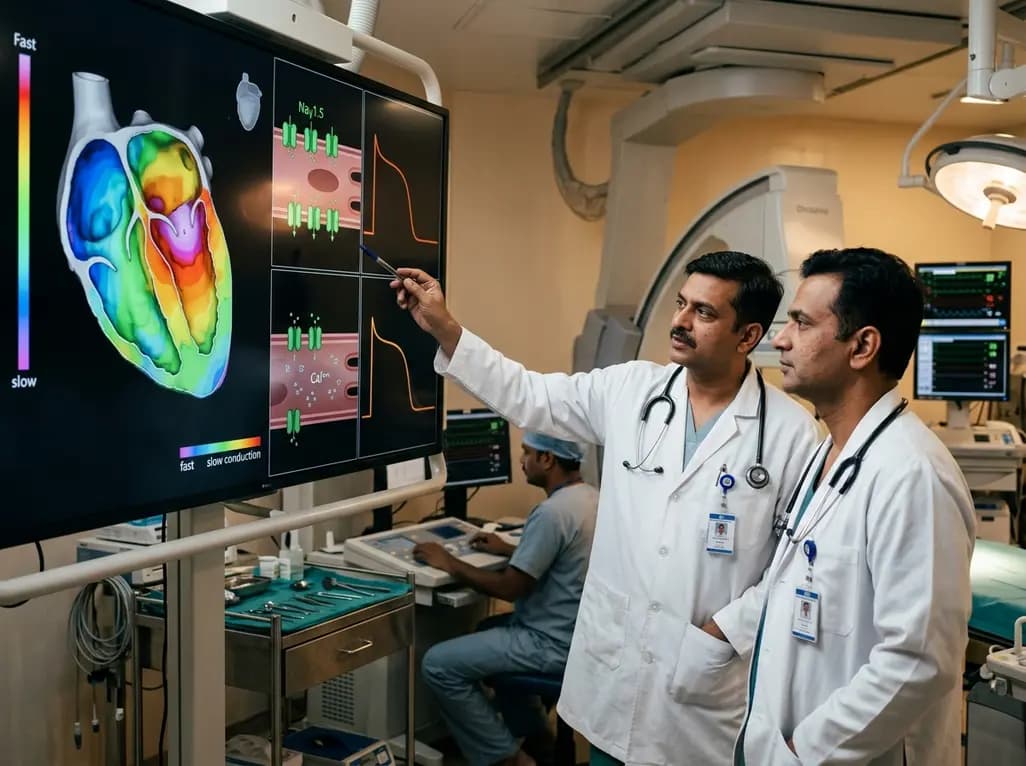
New research reveals that non-ablative radiotherapy suppresses ventricular tachycardia by increasing conduction velocity via NaV1.5 upregulation and action potential prolongation. However, sustained sodium current elevation and depressed calcium handling highlight the need for careful clinical translation.
6 days back

A single-cell transcriptomic atlas reveals how peripheral nerve injuries cause dorsal root ganglion remodeling. By evaluating proximal nerve crush and resection, researchers identify distinct glial and immune programs that resolve neuropathic pain and promote regeneration.
4 days back

A breakthrough study demonstrates that fullerol-primed extracellular vesicles generated in a 3D SECCS bioreactor attenuate ferroptosis and restore myogenic regeneration in diabetes via the FOXO3 pathway, offering a cell-free therapeutic strategy for diabetic musculoskeletal degeneration.
4 days back
