.webp&w=384&q=75)

Loading, please wait...
Loading, please wait...

Autoimmune encephalitis often begins with psychiatric, cognitive, seizure or movement symptoms that can mimic infection or primary psychiatric disease. A 2024 consensus statement from the Brazilian Academy of Neurology provides practical recommendations for diagnosis and treatment in adults and children. The panel recommends considering autoimmune encephalitis in compatible clinical presentations and using both tissue-based and cell-based antibody testing in serum and cerebrospinal fluid. In children, MOG antibodies may also be relevant. The consensus emphasises beginning immunotherapy early once the clinical criteria are met rather than waiting indefinitely for every laboratory result. First-line treatment generally combines high-dose corticosteroids with IVIG or plasmapheresis, while rituximab or cyclophosphamide are options for inadequate response. The document also highlights the importance of functional and cognitive follow-up. For HCPs, the central message is to avoid delayed treatment in a potentially reversible inflammatory encephalopathy. Because antibody results can be negative or delayed, clinical judgement remains crucial. This framework is directly relevant to IANCON's emphasis on autoimmune encephalitis, imaging, neurobehavioral presentations and immunotherapy.

Read summarized clinical updates, watch expert medical content, and earn CME certifications right from your smartphone.
Open your smartphone camera to scan and install.





Autoimmune encephalitis often begins with psychiatric, cognitive, seizure or movement symptoms that can mimic infection or primary psychiatric disease. A 2024 consensus statement from the Brazilian Academy of Neurology provides practical recommendations for diagnosis and treatment in adults and children. The panel recommends considering autoimmune encephalitis in compatible clinical presentations and using both tissue-based and cell-based antibody testing in serum and cerebrospinal fluid. In children, MOG antibodies may also be relevant. The consensus emphasises beginning immunotherapy early once the clinical criteria are met rather than waiting indefinitely for every laboratory result. First-line treatment generally combines high-dose corticosteroids with IVIG or plasmapheresis, while rituximab or cyclophosphamide are options for inadequate response. The document also highlights the importance of functional and cognitive follow-up. For HCPs, the central message is to avoid delayed treatment in a potentially reversible inflammatory encephalopathy. Because antibody results can be negative or delayed, clinical judgement remains crucial. This framework is directly relevant to IANCON's emphasis on autoimmune encephalitis, imaging, neurobehavioral presentations and immunotherapy.
4 weeks back

Discover how catalytic nanozymes redefine autoimmune disease therapy by establishing a physiological redox set-point to restore immune tolerance without broad immunosuppression.
Last week

Recent research reveals that downregulating YAP1/TAZ-TEAD via Hippo signaling triggers spontaneous human trophoblast syncytialization in 3D cultures, illuminating placental biology and preeclampsia.
3 weeks back

A landmark comparative study evaluates atrial electrophysiology across humans, swine, and rodents. By linking cellular recordings with transcriptomics and in silico modeling, researchers resolve cross-species gaps, explaining translational failures to advance targeted therapies for atrial arrhythmias.
3 weeks back

A novel pathology-adaptive surface engineering strategy uses functionalized plasma polymer coatings to selectively modulate AGE adsorption, reducing oxidative stress and restoring bone formation in diabetic and aging microenvironments.
last month
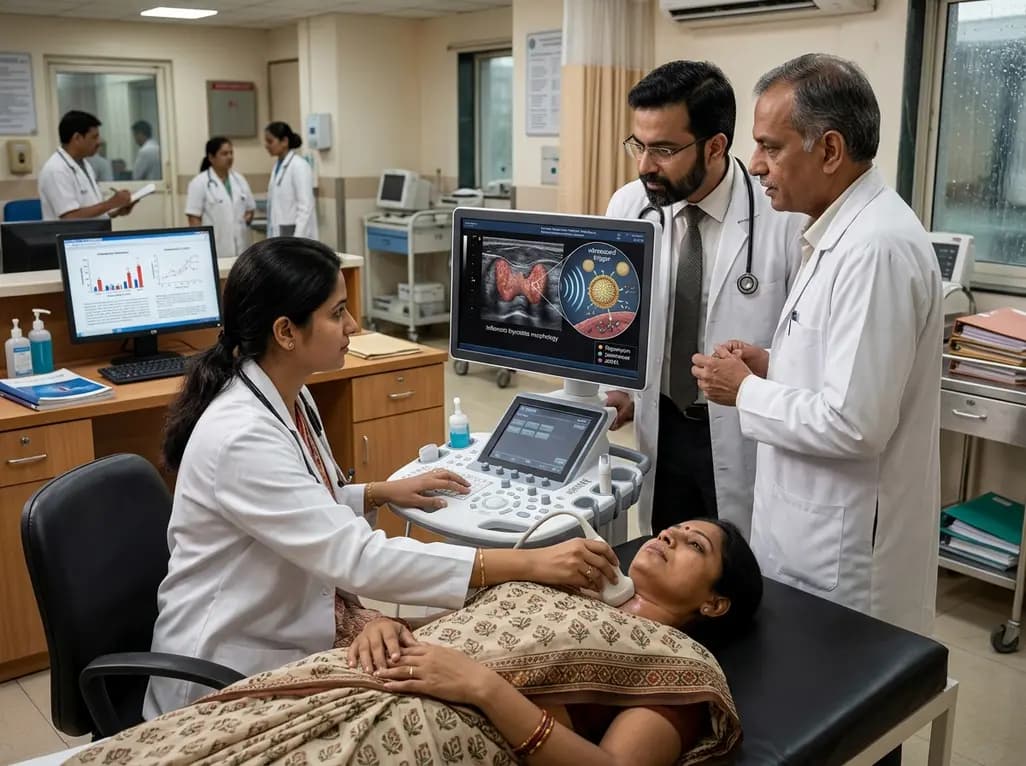
Researchers have developed an innovative ultrasound-responsive nano-contrast agent that co-delivers CIITA-siRNA and rapamycin directly to inflamed thyroid tissue, significantly reducing autoimmune injury and thyroid autoantibodies in preclinical models of Hashimoto thyroiditis.
3 weeks back
