.webp&w=384&q=75)

Loading, please wait...
Loading, please wait...

The emergence of extensively drug-resistant (XDR) typhoid has created a major therapeutic challenge in South Asia. Randomized evidence comparing azithromycin with more intensive antibiotic strategies in uncomplicated enteric fever has helped define when oral therapy remains reasonable and when resistant disease requires escalation. The key clinical issue is not simply selecting an antibiotic but obtaining susceptibility information when feasible, recognizing treatment failure early and understanding local resistance patterns. For physicians in endemic settings, persistent fever, prior antibiotic exposure and epidemiologic context should raise concern for resistant infection. Laboratory confirmation and blood culture remain important whenever possible because empiric use of broad-spectrum agents can accelerate antimicrobial resistance. The management of typhoid also highlights the role of prevention through vaccination, sanitation and safe food and water. The broader message for APICON is that “guidelines versus realities” becomes particularly important in infectious disease: recommendations are only effective when diagnostic capacity, antimicrobial stewardship and local epidemiology are incorporated into clinical decision-making.

Read summarized clinical updates, watch expert medical content, and earn CME certifications right from your smartphone.
Open your smartphone camera to scan and install.





The emergence of extensively drug-resistant (XDR) typhoid has created a major therapeutic challenge in South Asia. Randomized evidence comparing azithromycin with more intensive antibiotic strategies in uncomplicated enteric fever has helped define when oral therapy remains reasonable and when resistant disease requires escalation. The key clinical issue is not simply selecting an antibiotic but obtaining susceptibility information when feasible, recognizing treatment failure early and understanding local resistance patterns. For physicians in endemic settings, persistent fever, prior antibiotic exposure and epidemiologic context should raise concern for resistant infection. Laboratory confirmation and blood culture remain important whenever possible because empiric use of broad-spectrum agents can accelerate antimicrobial resistance. The management of typhoid also highlights the role of prevention through vaccination, sanitation and safe food and water. The broader message for APICON is that “guidelines versus realities” becomes particularly important in infectious disease: recommendations are only effective when diagnostic capacity, antimicrobial stewardship and local epidemiology are incorporated into clinical decision-making.
3 weeks back
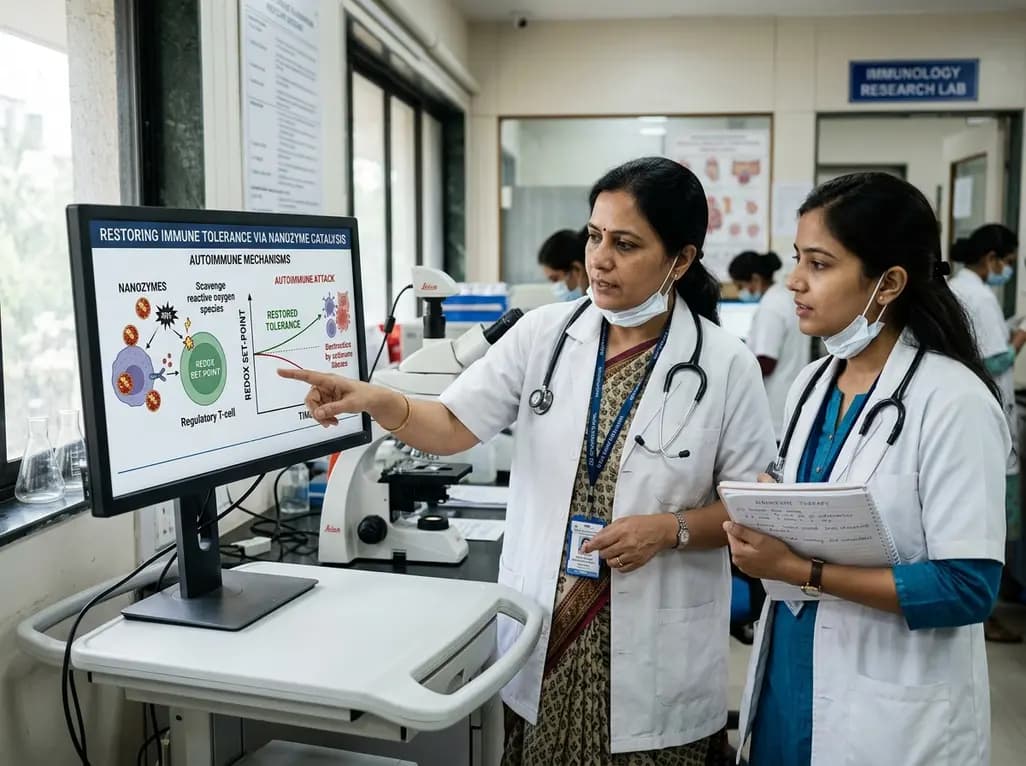
Discover how catalytic nanozymes redefine autoimmune disease therapy by establishing a physiological redox set-point to restore immune tolerance without broad immunosuppression.
Last week
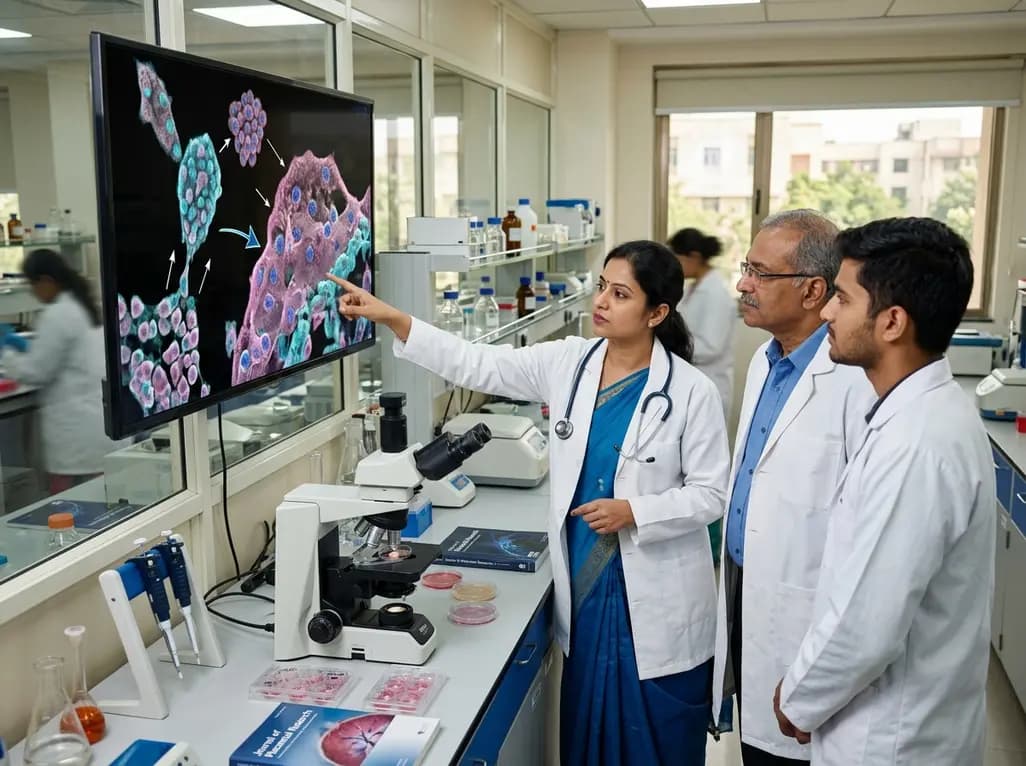
Recent research reveals that downregulating YAP1/TAZ-TEAD via Hippo signaling triggers spontaneous human trophoblast syncytialization in 3D cultures, illuminating placental biology and preeclampsia.
3 weeks back

A landmark comparative study evaluates atrial electrophysiology across humans, swine, and rodents. By linking cellular recordings with transcriptomics and in silico modeling, researchers resolve cross-species gaps, explaining translational failures to advance targeted therapies for atrial arrhythmias.
3 weeks back
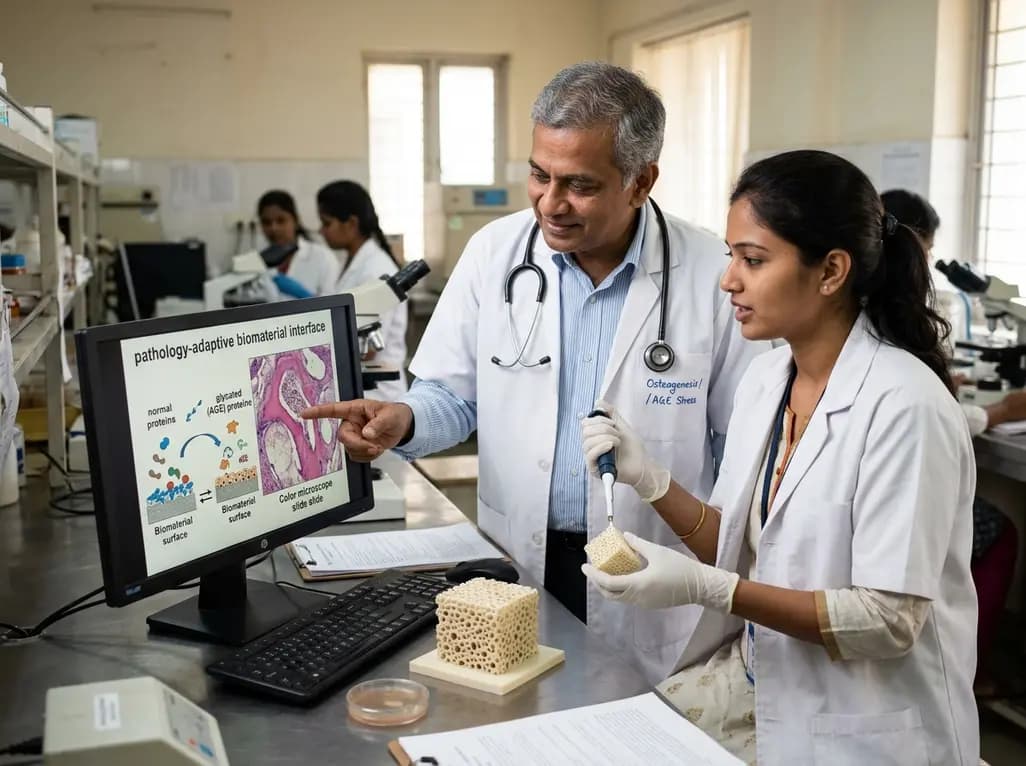
A novel pathology-adaptive surface engineering strategy uses functionalized plasma polymer coatings to selectively modulate AGE adsorption, reducing oxidative stress and restoring bone formation in diabetic and aging microenvironments.
last month

Researchers have developed an innovative ultrasound-responsive nano-contrast agent that co-delivers CIITA-siRNA and rapamycin directly to inflamed thyroid tissue, significantly reducing autoimmune injury and thyroid autoantibodies in preclinical models of Hashimoto thyroiditis.
3 weeks back
