.webp&w=384&q=75)

Loading, please wait...
Loading, please wait...
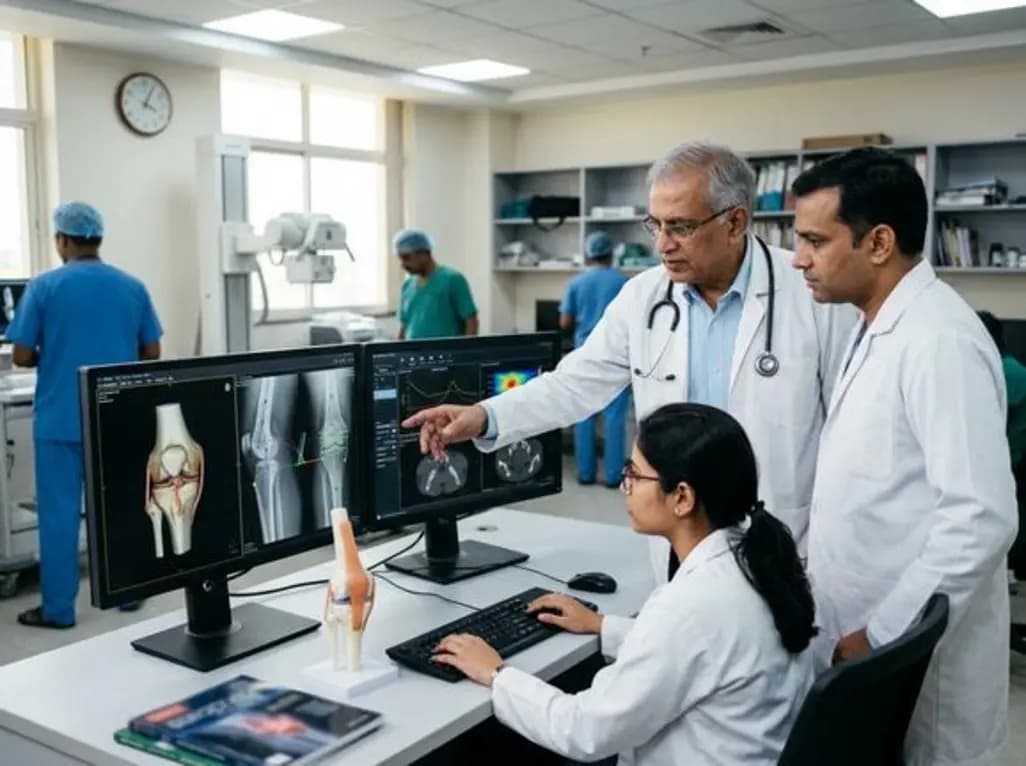
In computer-assisted orthopedic analysis, aligning 2D fluoroscopic X-ray images with preoperative CT models is paramount. This process, known as 2D/3D knee registration, provides the foundation for understanding dynamic joint kinematics. However, conventional methods often struggle with limited capture ranges and high sensitivity to noise or occlusions. Consequently, researchers have sought more robust similarity metrics to bridge the gap between intraoperative imaging and 3D anatomical data.
A recent study introduces a pose-aware deep perceptual metric to solve these issues. By utilizing contrastive learning, this innovative network enhances the 2D/3D knee registration process significantly. Specifically, the supervision reflects true 3D transformation discrepancies rather than simple pixel-wise differences. Therefore, the metric remains robust even when faced with low-contrast fluoroscopic conditions. This specialization allows the network to outperform standard deep learning models like LPIPS.
The results indicate that this learned metric significantly enlarges the capture range and smooths the loss landscape. Furthermore, the framework is differentiable, which enables efficient gradient-based optimization during surgery. One notable finding is the network's zero-shot ability. This means it performs accurately on unseen fluoroscopic data without requiring additional training. Ultimately, these improvements lead to more precise joint kinematics analysis in both single- and dual-plane fluoroscopy. Moreover, the increased accuracy supports better decision-making for orthopedic surgeons.
Contrastive learning allows the AI to learn deep features specifically sensitive to pose changes while ignoring irrelevant noise. This results in a more robust similarity metric that performs well under varied clinical imaging conditions.
By providing a more accurate 2D/3D knee registration, surgeons can better analyze dynamic joint motion. This precision is essential for optimizing implant placement and assessing postoperative kinematics to improve patient recovery.
Disclaimer: This content is for informational and educational purposes only. It does not constitute medical advice, diagnosis, or treatment. Always seek the advice of a qualified healthcare provider with any questions regarding a medical condition. Refer to the latest local and national guidelines for clinical practice.
References

Read summarized clinical updates, watch expert medical content, and earn CME certifications right from your smartphone.
Open your smartphone camera to scan and install.





Researchers developed a pose-aware deep perceptual metric using contrastive learning to improve 2D/3D registration of knee joints. This AI-driven approach enhances capture range, robustness to noise, and accuracy in joint kinematics analysis for orthopedic procedures.
4 months ago

Depemokimab offers twice-yearly dosing for severe eosinophilic asthma and chronic rhinosinusitis with nasal polyps, significantly cutting exacerbations and hospital admissions.
3 days back

A novel copper metal-organic framework hydrogel remodels the uterine microenvironment to stimulate robust endometrial regeneration, reduce intrauterine fibrosis, and restore reproductive fertility, offering a groundbreaking strategy for managing refractory endometrial damage and Asherman syndrome.
4 days back

New research reveals that non-ablative radiotherapy suppresses ventricular tachycardia by increasing conduction velocity via NaV1.5 upregulation and action potential prolongation. However, sustained sodium current elevation and depressed calcium handling highlight the need for careful clinical translation.
6 days back

A single-cell transcriptomic atlas reveals how peripheral nerve injuries cause dorsal root ganglion remodeling. By evaluating proximal nerve crush and resection, researchers identify distinct glial and immune programs that resolve neuropathic pain and promote regeneration.
3 days back
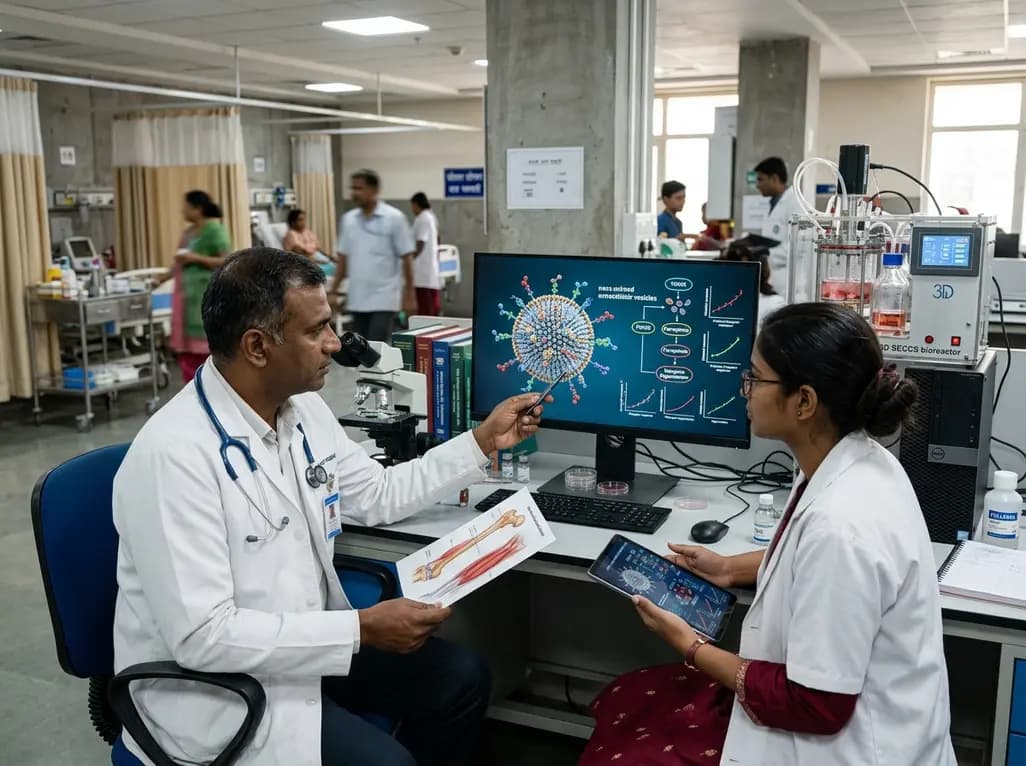
A breakthrough study demonstrates that fullerol-primed extracellular vesicles generated in a 3D SECCS bioreactor attenuate ferroptosis and restore myogenic regeneration in diabetes via the FOXO3 pathway, offering a cell-free therapeutic strategy for diabetic musculoskeletal degeneration.
3 days back
