.webp&w=384&q=75)

Loading, please wait...
Loading, please wait...
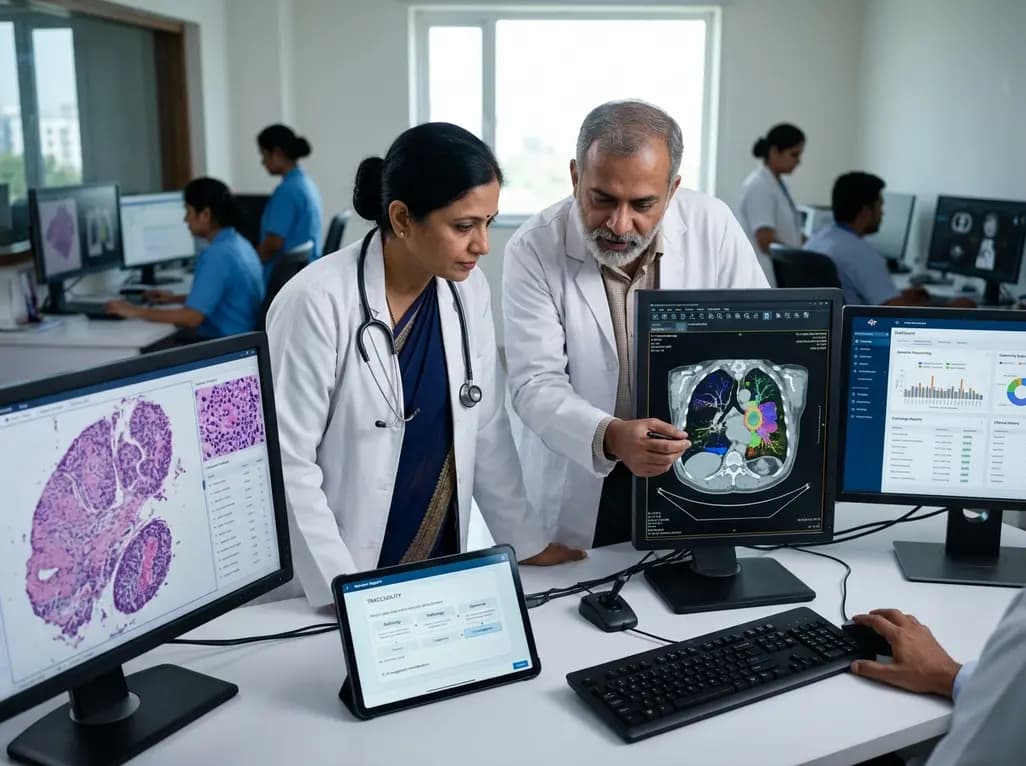
Modern cancer care requires synthesizing complex diagnostic information across multiple disciplines. Clinicians must evaluate radiological imaging, histopathology, molecular biomarkers, and longitudinal health records. Consequently, achieving an accurate multimodal oncology diagnosis demands iterative and structured clinical reasoning. While computational algorithms show impressive performance on isolated tasks, emerging artificial intelligence agents offer a transformative path toward integrated decision support.
Conventional algorithms often operate within rigid, narrow boundaries. In contrast, an artificial intelligence agent functions as an adaptive, feedback-driven system. It dynamically maintains task state across complex clinical workflows. Furthermore, the agent selects among governed medical tools, observes intermediate outputs, and revises its diagnostic hypotheses under strict safety constraints. This interactive capability separates clinical agents from static foundation models and retrieval-augmented generation pipelines. Foundation models typically generate text based solely on statistical probability. Similarly, standard automated workflows follow predetermined pathways without adapting to unexpected diagnostic ambiguities. An agent, however, actively orchestrates specialized algorithms for image segmentation, variant calling, and clinical text extraction. It assesses whether available laboratory or imaging data justify a definitive conclusion. If findings remain inconclusive, the system can recommend targeted follow-up examinations. Most importantly, explicit governance mechanisms bound every proposed action. Therefore, these systems maintain complete traceability, ensuring that clinical teams can verify each analytical step during complex diagnostic investigations. Accordingly, this iterative capability mimics the deliberative logic that medical specialists employ during multidisciplinary tumor boards.
Cancer medicine inherently relies on heterogeneous data sources that span microscopic, macroscopic, and molecular scales. Diagnostic assessments draw upon whole-slide digital pathology, computed tomography, magnetic resonance imaging, genomic profiling, and longitudinal clinical documentation. Consequently, harmonizing these disparate streams presents a fundamental engineering and clinical challenge. AI agents address this bottleneck by executing systematic data collection and automated preprocessing pipelines. First, the agent normalizes multi-institution imaging datasets to correct for scanner variations. Next, it cleans unstructured clinical text and standardizes molecular reports into structured representations. Cross-modal representation learning subsequently maps complementary features into a shared latent space. In this unified space, radiomic imaging features connect directly to underlying molecular alterations and tissue microenvironments. Moreover, the agent identifies subtle phenotypic patterns that human evaluation might miss in isolation. It synthesizes these diverse signals without losing the unique diagnostic context of individual modalities. As a result, the integrated representation provides a comprehensive diagnostic landscape. Thus, clinicians receive a coherent, cross-referenced profile that reflects the complete biological state of the patient's malignancy.
Evaluating agentic systems requires distinguishing between component-level metrics and true agent-level clinical evidence. Researchers have validated numerous individual algorithms for specific tasks, such as lung nodule detection or epidermal growth factor receptor mutation prediction. Nevertheless, high performance in isolated tools does not guarantee reliable end-to-end multi-agent performance. When multiple analytical components interact, compounding errors can destabilize the overall diagnostic pathway. Furthermore, early literature frequently relies on retrospective cohorts and prospective propositions rather than real-world validation. Component evidence confirms that a convolutional network accurately segments a tumour margin. However, only agent-level evaluation demonstrates whether the system reliably coordinates pathology and radiology data under real-world clinical uncertainty. Clinical teams must therefore demand rigorous prospective trials before adopting these agentic frameworks. In addition, developers must quantify uncertainty at every decision node. When an agent encounters ambiguous histopathology or conflicting clinical notes, it must flag its uncertainty transparently. Consequently, establishing robust benchmarks for multi-agent coordination remains vital for patient safety and clinical credibility. Without such validation, unverified algorithmic chains risk propagating systemic errors across oncology services.
Translating AI agents into hospital workflows involves formidable practical and technical challenges. First, healthcare facilities require resilient failure handling to manage system outages or corrupted data streams. If a molecular test fails quality controls, the agent must degrade gracefully rather than generate misleading conclusions. Furthermore, oncology guidelines evolve rapidly as novel clinical trials publish practice-changing findings. AI systems must incorporate rigorous guideline version control to prevent obsolete therapy recommendations. In addition, computational feasibility represents a substantial operational barrier, especially in resource-constrained community settings. Running complex multimodal models demands significant graphics processing power and enterprise infrastructure. Many healthcare centers cannot readily support high-end local servers or high-latency cloud architectures. Moreover, integration with legacy electronic medical records often encounters proprietary data silos and interoperability deficits. To overcome these obstacles, healthcare leaders must invest in open-source standards and federated computing architectures. Accordingly, multi-institutional collaborations should design lightweight models that function seamlessly within existing clinical software environments. Such proactive measures ensure equitable access to cutting-edge diagnostic support across diverse health systems.
The primary objective of oncology AI agents must center on transparent decision support rather than autonomous clinical practice. Cancer care involves profound ethical nuances, personal patient preferences, and intricate risk-benefit evaluations that algorithms cannot replicate. Therefore, human clinician authority must remain absolute across all diagnostic and therapeutic determinations. AI agents provide value by organizing complex data, highlighting relevant clinical guidelines, and generating traceable reasoning chains. When the system proposes a potential diagnosis, it should display the underlying evidence from pathology slides, radiological scans, and published clinical trials. This radical transparency enables oncologists, radiologists, and pathologists to audit every analytical step efficiently. Furthermore, explainable decision support fosters clinician trust and facilitates interdisciplinary communication during tumor boards. Instead of replacing clinical expertise, the technology amplifies diagnostic precision and reduces administrative cognitive burden. Ultimately, agentic artificial intelligence functions best as an intelligent assistant, empowering medical teams to deliver safer, personalized, and timely oncology care. By keeping physicians firmly in the loop, healthcare institutions preserve clinical accountability and elevate patient care standards.
Traditional oncology models perform narrow, single-task classifications, such as identifying lung nodules on computed tomography scans. In contrast, an AI agent maintains task state across an entire diagnostic workflow. It actively selects among specialized tools, interprets multimodal outputs, and dynamically updates its diagnostic hypotheses under explicit safety constraints. Furthermore, the agent provides a traceable audit trail, enabling clinicians to review and verify every intermediate reasoning step during complex cancer evaluations.
When imaging reports conflict with biopsy results, an advanced AI agent does not generate an arbitrary decision. Instead, it recognizes data discordance and flags the ambiguity for clinical review. Furthermore, the system quantifies uncertainty across both modalities and traces the contradictory evidence back to source files. By highlighting potential biopsy sampling errors or atypical radiological features, the agent assists the multidisciplinary tumor board in determining whether repeat testing or additional biopsies are necessary.
Autonomous cancer diagnosis remains unfeasible because oncologic decision-making involves subtle clinical judgment, patient comorbidities, and shared therapeutic goals that algorithms cannot fully evaluate. Additionally, AI systems carry risks of hallucinations, distribution shifts, and data integration errors. Consequently, regulatory bodies and clinical leaders require human-in-the-loop governance. Clinicians must maintain absolute authority over diagnostic confirmations and treatment plans, utilizing agentic AI strictly as an explainable, traceable decision support tool.
Disclaimer: This content is for informational and educational purposes only. It is not intended to substitute for professional medical advice, diagnosis, or treatment. Always seek the advice of your physician or other qualified health provider with any questions you may have regarding a medical condition or clinical decision-making. Refer to the latest local and national guidelines for clinical practice.
References

Read summarized clinical updates, watch expert medical content, and earn CME certifications right from your smartphone.
Open your smartphone camera to scan and install.





Cancer care demands complex synthesis across radiology, digital pathology, and genomics. AI agents offer feedback-driven, traceable decision support rather than autonomous diagnosis, keeping clinicians in command.
Yesterday

A randomized trial shows oral DL-3-n-butylphthalide (200 mg thrice daily) significantly slows functional decline in spinocerebellar ataxia type 3 over 12 months, improving SARA and SCAFI scores with favorable safety and zero serious adverse events.
Yesterday
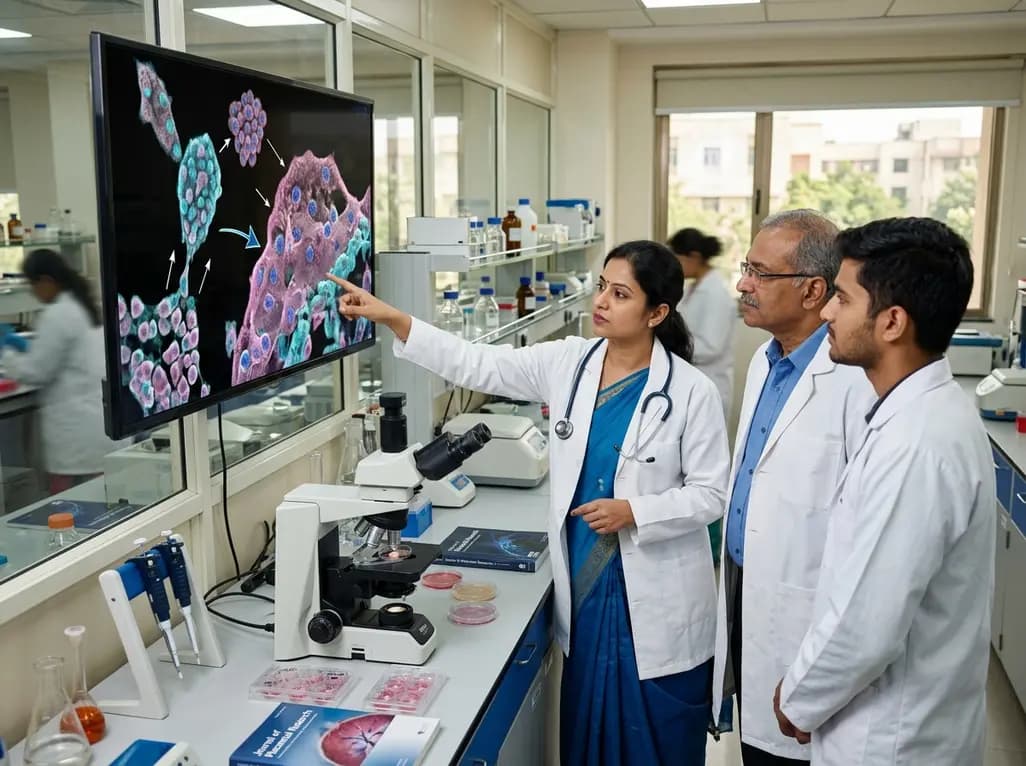
Recent research reveals that downregulating YAP1/TAZ-TEAD via Hippo signaling triggers spontaneous human trophoblast syncytialization in 3D cultures, illuminating placental biology and preeclampsia.
Last week
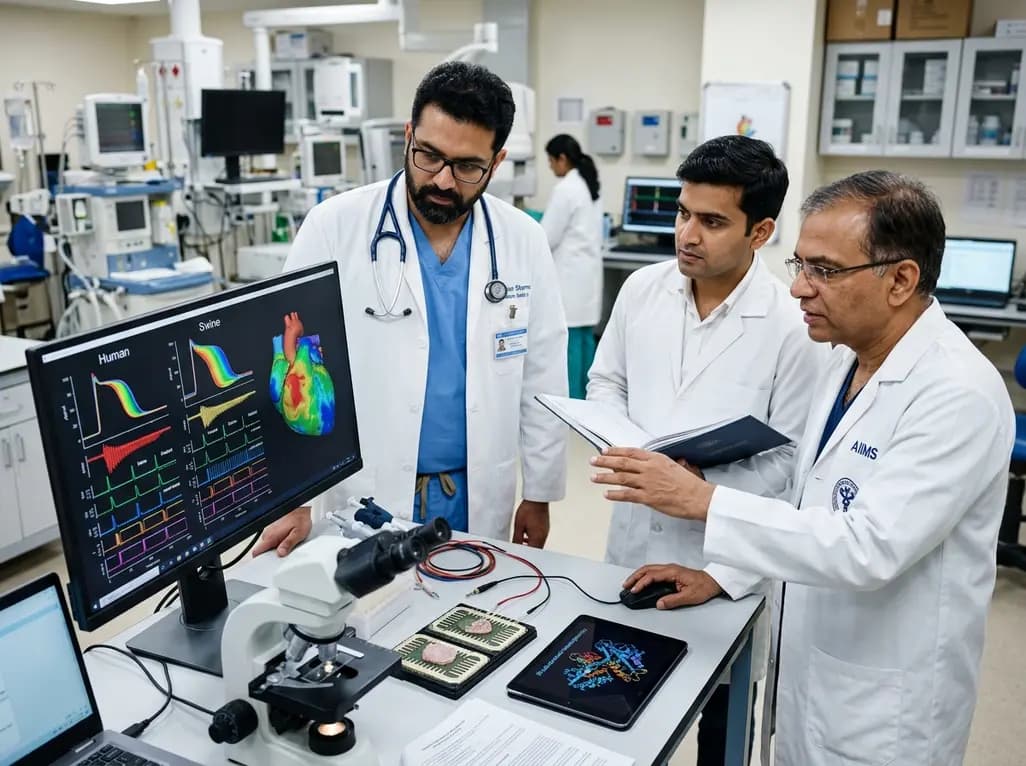
A landmark comparative study evaluates atrial electrophysiology across humans, swine, and rodents. By linking cellular recordings with transcriptomics and in silico modeling, researchers resolve cross-species gaps, explaining translational failures to advance targeted therapies for atrial arrhythmias.
Last week
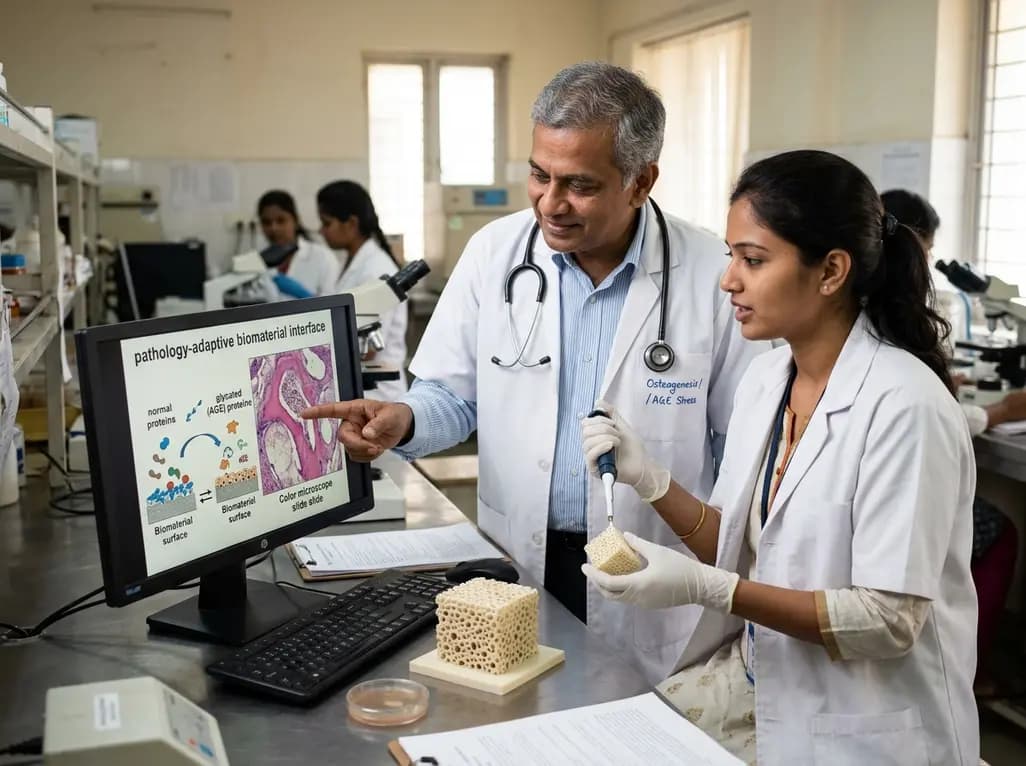
A novel pathology-adaptive surface engineering strategy uses functionalized plasma polymer coatings to selectively modulate AGE adsorption, reducing oxidative stress and restoring bone formation in diabetic and aging microenvironments.
last month
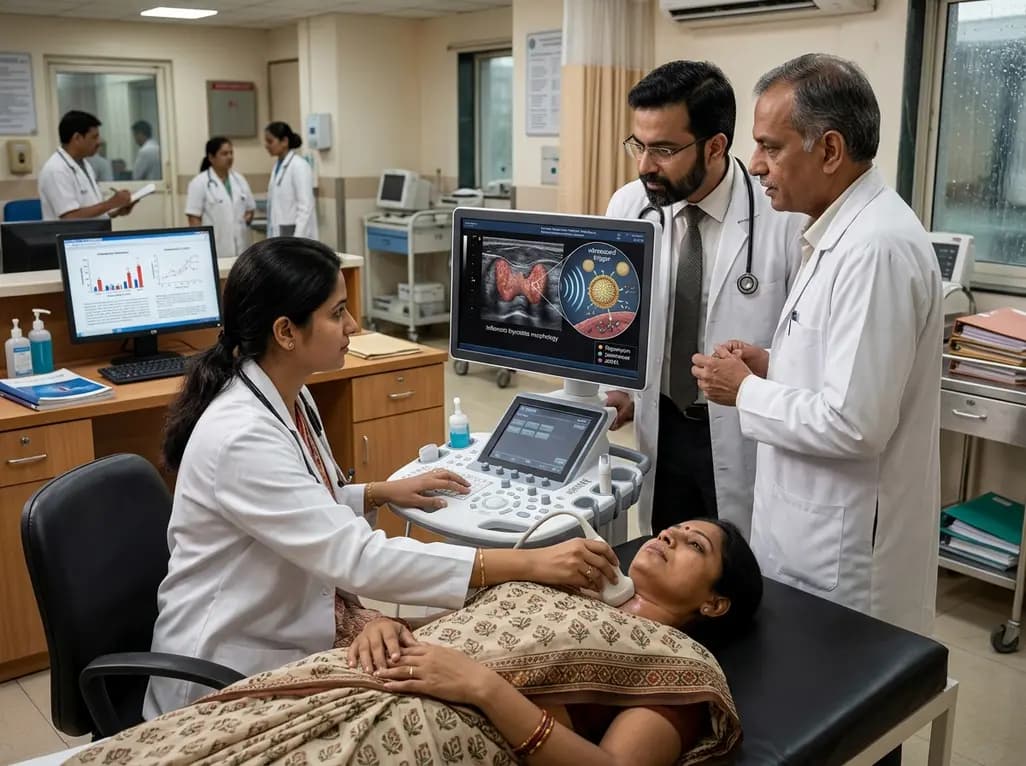
Researchers have developed an innovative ultrasound-responsive nano-contrast agent that co-delivers CIITA-siRNA and rapamycin directly to inflamed thyroid tissue, significantly reducing autoimmune injury and thyroid autoantibodies in preclinical models of Hashimoto thyroiditis.
Last week
