.webp&w=384&q=75)

Loading, please wait...
Loading, please wait...
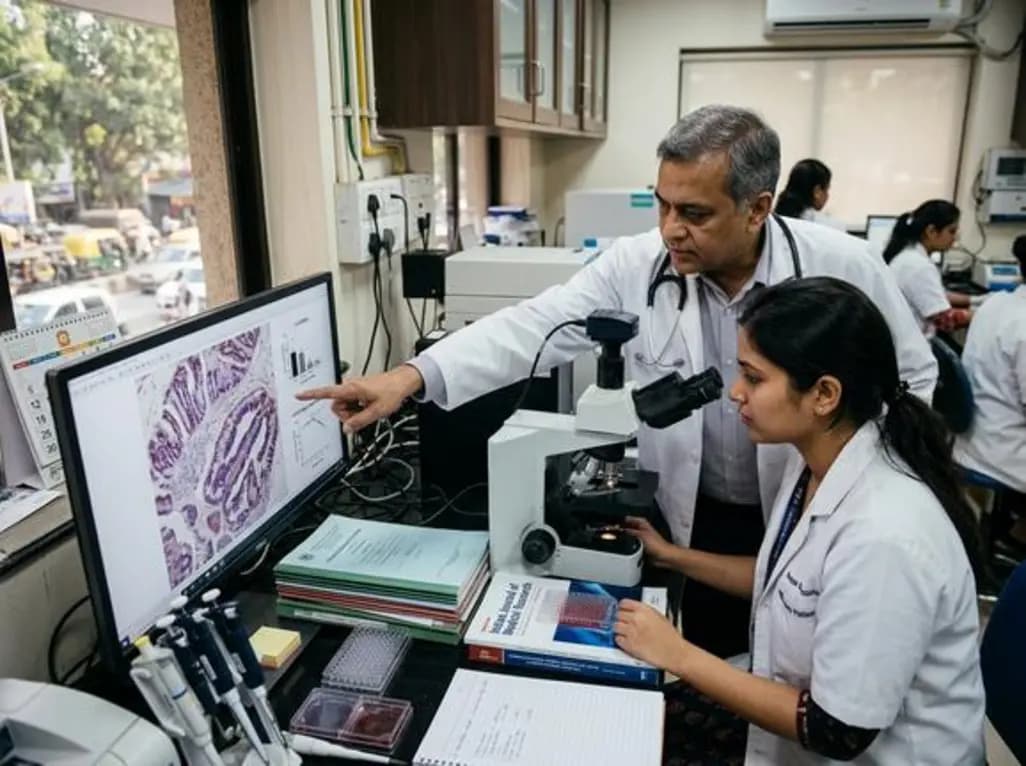
Colorectal cancer (CRC) remains a significant challenge in modern oncology, and radiotherapy is essential for managing locally advanced cases. However, many patients develop CRC radiotherapy resistance, which severely limits therapeutic success. Recent research has identified the ADAR1-circRAB5A-BIP molecular axis as a key regulator of this resistance mechanism.
Researchers discovered that the RNA-editing enzyme ADAR1 significantly influences the biogenesis of circRAB5A. Specifically, ADAR1 binds to Alu Jo/Jr elements to suppress the production of circRAB5A. In radioresistant CRC cells, this downregulation is particularly pronounced. Consequently, low levels of circRAB5A fail to facilitate the TRIM21-mediated degradation of the chaperone protein BIP. This stability allows BIP to accumulate and drive survival pathways.
BIP plays a critical role in balancing protective autophagy and programmed cell death. Under normal conditions, circRAB5A enhances the ubiquitination and degradation of BIP. When circRAB5A is depleted, BIP levels rise and activate the p-Akt/Beclin1 signaling pathway. This shift promotes protective autophagy while simultaneously inhibiting apoptosis, directly contributing to CRC radiotherapy resistance. Xenograft experiments confirm that targeting BIP can restore sensitivity to radiation, even at lower doses.
The study highlights that low circRAB5A expression may serve as a valuable clinical biomarker for identifying radioresistant tumors. Identifying patients with this molecular profile could allow clinicians to personalize treatment strategies more effectively. Furthermore, therapeutic targeting of the ADAR1/circRAB5A/BIP axis represents a promising strategy to improve outcomes in resistant colorectal cancer cases.
ADAR1 acts as a driver of resistance by binding to specific genomic elements. This action suppresses the formation of circular RNAs like circRAB5A, which otherwise promote cancer cell death and radiosensitivity.
High levels of the BIP protein protect cancer cells from the damaging effects of radiation. It accomplishes this by increasing protective autophagy and preventing the natural process of apoptosis, or programmed cell death.
Disclaimer: This content is for informational and educational purposes only. It does not constitute medical advice, diagnosis, or treatment. Always seek the advice of a qualified healthcare provider with any questions regarding a medical condition. Refer to the latest local and national guidelines for clinical practice.
References
Chen W et al. ADAR1-circRAB5A-BIP axis governs radiotherapy resistance in colorectal cancer through coordinating protective autophagy and apoptosis. Cancer Biol Ther. 2026 Dec 31. doi: 10.1080/15384047.2026.2677975. PMID: 42324593.
National Cancer Institute. Colorectal Cancer Treatment (PDQ®)–Health Professional Version. 2024.
Journal of Clinical Investigation. Improving radiotherapy in immunosuppressive microenvironments by targeting complement receptors. 2026.

Read summarized clinical updates, watch expert medical content, and earn CME certifications right from your smartphone.
Open your smartphone camera to scan and install.





Radioresistance often limits the efficacy of colorectal cancer treatment. Recent studies identify the ADAR1/circRAB5A/BIP axis as a key regulator. Low circRAB5A levels promote protective autophagy and inhibit apoptosis, offering a potential new biomarker and therapeutic target for overcoming resistance.
4 months ago

Depemokimab offers twice-yearly dosing for severe eosinophilic asthma and chronic rhinosinusitis with nasal polyps, significantly cutting exacerbations and hospital admissions.
4 days back

A novel copper metal-organic framework hydrogel remodels the uterine microenvironment to stimulate robust endometrial regeneration, reduce intrauterine fibrosis, and restore reproductive fertility, offering a groundbreaking strategy for managing refractory endometrial damage and Asherman syndrome.
4 days back

New research reveals that non-ablative radiotherapy suppresses ventricular tachycardia by increasing conduction velocity via NaV1.5 upregulation and action potential prolongation. However, sustained sodium current elevation and depressed calcium handling highlight the need for careful clinical translation.
6 days back

A single-cell transcriptomic atlas reveals how peripheral nerve injuries cause dorsal root ganglion remodeling. By evaluating proximal nerve crush and resection, researchers identify distinct glial and immune programs that resolve neuropathic pain and promote regeneration.
4 days back

A breakthrough study demonstrates that fullerol-primed extracellular vesicles generated in a 3D SECCS bioreactor attenuate ferroptosis and restore myogenic regeneration in diabetes via the FOXO3 pathway, offering a cell-free therapeutic strategy for diabetic musculoskeletal degeneration.
4 days back
