.webp&w=384&q=75)

Loading, please wait...
Loading, please wait...
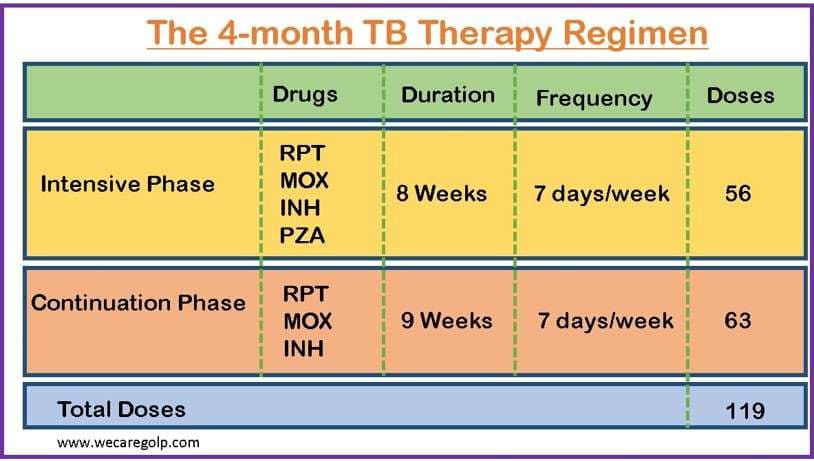
The large phase 3 Study 31/A5349 trial tested whether selected rifapentine-based regimens could shorten treatment for drug-susceptible pulmonary tuberculosis from six months to four months. One four-month regimen replaced rifampin with rifapentine and replaced ethambutol with moxifloxacin; a second used rifapentine without moxifloxacin. The rifapentine–moxifloxacin regimen met the prespecified noninferiority criterion against standard six-month therapy, while the rifapentine-only regimen did not. The study is important because shortening treatment duration can reduce pill burden and potentially improve the feasibility of completing therapy, but the regimen must still be matched to the appropriate patient and resistance profile. The paper directly supports the NAPCON tuberculosis symposium's emphasis on treatment strategy, implementation and adherence rather than focusing only on drug selection. For clinicians, the main take-home is that regimen shortening is evidence-based in defined drug-susceptible TB populations, but cannot simply be generalized to drug-resistant disease or to patients outside the studied eligibility criteria. It is a useful example of how modern TB programs can combine regimen innovation with microbiologic assessment and careful follow-up.

Read summarized clinical updates, watch expert medical content, and earn CME certifications right from your smartphone.
Open your smartphone camera to scan and install.





The large phase 3 Study 31/A5349 trial tested whether selected rifapentine-based regimens could shorten treatment for drug-susceptible pulmonary tuberculosis from six months to four months. One four-month regimen replaced rifampin with rifapentine and replaced ethambutol with moxifloxacin; a second used rifapentine without moxifloxacin. The rifapentine–moxifloxacin regimen met the prespecified noninferiority criterion against standard six-month therapy, while the rifapentine-only regimen did not. The study is important because shortening treatment duration can reduce pill burden and potentially improve the feasibility of completing therapy, but the regimen must still be matched to the appropriate patient and resistance profile. The paper directly supports the NAPCON tuberculosis symposium's emphasis on treatment strategy, implementation and adherence rather than focusing only on drug selection. For clinicians, the main take-home is that regimen shortening is evidence-based in defined drug-susceptible TB populations, but cannot simply be generalized to drug-resistant disease or to patients outside the studied eligibility criteria. It is a useful example of how modern TB programs can combine regimen innovation with microbiologic assessment and careful follow-up.
3 weeks back

Discover how catalytic nanozymes redefine autoimmune disease therapy by establishing a physiological redox set-point to restore immune tolerance without broad immunosuppression.
Last week

Recent research reveals that downregulating YAP1/TAZ-TEAD via Hippo signaling triggers spontaneous human trophoblast syncytialization in 3D cultures, illuminating placental biology and preeclampsia.
3 weeks back

A landmark comparative study evaluates atrial electrophysiology across humans, swine, and rodents. By linking cellular recordings with transcriptomics and in silico modeling, researchers resolve cross-species gaps, explaining translational failures to advance targeted therapies for atrial arrhythmias.
3 weeks back

A novel pathology-adaptive surface engineering strategy uses functionalized plasma polymer coatings to selectively modulate AGE adsorption, reducing oxidative stress and restoring bone formation in diabetic and aging microenvironments.
last month

Researchers have developed an innovative ultrasound-responsive nano-contrast agent that co-delivers CIITA-siRNA and rapamycin directly to inflamed thyroid tissue, significantly reducing autoimmune injury and thyroid autoantibodies in preclinical models of Hashimoto thyroiditis.
3 weeks back
