.webp&w=384&q=75)

Loading, please wait...
Loading, please wait...
The Enforcement Directorate (ED) has taken strict action against financial irregularities in the healthcare sector. Specifically, the federal agency provisionally attached immovable assets worth approximately Rs 158.37 crore. This legal development relates directly to the ongoing probe into the Rockland Hospitals fraud. Consequently, this case highlights growing regulatory oversight over hospital financial operations. Ultimately, medical administrators must recognize how these actions affect the healthcare landscape. Furthermore, this investigation underscores the critical need for absolute corporate billing transparency. Corporate healthcare systems in India often face strict audits. Therefore, executives must implement rigorous auditing procedures to ensure complete legal compliance. This article examines the details of this regulatory enforcement action. Indeed, this case highlights how regulatory authorities closely monitor corporate healthcare operations. Consequently, healthcare administrators must pay close attention to corporate governance.
The Serious Fraud Investigation Office (SFIO) initially triggered this probe in January 2020. Specifically, the SFIO filed a formal complaint before the Special Court in Dwarka, New Delhi. Subsequently, parallel money laundering investigations by the ED revealed a highly systematic financial fraud. According to official reports, the promoters of Rockland Hospitals siphoned off substantial corporate funds. They utilized two main fraudulent strategies to achieve this. First, they generated fake implant invoices amounting to Rs 76.03 crore through seventy-one different shell companies. Second, they inflated hospital construction costs by Rs 82.34 crore through a closely related business entity. Consequently, the total proceeds of crime generated through these methods reached Rs 158.37 crore. To conceal these transactions, the accused individuals allegedly used accommodation entry operators. These operators systematically routed the siphoned money back into the hospital as clean share capital. Therefore, the entire operation represents a calculated effort to deceive stakeholders and regulators alike. Hospital administrators should observe this case closely. Indeed, it demonstrates how easily financial irregularities can compromise clinical operations and damage institutional reputations. Consequently, this detailed investigation serves as a critical case study for hospital risk management departments.
To execute this complex scheme, the promoters relied heavily on a web of shell companies. Specifically, they created seventy-one paper entities to facilitate the generation of fake implant invoices. Consequently, these phantom suppliers existed only on paper to channel hospital funds outward. In addition, the promoters utilized these entities to convert illicit cash into seemingly legitimate share capital. Healthcare procurement systems normally require strict verification of all medical vendors and supply invoices. However, the lack of robust internal controls allowed these fictitious bills to pass without immediate detection. Furthermore, the promoters inflated construction expenses through another related company named Somya Constructions Private Limited. This entity allegedly charged exorbitant rates to drain cash from the hospital's primary bank accounts. As a result, the promoters converted hospital resources into private wealth. Ultimately, this systematic siphoning starved the hospital of vital operational capital. This cash drain compromised the hospital's ability to maintain high clinical standards and secure advanced medical equipment. Therefore, medical directors must establish independent audit committees to prevent similar internal financial abuse. Rigorous checks on third-party vendors remain absolutely essential to preserve healthcare integrity. Therefore, implementing independent supply chain audits can help hospitals avoid major legal issues.
The Prevention of Money Laundering Act (PMLA) of 2002 provides the primary legal mechanism for these seizures. Specifically, Section 5 of the PMLA empowers the Enforcement Directorate to provisionally attach properties involved in crime. Consequently, this measure prevents the accused from selling or transferring assets during the ongoing judicial process. In this case, the ED successfully targeted immovable properties valued at Rs 158.37 crore. This provisional attachment directly reflects the quantified proceeds of crime generated by the promoters. Furthermore, the agency can seek permanent confiscation of these assets once the court confirms the charges. Notably, the prosecution stems from violations under the Companies Act of 2013. This law establishes strict guidelines for corporate governance and financial transparency. Therefore, non-compliance can trigger severe criminal liabilities for hospital directors. Medical professionals who serve on corporate boards must remain highly vigilant. Specifically, they must ensure that all financial transactions conform to local laws. Ignorance of financial malpractice does not shield directors from legal consequences. Ultimately, regulatory authorities are increasingly scrutinizing the business operations of healthcare providers across India to protect public interest. Specifically, complying with statutory requirements remains a fundamental duty for every healthcare administrator.
The crackdown on Rockland Hospitals does not represent an isolated event in regional fraud investigations. Specifically, the ED recently conducted extensive searches at eight residential and business premises linked to other prominent figures. These raids targeted ROF Group chairman Mangal Sain Mittal and his associate, Anil Sharma. Consequently, investigators sought evidence regarding an alleged Rs 90.5-crore fraud involving a cooperative housing society. During these searches, officers seized digital devices, incriminating financial files, and detailed accounting records. Furthermore, the agency recovered substantial physical assets, including gold bullion, cash, and silver valued at Rs 6.63 crore. Additionally, investigators froze several linked bank accounts to prevent further movement of illicit funds. Therefore, these synchronized enforcement actions signal a nationwide campaign against economic offenders. For the medical community, these developments emphasize the importance of maintaining clean financial associations. Hospital networks must avoid business partnerships with individuals or groups facing active corruption probes. In addition, deep background checks on financial partners can prevent severe reputational damage. Ultimately, a clean balance sheet is just as crucial as clinical excellence for any sustainable healthcare institution in India today. Therefore, executing diligent risk assessments on all financial partners helps secure institutional stability.
This significant enforcement action offers critical lessons for medical professionals and hospital administrators across India. Specifically, it highlights the vulnerability of procurement departments to internal corruption and invoice manipulation. Hospital boards must establish rigid procurement protocols to verify the authenticity of all medical implants and devices. Consequently, regular third-party audits can prevent the generation of fraudulent invoices. In addition, hospitals should adopt transparent digital tracking systems for high-value clinical items. Furthermore, clinical leaders must play an active role in hospital governance. They should not leave financial oversight entirely to administrative staff or external promoters. Therefore, promoting a culture of compliance and ethics within healthcare organizations is vital. Indeed, clinical excellence cannot thrive in an environment plagued by financial instability and legal battles. Moreover, public trust in healthcare brands declines rapidly when news of asset attachments and money laundering investigations breaks. Ultimately, maintaining strict adherence to financial regulations is essential to protect patient care and institutional integrity. By implementing robust internal controls, Indian hospitals can safeguard their resources and ensure that funds support patient outcomes rather than fraudulent schemes. In addition, building transparent clinical auditing frameworks remains a cornerstone of professional hospital governance.
Q1: Why did the Enforcement Directorate attach assets belonging to Rockland Hospitals?
The Enforcement Directorate attached these assets worth Rs 158.37 crore due to an ongoing money laundering probe. Specifically, investigators found that the hospital's promoters systematically siphoned off corporate funds. They used fake medical implant invoices and highly inflated construction bills to divert money. Consequently, these siphoned funds constitute the proceeds of crime under the PMLA. The agency attached the properties to prevent the accused from selling them during the trial.
Q2: What specific strategies did the promoters use to siphon hospital funds?
The promoters utilized two distinct fraudulent strategies to siphon hospital resources. First, they generated fake medical implant invoices totaling Rs 76.03 crore through seventy-one different shell companies. Second, they artificially inflated construction costs by Rs 82.34 crore through a related business entity. Subsequently, they routed these illicit proceeds through accommodation operators. These operators brought the money back into the hospital as clean share capital, effectively laundering the siphoned wealth.
Q3: How does this legal action affect healthcare administrators in India?
This case serves as a major warning to healthcare administrators regarding the critical importance of financial compliance. Specifically, it demonstrates that regulators will aggressively prosecute internal fraud, including vendor invoice manipulation. Therefore, hospital executives must establish strict internal control mechanisms and conduct regular third-party audits. By verifying procurement invoices and construction costs, administrators can protect their organizations from severe legal liabilities, asset seizures, and devastating reputational damage.
Disclaimer: This content is for informational and educational purposes only. It does not constitute medical advice or replace professional judgment. Refer to the latest local and national guidelines for clinical practice.
References

Read summarized clinical updates, watch expert medical content, and earn CME certifications right from your smartphone.
Open your smartphone camera to scan and install.





The Enforcement Directorate has provisionally attached assets worth Rs 158.37 crore in the money-laundering investigation against Rockland Hospitals. Promoters allegedly siphoned corporate funds through fake medical implant invoices and inflated construction costs, routing them via shell companies.
3 months ago
Kenya's confirmation of its eighth Ebola infection highlights the acute risk of secondary transmission in hospital environments. Clinicians must maintain high vigilance, enforce strict infection prevention protocols, and implement rapid triage mechanisms for viral hemorrhagic fevers across healthcare settings.
4 days back
Maternal anaemia contributes to nearly half of pregnancy-related fatalities across India. To prevent complications, Uttar Pradesh has added single-dose parenteral iron to its essential medicines list. This clinical transition aims to restore haemoglobin rapidly and protect high-risk mothers across rural facilities.
Last week

India's food safety authority FSSAI has issued show-cause notices to Gemini Edibles, BigBasket, and Flipkart for unpermitted cardiovascular claims regarding Freedom Rice Bran Oil. This regulatory move highlights the strict enforcement of advertising standards and the clinical necessity of evidence-based lipid care.
6 days back

The state government is deploying helicopter emergency medical services across the Mumbai-Pune Expressway, Samruddhi Mahamarg, and Mumbai-Goa Highway. This initiative establishes unified standard operating procedures to enable rapid triage, advanced prehospital resuscitation, and seamless trauma care transfers.
Last week
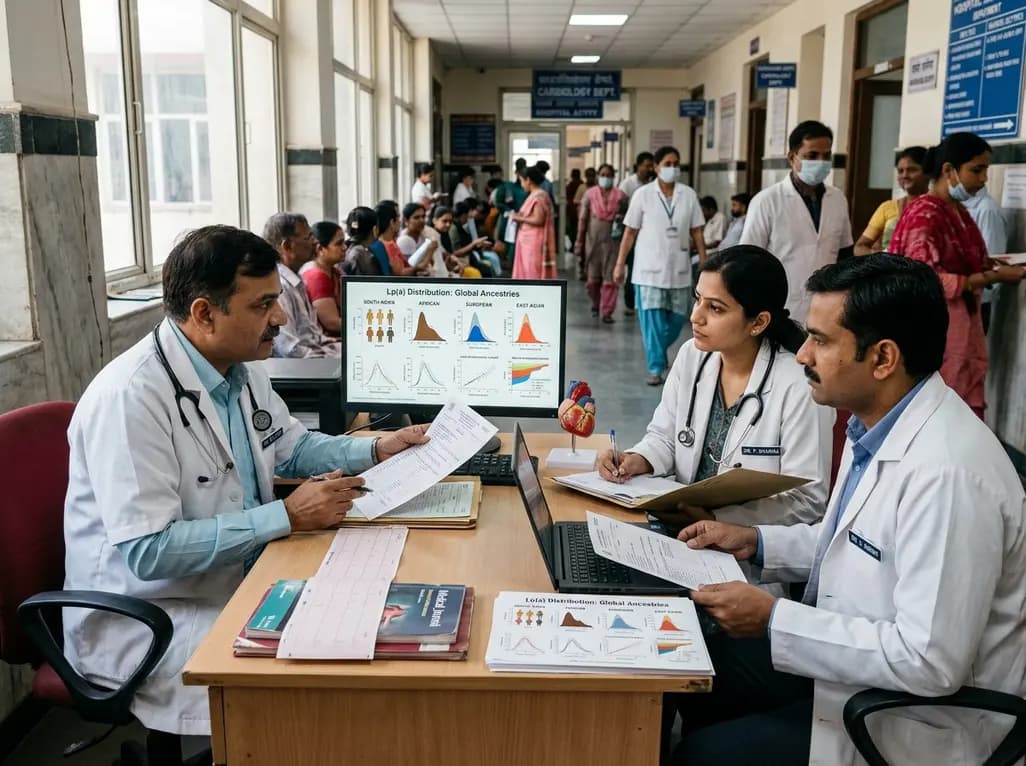
Atherosclerotic cardiovascular disease guidelines often rely on European-derived lipoprotein(a) cutoffs. However, baseline Lp(a) levels vary widely across ancestries, including South Asians and Africans. Clinicians must interpret Lp(a) values within overall absolute cardiovascular risk.
Last week
