.webp&w=384&q=75)

Loading, please wait...
Loading, please wait...

Recent research highlights a significant shift in the healthcare landscape, specifically focusing on the hospital consolidation impact on federal drug pricing initiatives. A comprehensive study by Masia N et al. analyzed data from over 2,200 U.S. hospitals to determine how market power influences participation in the 340B Program. This program allows qualifying providers to purchase outpatient drugs at significantly reduced prices. However, the findings suggest that the program may now be a primary driver for large-scale mergers rather than just a safety net for vulnerable populations. Specifically, the researchers discovered that hospitals with greater market share are far more likely to enroll in the 340B scheme. This trend indicates that financial incentives are reshaping the strategic decisions of healthcare administrators across the country. Furthermore, the correlation between hospital size and participation suggests that larger entities possess the administrative resources to maximize these benefits. Consequently, the study raises critical questions about whether the original intent of the 340B Program is being overshadowed by corporate growth strategies. Understanding these dynamics is essential for policymakers who aim to balance hospital profitability with affordable patient care.
The relationship between metropolitan market concentration and program enrollment is quite striking. According to the data, a 20 percentage-point increase in the health system share within a Metropolitan Statistical Area (MSA) correlates with a 7.6 percentage-point increase in 340B participation likelihood. Notably, this effect is most pronounced among larger hospitals that already wield significant regional influence. These institutions leverage their scale to integrate more clinical sites into the program, thereby increasing their total volume of discounted drug purchases. Moreover, the study utilized a commercial price index for over 1,300 hospitals to ensure that the findings were robust against variations in local pricing. Scientists observed that hospitals in consolidated markets face less competition, which may allow them to focus more on revenue-optimizing programs like 340B. Therefore, market dominance appears to provide both the motivation and the means to exploit drug discount mechanisms. In addition, the administrative complexity of 340B often favors large systems that can afford specialized compliance teams. This creates a feedback loop where consolidated systems grow even stronger by capturing more pharmaceutical margins.
Merger activity serves as a powerful catalyst for entering the 340B space. The study tracked merger activity from 2017 to 2022 and found that recent consolidations were linked to an 8.6 percentage-point higher likelihood of participation. This finding suggests that hospitals often view mergers as a strategic gateway to qualify for pharmaceutical discounts. When a smaller, independent hospital joins a larger system, it frequently gains access to the system's existing 340B status or administrative infrastructure. Consequently, the merged entity can rapidly expand its outpatient drug volume under the discounted pricing model. Furthermore, this trend reflects a broader move toward vertical and horizontal integration in the healthcare sector. Because 340B eligibility is often tied to the disproportionate share hospital (DSH) metric, merged systems can strategically shift patient populations to maintain or gain eligibility. Specifically, the data indicates that mergers provide a synergistic effect that boosts both market power and program accessibility. In contrast, smaller independent hospitals may struggle to navigate the regulatory hurdles required for the same benefits. As a result, the consolidation trend continues to accelerate as hospitals seek to protect their financial viability through these programs.
The financial impact of the 340B Program on operating margins is profound, particularly for merged entities. For non-merged hospitals, 340B participation was associated with a modest increase in margins of approximately 1.1 to 3.0 percentage points. However, for merged hospitals, the margin boost was significantly higher, ranging from 5.2 to 7.0 percentage points. This disparity highlights how the hospital consolidation impact amplifies the financial benefits of drug discount programs. Larger systems are better positioned to capture the spread between the discounted purchase price and the higher reimbursement rates from commercial insurers. Additionally, the study found that greater market share and higher outpatient revenues were consistently associated with larger estimated margin effects. This alignment is consistent with the outpatient-focused design of the 340B Program, which targets clinician-administered drugs. Therefore, the program has become a vital revenue stream that supports the bottom line of consolidated health systems. Because these margins are so substantial, they provide a strong incentive for further acquisition activity. Subsequently, the financial health of many modern hospitals is becoming increasingly dependent on their ability to manage pharmaceutical arbitrage effectively.
While the 340B Program is unique to the United States, the underlying principles of hospital consolidation and pharmaceutical pricing are globally relevant. In India, the healthcare market is currently undergoing a rapid phase of consolidation, with major chains acquiring smaller nursing homes and independent hospitals. For instance, large hospital groups in cities like Delhi, Mumbai, and Bangalore are leveraging their scale to negotiate better procurement prices from pharmaceutical manufacturers. Similarly, institutional discount programs like the Central Government Health Scheme (CGHS) and ECHS function on volume-based incentives that favor larger, integrated systems. Although India lacks a direct equivalent to 340B, the drive for higher margins through bulk drug purchasing and standardized procurement is a common theme. Furthermore, the U.S. study provides a cautionary tale for Indian regulators about how financial incentives can inadvertently drive market concentration. If procurement discounts only benefit large systems, smaller providers may find it impossible to compete, leading to a monopoly that could eventually raise costs for patients. Therefore, Indian healthcare leaders must monitor how consolidation affects the accessibility of affordable medicines. By examining international data, local stakeholders can better anticipate the long-term consequences of current M&A trends in the domestic market.
In summary, the research by Masia N et al. confirms that 340B participation is deeply intertwined with hospital market power and merger activity. The findings illustrate that the hospital consolidation impact extends far beyond simple operational efficiencies, reaching into the core of pharmaceutical economics. As health systems continue to grow, the 340B Program increasingly serves as a financial engine for expansion rather than solely as a safety net. This shift necessitates a critical re-evaluation of how such programs are structured and monitored. Specifically, policymakers must ensure that the financial gains from drug discounts are passed on to patients and underserved communities. Moreover, the high correlation between mergers and margin increases suggests that current regulations may be incentivizing anti-competitive behavior. To address this, future legislative efforts could focus on transparency in how 340B profits are utilized. Additionally, maintaining a competitive hospital market is essential for ensuring that pricing remains fair and accessible. As the healthcare industry continues to evolve, the balance between institutional profitability and public health must remain a top priority. Ultimately, the lessons learned from the 340B experience provide a roadmap for managing similar dynamics in other global healthcare markets.
The 340B Program influences merger decisions by offering significant financial incentives that enhance a hospital's operating margins. When hospitals merge, they can leverage a larger market share and improved administrative infrastructure to qualify for or maximize drug discounts. This study shows that merged hospitals experience a much higher margin boost compared to independent ones. Consequently, the program acts as a strategic driver for systems looking to strengthen their financial position through acquisition and scale.
The study found a strong positive correlation between market share and 340B participation. Specifically, a 20 percentage-point increase in a health system's share within its metropolitan area was associated with a 7.6 percentage-point increase in the likelihood of participating in the program. This suggests that dominant hospitals are more proactive and successful in enrolling in 340B. This dominance allows them to capture a larger portion of the pharmaceutical market and reinvest the resulting margins into further expansion.
Yes, these findings are highly relevant to the Indian context where healthcare consolidation is accelerating. As major Indian hospital chains acquire smaller facilities, they utilize similar strategies of bulk procurement and institutional volume discounts to improve profitability. Understanding how these financial mechanisms drive consolidation helps Indian policymakers and doctors anticipate market shifts. It underscores the need for a balance between allowing systems to scale for efficiency and ensuring that such growth does not lead to anti-competitive pricing behavior.
Disclaimer: This content is for informational and educational purposes only. It is not intended to provide legal, financial, or clinical advice. The dynamics of hospital consolidation and drug pricing vary by region and regulatory environment. Refer to the latest local and national guidelines for clinical practice.
References
Masia N et al. Exploring Associations Between 340B Participation and Hospital Consolidation. Med Care Res Rev. 2026 Jul 21. doi: 10.1177/10775587261467103. PMID: 42479453.
Bipartisan Policy Center. Health Care Provider Consolidation: Trends and Policy Levers. 2026 Jan 29.
PwC India. Global M&A Trends in Health Industries: 2026 Mid-Year Outlook.
"
Read summarized clinical updates, watch expert medical content, and earn CME certifications right from your smartphone.
Open your smartphone camera to scan and install.





A new study reveals a strong link between hospital consolidation and the 340B Drug Pricing Program. Larger market shares and recent mergers significantly increase participation likelihood and operating margins, raising questions about the program's original intent and its role in modern healthcare economics.
3 months ago
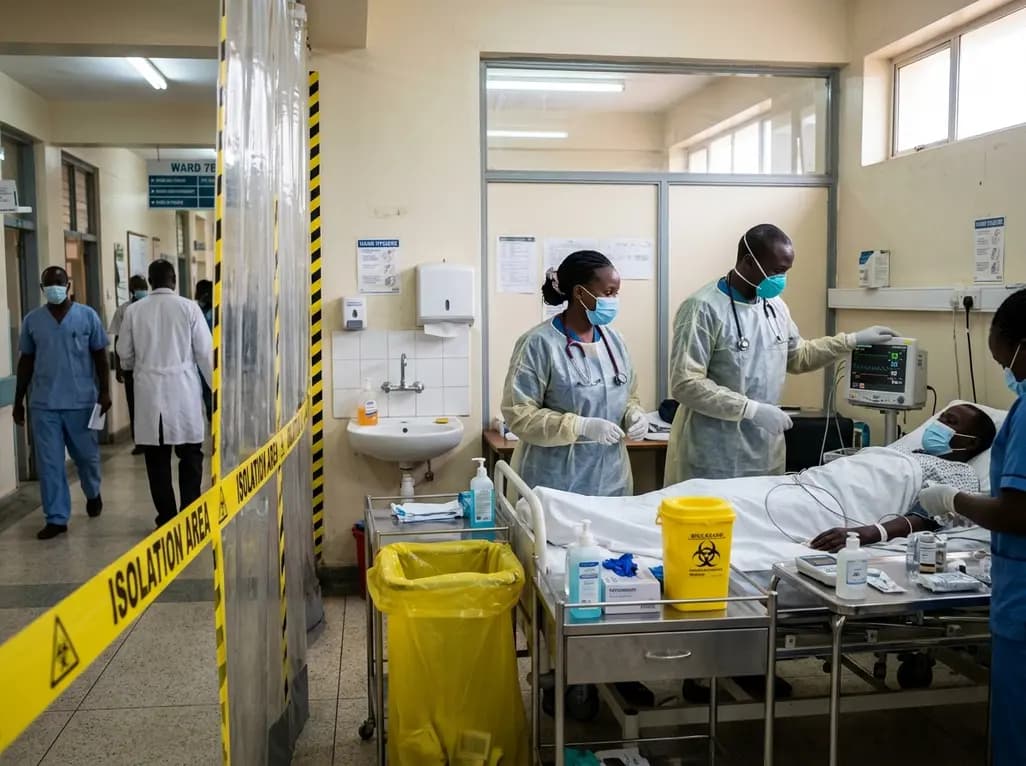
Kenya's confirmation of its eighth Ebola infection highlights the acute risk of secondary transmission in hospital environments. Clinicians must maintain high vigilance, enforce strict infection prevention protocols, and implement rapid triage mechanisms for viral hemorrhagic fevers across healthcare settings.
4 days back
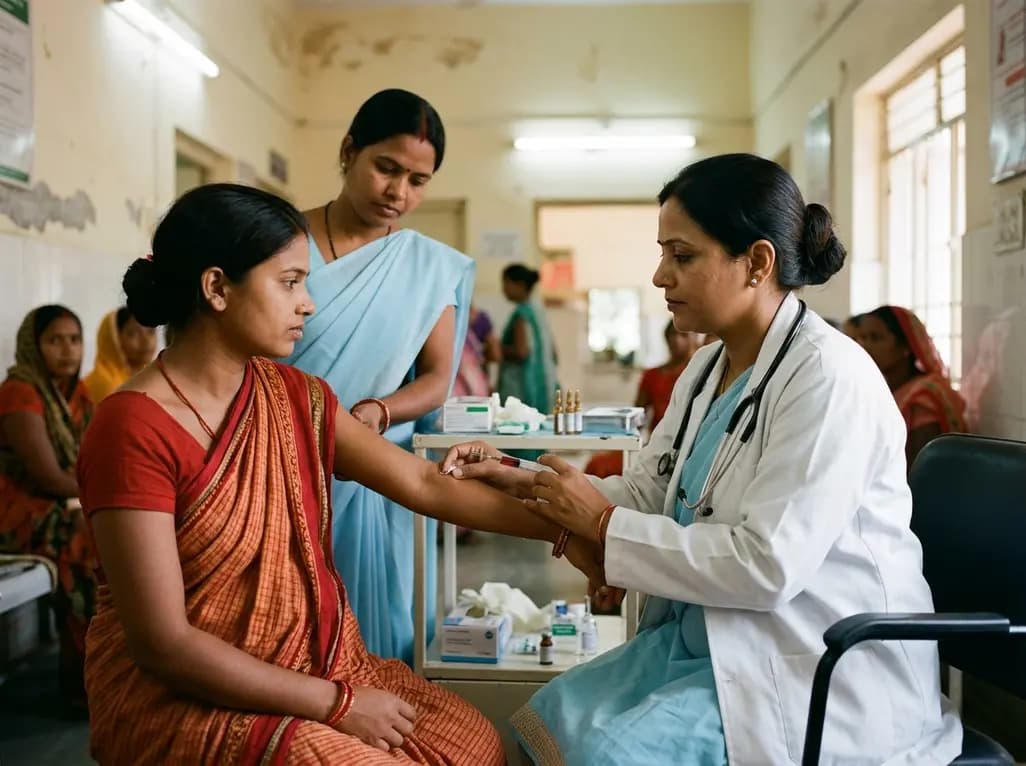
Maternal anaemia contributes to nearly half of pregnancy-related fatalities across India. To prevent complications, Uttar Pradesh has added single-dose parenteral iron to its essential medicines list. This clinical transition aims to restore haemoglobin rapidly and protect high-risk mothers across rural facilities.
Last week

India's food safety authority FSSAI has issued show-cause notices to Gemini Edibles, BigBasket, and Flipkart for unpermitted cardiovascular claims regarding Freedom Rice Bran Oil. This regulatory move highlights the strict enforcement of advertising standards and the clinical necessity of evidence-based lipid care.
6 days back

The state government is deploying helicopter emergency medical services across the Mumbai-Pune Expressway, Samruddhi Mahamarg, and Mumbai-Goa Highway. This initiative establishes unified standard operating procedures to enable rapid triage, advanced prehospital resuscitation, and seamless trauma care transfers.
Last week

Atherosclerotic cardiovascular disease guidelines often rely on European-derived lipoprotein(a) cutoffs. However, baseline Lp(a) levels vary widely across ancestries, including South Asians and Africans. Clinicians must interpret Lp(a) values within overall absolute cardiovascular risk.
Last week
