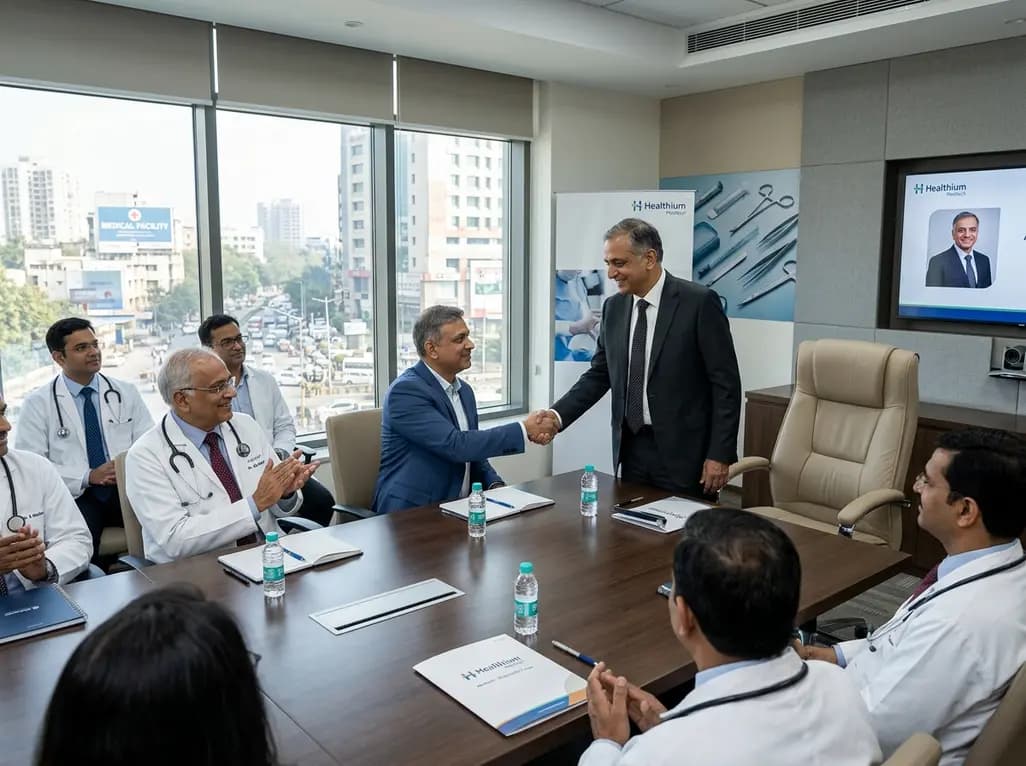
Healthium Medtech, a prominent player in the global medical devices sector, recently announced a significant leadership reorganization. Consequently, Anish Bafna, who has served as the Chief Executive Officer and Managing Director since 2018, is stepping down from his executive duties. He will transition into the role of non-executive chairman. This planned
Healthium Medtech CEO transition comes at a crucial moment for the KKR-owned organization as it navigates structural changes in the Indian surgical products market. Over the next month, the company plans to identify and onboard a new chief executive. Meanwhile, Bafna will actively assist in this selection process to ensure a seamless change in leadership. Under Bafna’s guidance, Healthium transitioned from a domestic suture manufacturer into a global medical technology powerhouse. Therefore, his ongoing presence on the board as a non-executive chairman will provide essential continuity and strategic oversight. Additionally, his experience of more than 25 years in healthcare operations will continue to benefit the executive board. This leadership evolution ensures that the company maintains its strong focus on delivering high-quality surgical solutions worldwide while preparing for its next phase of market penetration.
The Strategic Meaning of the Healthium Medtech CEO Transition
The planned
Healthium Medtech CEO transition represents a deliberate effort to separate day-to-day operational execution from long-term corporate governance. By assuming the role of non-executive chairman, Bafna can focus on high-level strategic direction while allowing a new executive leader to handle direct operations. Furthermore, this transition is happening at a time when private equity ownership demands enhanced operational efficiency and sustainable growth models. In 2024, the global investment giant KKR acquired Healthium Medtech for approximately ₹7,000 crore, highlighting the high stakes involved in this management shift. Consequently, the incoming chief executive must balance aggressive market expansion with bottom-line profitability. Since Healthium manufactures clinical surgical devices, any executive shift directly influences hospital supply chains. Therefore, maintaining stability during this leadership transition is incredibly important for maintaining clinical trust and market share. Additionally, Bafna's active involvement will help preserve key partnerships with global clinical stakeholders. Indeed, having an experienced leader remain on the board helps mitigate the risks typically associated with rapid C-suite changes. This structural stability is essential for reassuring international distributors, healthcare systems, and regulatory agencies.
Anish Bafna's Legacy and Operational Expansion
Anish Bafna joined Healthium in 2018 when it was primarily known as Sutures India, following its acquisition by Apax Partners. Over his eight-year tenure, Bafna implemented a series of transformative strategies that dramatically broadened the company's product portfolio. Specifically, he drove growth through several key acquisitions that transformed the business into a diversified medical technology platform. Specifically, in 2021, the company acquired Sri Gopal Krishna Labs' gelatin sponge business. Subsequently, Healthium purchased CareNow Medical, which added advanced wound management and infection prevention solutions to its offerings. Moreover, the firm recently acquired a controlling stake in Paramount Surgimed Ltd. This aggressive inorganic growth allowed the company to expand its reach to over 90 countries. Consequently, exports grew to account for nearly half of Healthium’s total revenue by the end of fiscal year 2025. This legacy of global expansion has set a high benchmark for the incoming executive leadership. Furthermore, Bafna focused heavily on building a robust distribution network and fostering strong relationships with clinical practitioners. Under his tenure, the brand established deep clinical trust and secured multiple essential global certifications.
Financial Dynamics and the Shift in KKR Ownership
From a financial perspective, Healthium Medtech has experienced a period of remarkable top-line growth. Indeed, the company's revenue rose steadily from ₹589 crore in FY19 to ₹870 crore in FY25. However, this impressive sales trajectory was accompanied by significant changes in profitability over the last two fiscal years. While the company maintained robust profits between FY19 and FY22, its earnings weakened significantly during the transition to KKR's ownership. Specifically, profit after tax fell to ₹37 crore in FY24, and the company slipped into a net loss of ₹38 crore in FY25. According to industry sources, these losses were primarily driven by one-time transaction costs associated with the sale from Apax Partners to KKR. Despite these short-term financial headwinds, the underlying business operations remain fundamentally sound. KKR's substantial investment of ₹7,000 crore demonstrates strong confidence in Healthium’s long-term value. Therefore, the incoming chief executive will focus on restoring profitability by optimizing operational expenses and integrating recently acquired entities. By streamlining manufacturing processes across its multiple global facilities, the firm can rebuild its margins and enhance long-term shareholder value.
Current Challenges in the Indian Surgical Products Market
The domestic surgical products market in India continues to be highly competitive and demanding. Historically, global giants like Johnson & Johnson's Ethicon brand have dominated the suture and wound closure segments. Although Healthium has established itself as one of the world's largest suture manufacturers, it still faces stiff pricing pressure from multinational and domestic rivals. Furthermore, a general market slowdown occurred during the second half of FY25 and the first half of FY26. This industry-wide deceleration inevitably impacted Healthium's domestic revenue momentum. Nevertheless, the medical devices sector is protected by significant barriers to entry that favor established players. For instance, establishing distribution networks and gaining practitioner trust takes considerable time. Additionally, strict regulatory requirements and quality certifications present hurdles that new players cannot easily overcome. Consequently, established leaders like Healthium remain well-positioned to maintain their market presence once the current sector-specific slowdown resolves. Indeed, the high switching costs for hospitals and surgeons provide a strong defensive moat for dominant suppliers. Therefore, the company's long-term market leadership in wound closure and consumables remains largely secure.
Future Outlook for Healthium Medtech
Looking forward, the upcoming months will be highly critical for Healthium's future strategic trajectory. The board of directors is expected to announce the newly appointed chief executive officer shortly. Meanwhile, Anish Bafna will play an active role in onboarding the successor to ensure a seamless leadership transition. This structured handover is vital for maintaining relationship continuity with global distributors and medical institutions. In the long term, Healthium will likely continue its focus on precision engineering and high-quality surgical manufacturing. Indeed, the Indian government's emphasis on domestic medical device manufacturing provides a supportive regulatory tailwind for homegrown enterprises. By leveraging KKR's global network and expertise, Healthium has an opportunity to penetrate new geographic markets and expand its advanced surgery portfolio. Ultimately, while the leadership transition marks the end of a highly successful executive era, it also opens a new chapter of potential growth and innovation for the medical device leader. With a strong executive at the helm and Bafna providing guidance as chairman, the company is poised to navigate future market opportunities successfully.
Frequently Asked Questions
Q1: Why is the leadership changing at Healthium Medtech?
The leadership shift is a planned transition designed to separate day-to-day operations from corporate governance. Anish Bafna is transitioning from CEO to become the non-executive chairman. Meanwhile, owner KKR is searching for a new chief executive officer to handle daily operations. Bafna will assist in selecting and onboarding this new leader within the coming month.
Q2: What was Anish Bafna's role in expanding Healthium Medtech?
Since joining in 2018, Anish Bafna transformed Healthium from a domestic suture manufacturer into a global medical device platform. Under his leadership, the company's revenue grew from ₹589 crore to ₹870 crore. Furthermore, he spearheaded major strategic acquisitions, including CareNow Medical, Sri Gopal Krishna Labs, and Paramount Surgimed. These acquisitions diversified Healthium's product portfolio and expanded exports globally.
Q3: Who owns Healthium Medtech and what is its market position?
Currently, global private equity firm KKR owns Healthium Medtech, having acquired it for approximately ₹7,000 crore in 2024. Healthium is a dominant player in the medical consumables market, specializing in sutures, needles, and advanced wound care. Despite facing heavy competition from multinational giants like Johnson & Johnson's Ethicon, Healthium retains a highly secure market position protected by high entry barriers.
Disclaimer and References
Disclaimer: This content is for informational and educational purposes only. It does not constitute medical advice or replace professional judgment. Refer to the latest local and national guidelines for clinical practice.
References
- Healthium Medtech CEO Anish Bafna steps down, moves to non-executive chairmanrole - ETHealthworld
- KKR to Acquire Healthium from Apax Funds - KKR Press Release
- Anish Bafna: CEO & Managing Director, Healthium Group - Top 100 Awards
.webp&w=384&q=75)