.webp&w=384&q=75)

Loading, please wait...
Loading, please wait...

The Food Safety and Standards Authority of India has launched a rigorous enforcement campaign across the nation to enforce food safety regulations and protect public health. Consequently, regulatory authorities recently penalized three prominent business operators for serious statutory non-compliances, ranging from hazardous pesticide contamination to unhygienic manufacturing practices and deceptive marketing claims. Therefore, healthcare professionals must stay informed regarding these administrative actions to guide patients effectively on consumer safety.
To uphold public safety, statutory authorities continuously monitor commercial supply chains and manufacturing facilities across various states. Consequently, recent routine sampling drives revealed critical gaps in statutory compliance among several prominent food and dietary supplement manufacturers. Furthermore, regulatory officers identified severe violations that compromised the quality, safety, and therapeutic transparency of consumer items.
Specifically, the regulator executed targeted enforcement measures including immediate product recalls, manufacturing licence suspensions, and strict prohibition orders. Moreover, these swift regulatory interventions demonstrate the statutory authority's commitment to eliminating unsafe food products from the consumer marketplace. Consequently, food business operators face increasing pressure to adhere strictly to prescribed quality standards and hygiene protocols.
In addition, healthcare providers must recognize how these enforcement actions impact public health and patient safety. Ultimately, strong statutory oversight prevents hazardous chemical exposures, minimizes foodborne infections, and protects consumers from fraudulent therapeutic claims. Consequently, regulatory vigilance remains essential for maintaining public trust in commercial food and supplement supply chains.
Pesticide residues in agricultural products present serious toxicological risks to human health when they exceed maximum residual limits. Consequently, regulatory testing on Wonderland Raisins, manufactured by M/s Sun Organic Industries Pvt Ltd, revealed dangerous pesticide levels above prescribed statutory safety thresholds. Furthermore, official analysis conducted at both the National Food Laboratory in Ghaziabad and the Referral Laboratory at NIFTEM-K officially declared the tested samples unsafe under the Food Safety and Standards Act of 2006.
Consequently, the food regulator issued an immediate food recall order directing the company to withdraw the entire affected product batch from commercial distribution networks. Furthermore, the manufacturer must maintain comprehensive records of recovered inventory and submit periodic recall status reports to the regulatory authority. Moreover, the firm must implement comprehensive corrective and preventive measures before resuming product distribution.
Notably, prolonged ingestion of organophosphate or synthetic pyrethroid pesticide residues can cause adverse endocrine, neurological, and hepatic toxicities in vulnerable human populations. Therefore, physicians and clinical dietitians must advise patients to consume verified, safe food items. Ultimately, rigorous laboratory testing serves as a vital safeguard against toxic agricultural chemical contamination in processed dried fruits.
Quality assurance during nutraceutical production remains essential for preserving public health and maintaining product efficacy. Consequently, regulatory officers conducted a comprehensive physical inspection at the nutraceutical manufacturing plant of Dior Pharmaceuticals. However, the regulatory inspection uncovered major structural non-compliances, critical hygiene failures, and severe deficiencies in overall manufacturing practices.
Specifically, inspectors documented severe breaches in Good Manufacturing Practices, Good Hygiene Practices, and internal Food Safety Management Systems. Furthermore, the facility lacked adequate quality management systems, essential sanitation controls, proper pest management protocols, and reliable water quality monitoring systems. Moreover, inadequate record-keeping practices compromised complete product batch traceability across the manufacturing facility.
Consequently, the food authority suspended the company's manufacturing licence with immediate effect, forcing the facility to halt all production activities immediately. In addition, the manufacturer cannot resume industrial operations until inspectors verify total rectification of all identified operational and hygienic deficiencies. Therefore, this stringent regulatory action highlights the government's zero-tolerance policy toward compromised pharmaceutical and nutraceutical manufacturing standards. Ultimately, robust regulatory oversight ensures that manufactured health supplements meet uncompromising quality benchmarks.
Deceptive branding and unsubstantiated health claims pose significant risks to vulnerable medical patients and general consumers. Consequently, regulatory authorities issued a strict prohibition order against M/s Vatave Health Care regarding its Folineuro Syrup, containing folinic acid. Furthermore, the regulator completely banned the manufacture, storage, distribution, and sale of this health supplement across all commercial channels.
Specifically, the manufacturer used the trade name Folineuro alongside explicit brain imagery on front-of-pack labeling. Consequently, this visual marketing created a false and misleading impression that the product cured, supported, or enhanced neurological functions without scientific evidence. Moreover, the company misclassified the product under an unauthorized supplement category, directly violating statutory labeling rules and regulations.
In addition, folinic acid is a vital reduced folate derivative used clinically under direct medical supervision for specific metabolic and hematologic indications. However, marketing this compound as an over-the-counter brain enhancer without regulatory authorization misleads patients and delays necessary clinical evaluations. Consequently, statutory regulators warned that any unauthorized sales or regulatory non-compliance would invite severe penal and legal prosecutions under Indian food laws.
Medical practitioners play a fundamental role in educating patients about dietary supplement safety and evidence-based nutrition. Consequently, clinicians must recognize that over-the-counter nutraceuticals do not undergo the rigorous pre-market safety and clinical efficacy trials required for prescription pharmaceutical drugs. Furthermore, unregulated supplements may contain unlisted chemical contaminants, inappropriate ingredient dosages, or unverified therapeutic assertions.
Therefore, doctors should routinely ask patients about their consumption of over-the-counter dietary supplements, health tonics, and packaged dried fruits. Moreover, clinicians ought to report suspected adverse events or toxic reactions associated with commercial health products to regulatory bodies. In addition, healthcare professionals should advise patients against purchasing health supplements that promise miraculous neurological or metabolic enhancements without clinical validation.
Ultimately, collaborative vigilance between healthcare professionals and government regulators strengthens consumer protection against deceptive health claims and substandard products. Furthermore, encouraging patients to select certified food products helps minimize exposure to unsafe pesticide residues and unapproved chemical additives. Consequently, clinical guidance remains a pivotal defense against predatory health marketing practices.
Food business operators must establish comprehensive compliance frameworks to avoid severe regulatory sanctions and protect public health. Consequently, companies must implement robust internal audit mechanisms, comprehensive quality control systems, and strict hazard analysis critical control point protocols. Furthermore, food processors must regularly analyze raw agricultural materials for chemical, biological, and pesticide residues prior to commercial processing.
Additionally, manufacturers operating in the nutraceutical sector must adhere strictly to Good Manufacturing Practices and transparent labeling mandates. Specifically, companies must refrain from utilizing deceptive trade names, unauthorized therapeutic claims, or misleading anatomical graphics on product packaging. Moreover, business operators must maintain complete supply chain traceability records to execute rapid, effective product recalls when quality deviations occur.
Ultimately, statutory regulatory authorities continue to expand surveillance operations through automated testing, unannounced facility inspections, and public reporting portals. Consequently, food business operators that prioritize statutory compliance safeguard both their commercial reputation and consumer safety. Therefore, adherence to food safety laws remains an indispensable operational prerequisite in modern food and supplement industries.
Q1: Why did FSSAI issue a recall order for Wonderland Raisins?
The regulator ordered an immediate product recall after regulatory testing revealed excessive pesticide residues exceeding prescribed safety limits. Samples analyzed at the National Food Laboratory in Ghaziabad and the Referral Laboratory at NIFTEM-K officially declared the raisins unsafe under the Food Safety and Standards Act, 2006. Consequently, the company must recall the entire batch and submit periodic recall reports.
Q2: What specific violations caused the suspension of Dior Pharmaceuticals' licence?
Inspectors suspended the company's nutraceutical manufacturing licence due to critical non-compliances in Good Manufacturing Practices and Good Hygiene Practices. Specifically, the facility lacked functional quality management systems, adequate sanitation, proper pest control, and water quality monitoring. Consequently, the firm must halt all manufacturing until it rectifies all operational deficiencies and proves complete statutory compliance.
Q3: Why was Vatave Health Care prohibited from selling Folineuro Syrup?
The regulator prohibited Folineuro Syrup because the brand name and brain imagery on the front pack created misleading claims regarding neurological enhancement. Additionally, the product was misclassified under a non-existent nutritional supplement category, breaching the Food Safety and Standards Regulations, 2016. Consequently, the manufacturer is completely banned from producing, storing, distributing, or selling the product.
Disclaimer: This content is for informational and educational purposes only. It does not constitute medical advice or replace professional judgment. Refer to the latest local and national guidelines for clinical practice.
References

Read summarized clinical updates, watch expert medical content, and earn CME certifications right from your smartphone.
Open your smartphone camera to scan and install.





India's food safety regulator, FSSAI, has taken strict enforcement action against three firms for severe regulatory breaches, including excessive pesticide residues in raisins, major hygiene failures in nutraceutical manufacturing, and deceptive brain health claims on dietary supplements.
last month

As India's geriatric demographic prepares to double to 346 million by 2050, national health initiatives are expanding. From universal PM-JAY insurance for individuals aged 70 and above to institutional care homes and dedicated digital caregiver dashboards, proactive public healthcare models are reshaping eldercare.
2 days back
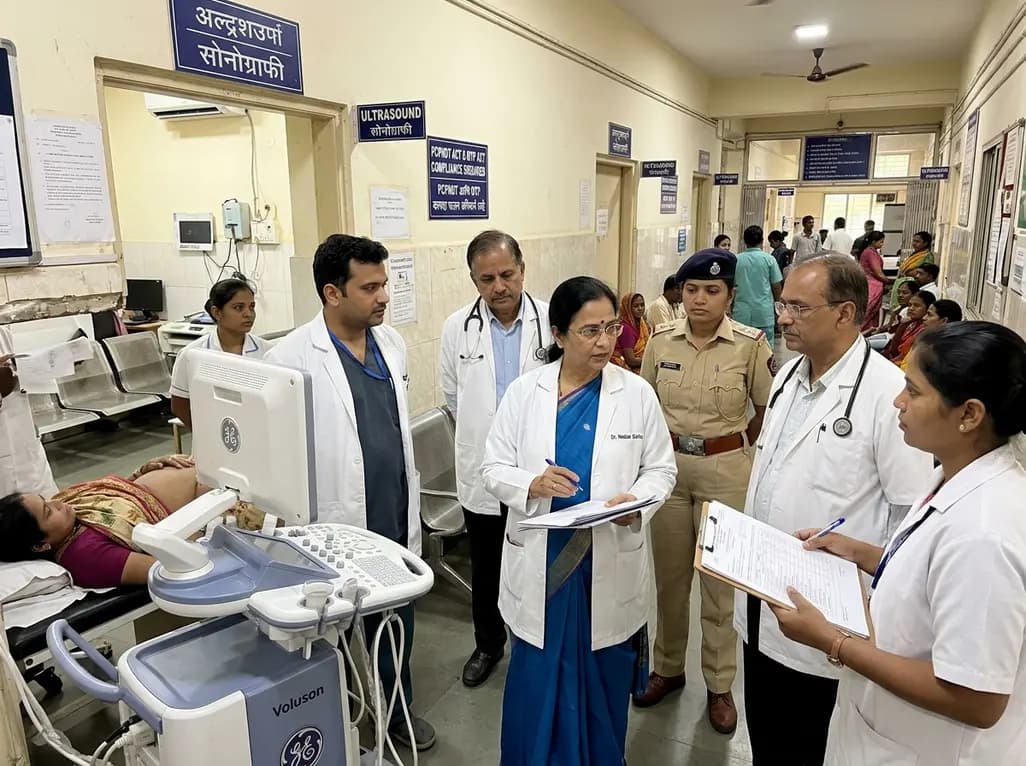
The Maharashtra public health department has established a specialized task force headed by Dr. Neelam Gorhe to eliminate illegal sex determination and unauthorized abortions. The team will execute surprise inspections of ultrasound facilities, audit medical documentation, and enforce strict statutory standards.
2 days back

A major cybersecurity breach disrupted global operations at Boston Scientific, delaying device distribution and remote cardiac monitoring activations. This analysis examines the immediate consequences for clinical catheterization suites, electrophysiology teams, hospital inventory systems, and patient care safety.
2 days back

Nearly 80% of Indians suffer from inadequate Vitamin D, causing silent bone weakening and sudden fractures. This expert guide reviews why mega-dose therapy is critical for high-risk patients, the key factors driving widespread deficiency, and the mandatory medical evaluations needed to protect skeletal health.
2 months ago

A nationwide mixed-methods study evaluated hospital glycemic management systems across 265 hospitals. While real-time alerts and automatic data sync are highly valued, significant disparities in digital maturity and low satisfaction with decision support highlight the need for standardized implementation.
2 weeks back
