

Loading, please wait...
Loading, please wait...
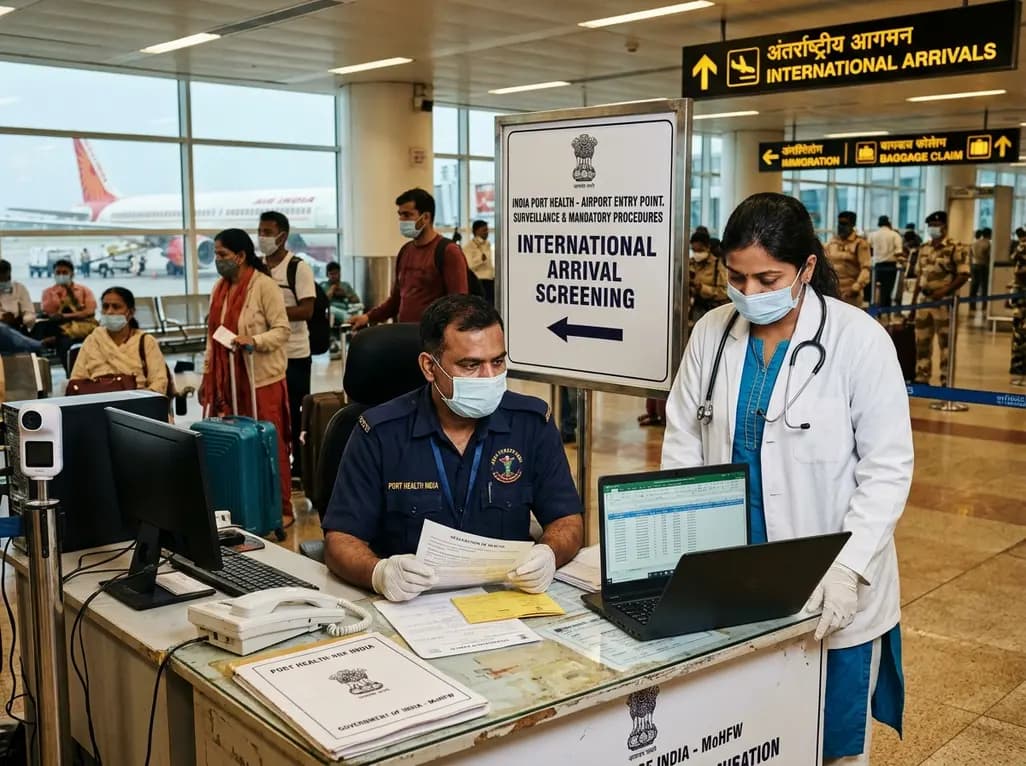
International air travel continues to expand rapidly across modern global transit networks. Consequently, border health surveillance plays a crucial role in safeguarding domestic populations against exotic infectious pathogens. The Union Health Ministry recently issued draft regulations to overhaul maritime and aviation biosecurity frameworks. Specifically, the proposed draft updates the yellow fever quarantine rules for international arrivals who enter without proper immunisation documents. Medical practitioners must understand these regulatory shifts to advise international travelers accurately.
The proposed Indian Aircraft (Public Health) Rules, 2026, intend to replace the seventy-year-old framework of 1954. Under the previous regulations, health authorities could isolate unvaccinated travellers for up to nine days from exposure. However, the newly formulated draft reduces this mandatory isolation window to six days. Health officials calculate this duration strictly from the departure date from the endemic zone. Travellers arriving from high-risk countries like Nigeria, Kenya, or Venezuela without valid vaccination certificates face immediate isolation. Furthermore, incoming passengers must bear all financial expenses associated with their institutional stay. Meanwhile, airlines bear the operational responsibility and costs of transporting non-compliant individuals to designated quarantine facilities. If an arriving passenger refuses to enter quarantine, border authorities can execute immediate deportations directly from transit lounges. Consequently, the individual cannot clear immigration or exit the designated airport transit area. Therefore, travel medicine clinics must emphasize strict pre-departure immunization compliance to avoid costly administrative detentions. Clinicians should educate departing travelers regarding mandatory international vaccination cards well before departure dates. Additionally, healthcare providers must highlight that certificates gain validity only ten days post-vaccination. Thus, timely intervention prevents severe border disruption.
Public health policymakers based the revised quarantine duration on rigorous biological evidence regarding viral incubation dynamics. Yellow fever represents an acute viral hemorrhagic disease caused by an arbovirus of the Flaviviridae family. Clinical studies consistently establish that symptoms typically appear within three to six days following an infectious mosquito bite. Therefore, a six-day observation timeline aligns perfectly with international epidemiological models. In contrast, extending institutional isolation beyond six days offers negligible protective value for disease surveillance. Although early disease manifestations mimic benign viral syndromes with fever and myalgia, severe infections precipitate catastrophic hepatorenal failure. Consequently, patients rapidly develop profound jaundice, extensive coagulopathies, and life-threatening hemorrhages. In India, competent vectors such as Aedes aegypti mosquitoes exist in vast numbers throughout both rural and urban areas. Thus, the introduction of a single viraemic traveller could trigger explosive local outbreaks. Because India remains non-endemic for yellow fever despite high vector abundance, stringent entry safeguards remain vital. Quarantine measures directly isolate potentially viremic individuals, thereby cutting transmission chains before mosquitoes feed. Hence, clinicians must appreciate that these airport restrictions protect the broader healthcare infrastructure against catastrophic epidemic burdens. Ultimately, clinical vigilance at ports prevents widespread community transmission.
Beyond individual traveller quarantine, the 2026 draft rules introduce comprehensive public health oversight across all international airports. Historically, statutory airport surveillance focused almost exclusively on conventional quarantinable infectious diseases. In contrast, the updated legislation addresses emerging pandemics, public health emergencies of international concern, and non-biological threats. Airport Health Officers can now enforce countermeasures against chemical, biological, radiological, nuclear, and explosive hazards. Furthermore, the draft regulations mandate strict vector control within airport perimeters to block vector-borne disease transmission. Airport operators must maintain a vector-free buffer zone extending at least four hundred metres beyond airport perimeters. Consequently, authorities must actively eliminate breeding sites for mosquitoes, rodents, and other disease-carrying pests within this buffer. Additionally, the new draft rules require mandatory disinsection for all arriving international aircraft. Previously, airlines conducted disinsection only when arriving from areas with documented mosquito-borne outbreaks. Now, ground crews must disinfect passenger cabins and cargo holds uniformly. As a result, airport terminals establish an active biological perimeter against imported vectors. These combined biosecurity protocols significantly diminish the risk of introducing exotic insect populations into domestic urban centres. Moreover, rigorous perimeter sanitation reinforces overall airport biosecurity.
Foodborne and waterborne illnesses pose another critical threat to air passengers and local populations alike. Therefore, the draft rules enforce stringent hygiene mandates across flight kitchens and terminal concessions. Airport dining establishments and flight catering kitchens must now obtain formal licensing under the Food Safety and Standards Act. Moreover, Airport Health Officers receive sweeping powers to inspect culinary facilities without prior notification. Officers can promptly seize contaminated ingredients, order immediate food disposal, and shut down non-compliant culinary establishments. Simultaneously, authorities must enforce rigorous water quality monitoring throughout airport premises. Testing laboratories must assess potable water directly at the source, submitting regular diagnostic reports to port health officers. If drinking water sources fail microbiological or chemical standards, officers can close access terminals immediately. In addition, airlines must maintain clean onboard holding tanks to prevent enteric pathogen transmission during long flights. These coordinated measures reflect a modern public health approach that protects passengers from foodborne outbreaks. Consequently, air travel environments will achieve higher sanitary standards comparable to advanced global aviation hubs. Overall, standardized inspection protocols eliminate dangerous gaps in environmental health surveillance. Furthermore, ongoing water testing guarantees safe drinking supplies for millions.
The 2026 draft regulations establish enforceable operational requirements and clear legal obligations for commercial airlines. For instance, carriers must submit accurate passenger manifests and report any onboard illnesses or deaths promptly. Furthermore, Airport Health Officers can demand detailed passenger locator forms, contact details, itineraries, and seat assignments anytime. Importantly, officers may gather this tracing information even outside formal declared public health emergencies. To deter regulatory infractions, the government introduces a structured monetary penalty schedule for non-compliant carriers and facility managers. However, the legislation balances stringent administrative power with essential legal safeguards for operators. Specifically, the framework introduces a transparent, two-stage appeal mechanism against punitive orders issued by health officers. Aggrieved individuals or commercial airlines may submit formal appeals within thirty days of an order. Subsequently, appellate authorities must resolve these legal disputes within sixty days whenever possible. The Health Ministry opened a thirty-day public comment window starting from its mid-November memorandum. Following this consultative phase, the draft will advance to the Ministry of Civil Aviation for formal legislative notification. Ultimately, these checks preserve passenger rights while guaranteeing robust international health security. Thus, balanced governance strengthens overall statutory compliance.
Q1: Why did authorities reduce the yellow fever quarantine duration from nine days to six days?
Authorities updated the isolation period to align strictly with the true biological incubation period of yellow fever. Comprehensive clinical and epidemiological studies demonstrate that the virus incubates within three to six days after transmission. Therefore, observing asymptomatic arriving travellers beyond six days provides no added disease prevention benefit. The revised six-day protocol maintains complete biosecurity while significantly reducing unnecessary financial and logistical burdens on incoming travellers.
Q2: Who bears the costs if an arriving passenger requires mandatory quarantine in India?
Under the proposed 2026 rules, non-compliant arriving travellers must bear all personal financial expenses for quarantine accommodation and medical observation. However, airlines must pay for transporting quarantined individuals safely to approved facilities. Furthermore, if a traveller refuses mandatory isolation, border authorities promptly deny immigration clearance. Consequently, officials deport the non-compliant traveller directly from the airport transit area without permitting any domestic entry.
Q3: How does the new regulatory draft impact clinical travel medicine practice in India?
Clinical travel medicine specialists must rigorously audit patient itineraries before international journeys begin. Because yellow fever certificates become valid only ten days post-administration, clinicians should schedule immunizations well in advance. Moreover, physicians must inform patients that travelling from endemic zones without documentation triggers mandatory quarantine at personal expense. Proactive pre-travel counselling ensures compliance, protects travellers from border denial, and reinforces domestic biosecurity safeguards against arboviral importation.
Disclaimer: This content is for informational and educational purposes only. It does not constitute medical advice or replace professional judgment. Refer to the latest local and national guidelines for clinical practice.
References

Read summarized clinical updates, watch expert medical content, and earn CME certifications right from your smartphone.
Open your smartphone camera to scan and install.





The Ministry of Health and Family Welfare released draft Indian Aircraft (Public Health) Rules, replacing outdated 1954 regulations. The draft curbs isolation periods, mandates strict vector control around airports, tightens flight kitchen hygiene, and broadens port health surveillance across international entry points.
Today
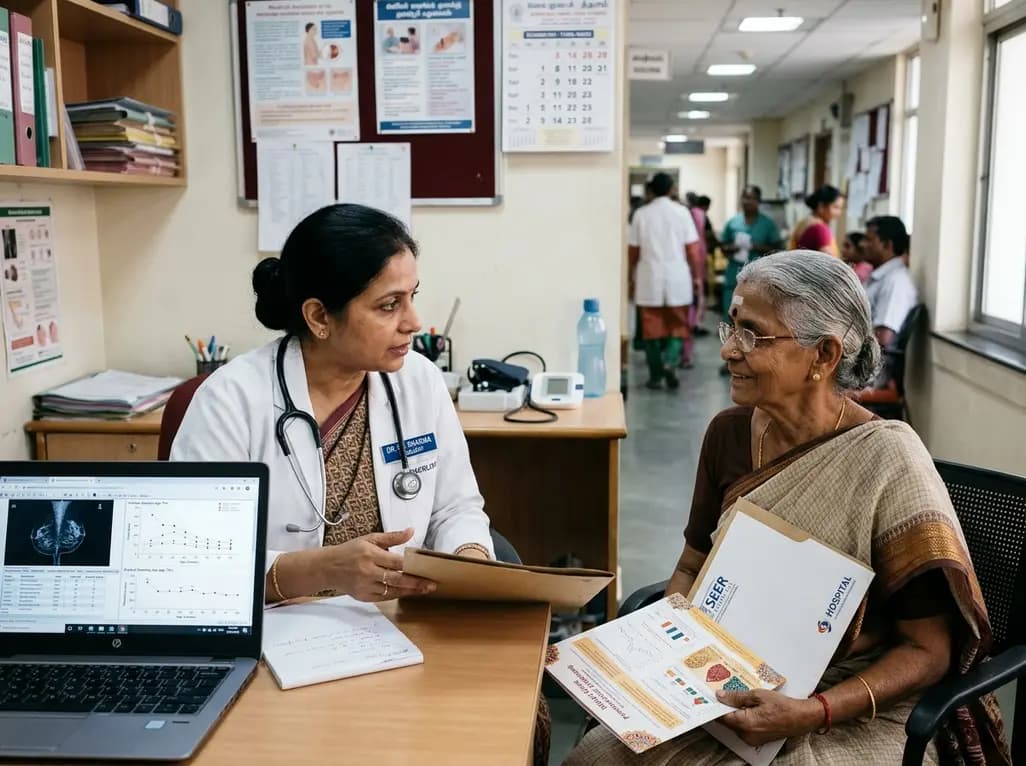
A landmark SEER-Medicare study clarifies the breast cancer screening benefit in women aged 70 and 75. Life-years gained vary significantly based on comorbidity, frailty, and race, highlighting why physicians must personalize screening decisions rather than relying solely on arbitrary chronological age cutoffs.
Today

A new scoping review and expert consensus establish a concise 16-measure performance bundle for hospital cardiology services. Covering clinical processes, outcomes, patient-reported experiences, and structural factors, this framework advances value-based cardiovascular care under universal health coverage.
Today

A paired cadaveric study compared triple and quintuple percutaneous Achilles tendon lengthening. While quintuple hemisection showed numerically greater elongation, differences were not statistically significant.
Today

Partial adrenalectomy for pheochromocytoma provides near 100% cure rates while preserving adrenal function in hereditary cases like VHL and MEN2. Despite a 13-15% local recurrence rate, it prevents lifelong steroid dependence without increasing mortality when supported by structured surveillance.
Today
