.webp&w=384&q=75)

Loading, please wait...
Loading, please wait...
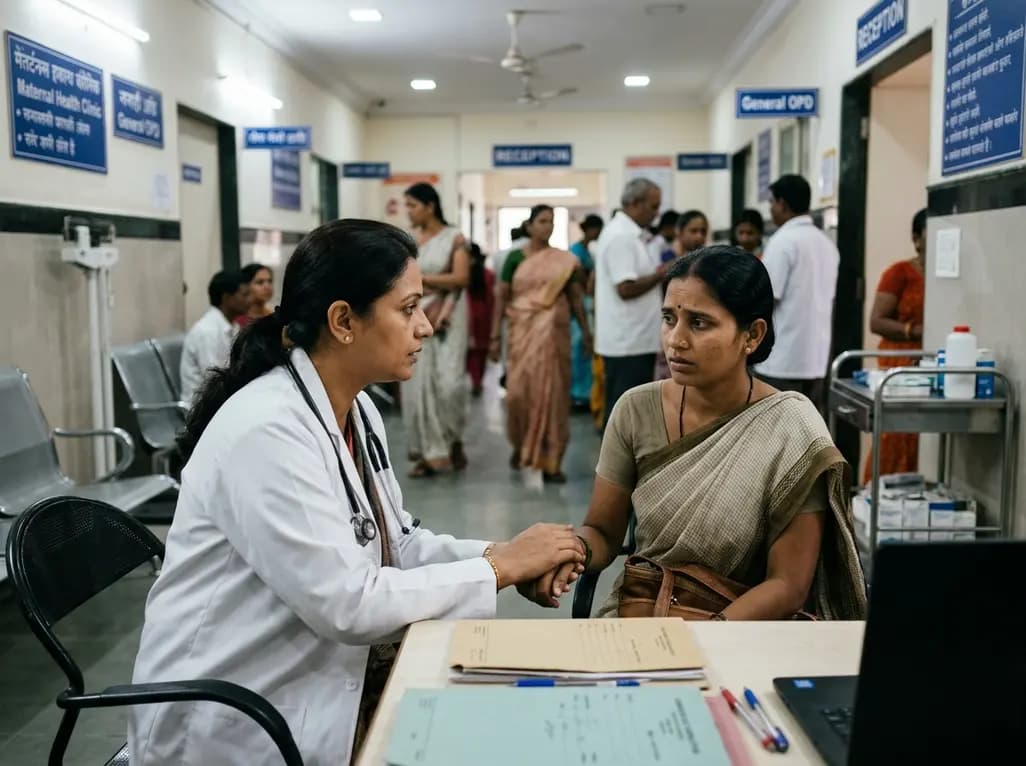
Public health models have long described HIV prevention among women as a linear movement from risk recognition to protective action. However, recent longitudinal qualitative research underscores the profound impact of socio-economic fluctuations on sustained harm reduction. When socio-economic safety nets weaken, women HIV prevention instability frequently emerges, undermining previously established protective habits. Female autonomy in health decision-making depends heavily on broader societal conditions. Consequently, public health interventions that assume static behavioral adoption often fail to account for how shifting personal circumstances disrupt long-term risk management. In settings affected by economic insecurity and gender inequality, individual commitment alone cannot guarantee continuous protection. Clinicians and public health strategists must recognize that prevention capacity fluctuates over time due to external environmental pressures. By examining temporal dynamics in community health, practitioners can better understand how financial shocks, changing relationship dynamics, and structural barriers directly alter a woman's ongoing capacity to negotiate safe practices and access essential preventive health services.
Traditional public health frameworks often conceptualize HIV prevention as a single event or a permanent lifestyle change. Nevertheless, longitudinal qualitative research in Sierra Leone demonstrates that risk mitigation is dynamic and highly sensitive to external conditions. Over a twelve-month follow-up period, researchers observed that women who initially demonstrated robust negotiating power regarding HIV testing and condom usage frequently lost this capacity when their social or financial circumstances deteriorated. Conversely, some participants who initially faced high exposure successfully established protective routines after gaining economic independence or accessing supportive social networks. Therefore, health behaviors should be evaluated as fluid trajectories rather than permanent achievements. Recognizing these temporal shifts allows clinicians to understand why previously compliant patients may suddenly face elevated exposure. Sustained protection requires continuous structural reinforcement rather than one-time behavioral counseling. Consequently, healthcare providers must routinely reassess an individual's socio-economic stability to deliver effective, long-term preventative care.
Economic vulnerability remains one of the primary drivers disrupting long-term preventive behaviors among women in low-resource settings. When household income declines sharply, women often experience reduced bargaining power within intimate partnerships. Consequently, financial insecurity forces many individuals to prioritize immediate survival needs, such as shelter and food, over routine preventive healthcare. In many cases, economic dependence on male partners severely restricts a woman's ability to demand barrier methods or request joint HIV screening. Furthermore, sudden financial losses often impair access to transportation, hindering visits to community clinics for regular testing or pre-exposure prophylaxis refills. When public health programs fail to address underlying economic volatility, clinical interventions achieve only temporary success. Therefore, integrating microfinance opportunities, vocational empowerment, and social support mechanisms into healthcare delivery serves as a crucial strategy for maintaining protective behaviors over extended periods.
Navigating intimate partner dynamics represents a central challenge in mitigating women HIV prevention instability within patriarchal social structures. Male partner attitudes heavily dictate whether a woman can successfully sustain protective measures over time. Qualitative findings from Sierra Leone categorize male orientations into distinct typologies: protective complicity, dismissive gatekeeping, and fearful avoidance. Partners exhibiting protective complicity actively support testing and mutual safety, thereby creating a secure environment for continuous prevention. In contrast, dismissive gatekeepers actively minimize HIV risks and restrict access to reproductive health services, while fearful avoiders shun testing due to pervasive social stigma. Understanding these male partner typologies provides valuable insights for clinical practice. When healthcare systems engage male partners constructively while protecting female privacy, they significantly reduce interpersonal barriers to care. Therefore, multi-faceted interventions must target male attitudes alongside female empowerment to prevent abrupt disruptions in preventive practices.
Relational safety within intimate partnerships is inherently tied to male partner attitudes and broader structural stability. When relationship safety deteriorates due to domestic conflict, infidelity concerns, or economic stress, a woman's capacity to negotiate safe sex diminishes rapidly. Male partners displaying dismissive gatekeeping often view prevention requests with suspicion, interpreting them as accusations of infidelity. This reaction frequently leads to domestic resistance or emotional coercion, forcing women to abandon protective practices to maintain domestic stability. Furthermore, fearful avoidance among men creates a culture of silence around sexual health, preventing open communication about status disclosure and testing. Healthcare workers must acknowledge these interpersonal power dynamics when designing clinical outreach programs. Offering discreet prevention options, such as confidential testing services and discreet pre-exposure prophylaxis, protects women from domestic backlash while maintaining continuous protection despite male partner opposition.
Restoring protective agency among vulnerable women requires resilient health systems and sustained community-level interventions. Although structural instability can dismantle protective habits, women can actively rebuild their agency when supported by accessible healthcare infrastructure. Longitudinal data shows that consistent engagement with community health workers, peer support groups, and local economic initiatives enables women to overcome severe relational and financial setbacks. Community health workers play a vital role by providing non-judgmental counseling, mobile health services, and confidential referrals. Furthermore, continuous service accessibility reduces logistical barriers, ensuring that disruptions in personal life do not translate into immediate gaps in HIV prevention. Public health initiatives must move away from short-term educational campaigns toward durable, community-rooted support systems. By combining clinical care with community-level social safety nets, healthcare systems can effectively protect women from structural volatility and promote lasting harm reduction.
Structural instability, including sudden economic distress, loss of income, and domestic disharmony, severely impairs a woman's ability to maintain protective health behaviors. Financial dependence often reduces a woman's negotiating power regarding safe sex practices, while logistical barriers cut off access to clinical testing and pre-exposure prophylaxis. Consequently, structural instability turns previously effective preventive actions into fragile, temporary behaviors, highlighting the critical need for continuous social and financial support systems.
Male partner attitudes significantly influence female prevention capacity. Research identifies three distinct male partner orientations: protective complicity, dismissive gatekeeping, and fearful avoidance. Supportive partners facilitate joint testing and protective negotiation. Conversely, dismissive or fearful partners actively restrict access to services, view protection requests with suspicion, or avoid sexual health discussions altogether. Public health interventions must address these partner dynamics to ensure safe, continuous access to preventive care for women.
Healthcare providers can support sustained prevention by offering confidential, highly accessible health services that protect patient privacy. Integrating economic empowerment initiatives, peer support networks, and community health worker outreach directly reinforces female agency during periods of socio-economic vulnerability. Additionally, clinicians should routinely assess social determinants of health and relationship safety rather than assuming that initial behavioral counseling will guarantee long-term adherence to protective health measures.
Disclaimer: This content is for informational and educational purposes only and does not constitute medical advice, diagnosis, or treatment. Healthcare professionals should rely on their professional clinical judgment and refer to the latest local and national guidelines for clinical practice.
References

Read summarized clinical updates, watch expert medical content, and earn CME certifications right from your smartphone.
Open your smartphone camera to scan and install.





A longitudinal qualitative study in Sierra Leone highlights how financial deterioration, partner dynamics, and structural barriers cause instability in women's HIV prevention strategies, underscoring the need for sustained public health interventions.
3 months ago

As monsoon seasons elevate arboviral disease threats, Tamil Nadu has initiated an ICMR-monitored evaluation of the tetravalent dengue vaccine in Tenkasi district. Clinicians emphasize clinical monitoring, public prevention, and high-quality early pediatric care to reduce disease morbidity across endemic regions.
Today

A comparative cohort study evaluates vNOTES vs TLH hysterectomy for benign conditions, demonstrating shorter operative duration, faster return to daily activities, and equivalent female sexual function scores without increased dyspareunia.
Today

Review how tailored exercise programs benefit frail older patients with heart failure. Explore pathophysiological mechanisms, individualized training prescriptions, and strategies to overcome adherence barriers in clinical practice.
Yesterday

This comparative study evaluates posterior labral tears with and without glenohumeral instability, highlighting distinct demographic patterns, MRI underestimation in stable shoulders, and successful arthroscopic repair outcomes.
Yesterday

A clinical study demonstrates that early intervention with tocilizumab, either as monotherapy or bridged with corticosteroids, achieves significant proptosis reduction and resolves active inflammation in treatment-naive thyroid eye disease.
Today
