.webp&w=384&q=75)

Loading, please wait...
Loading, please wait...
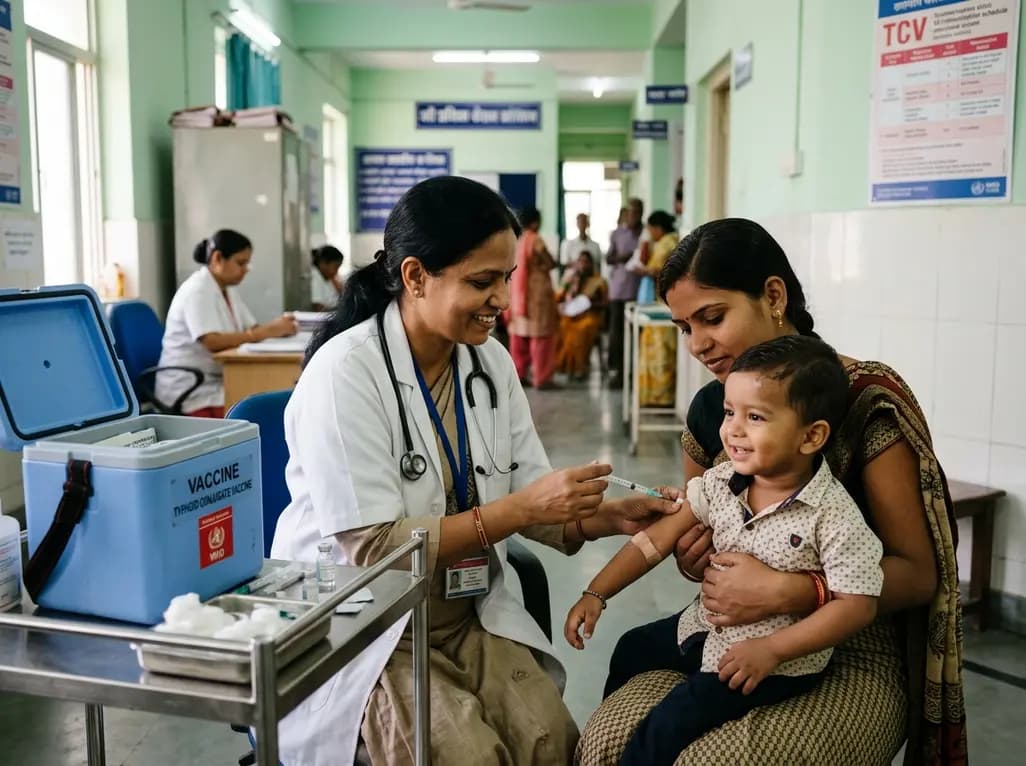
Typhoid fever remains a formidable public health challenge across low- and middle-income nations. Recently, the World Health Organization released revised guidance on the administration of the typhoid conjugate vaccine to mitigate severe morbidity and rising drug resistance. In India alone, mathematical modeling indicates that millions of individuals contract enteric fever each year. Furthermore, children bear the overwhelming brunt of this disease burden. Traditional treatment regimens are failing rapidly due to extensive antimicrobial resistance. Consequently, health authorities are urging immediate programmatic interventions to protect vulnerable populations. This clinical update synthesizes the newest recommendations, epidemiological data, and practical implementation pathways for medical professionals.
Recent epidemiological surveillance highlights the urgent need for robust preventive measures across India. A landmark study published in The Lancet Regional Health – Southeast Asia estimated 4.9 million cases of typhoid fever in India in 2023. Additionally, the analysis documented approximately 7.3 lakh hospital admissions and 7,850 associated fatalities during the same calendar year. Crucially, the data revealed an alarming prevalence of antimicrobial resistance. Fluoroquinolone-resistant strains of Salmonella enterica serovar Typhi accounted for approximately 6 lakh hospital admissions, representing 82% of all severe inpatient cases. Furthermore, clinician reports continue to identify sporadic clusters of carbapenem-resistant isolates in major metropolitan tertiary centers. Geographic clustering is particularly pronounced in states such as Delhi, Maharashtra, and Karnataka, which collectively account for nearly 30% of the nationwide burden. Pediatric demographics demonstrate heightened vulnerability to invasive clinical disease. Children between 5 and 9 years of age represent 36% of treated cases. Meanwhile, adolescents aged 10 to 14 years account for 27%, and toddlers aged 6 months to 4 years constitute 25%. Therefore, escalating resistance severely restricts oral treatment choices and forces healthcare providers toward expensive parenteral antimicrobial alternatives.
To counter the expanding threat of drug resistance, the World Health Organization has refreshed its global immunization guidance. The updated position paper recommends introducing the typhoid conjugate vaccine into national routine schedules in areas with high or very high incidence. Furthermore, international health experts emphasize deploying the vaccine in regions with elevated case-fatality rates or documented circulation of resistant Salmonella Typhi. Health agencies recommend administering the primary dose between 9 and 24 months of age. This approach ensures robust early-life immunogenicity compared to older unconjugated polysaccharide formulations. Unlike legacy vaccines, conjugated formulations generate strong T-cell dependent immune responses that provide superior, long-lasting immunological memory. Additionally, the World Health Organization advocates for broad catch-up vaccination campaigns when introducing the vaccine into regional schedules. Such catch-up initiatives should prioritize children and adolescents up to 15 years of age, depending on local epidemiology and logistical resources. Consequently, widespread population coverage rapidly suppresses transmission dynamics within high-risk communities. Clinical evidence demonstrates that conjugate platforms maintain favorable safety and efficacy profiles across pediatric cohorts. Therefore, prioritizing routine childhood immunization remains an essential pillar for global enteric fever control.
Determining optimal dosing intervals represents a central component of the revised global guidance. In settings characterized by very high disease incidence, health authorities now suggest considering a booster dose approximately five years after the initial infant dose. Longitudinal studies indicate that protective antibody titers can decline gradually over several years following early primary vaccination. Consequently, an additional dose reinforces circulating humoral immunity just as children enter school-age environments where exposure risks increase substantially. For high-incidence settings, program managers should evaluate booster policies if local surveillance demonstrates waning clinical protection. Furthermore, public health administrators must weigh multiple operational factors when formulating national schedules. These critical factors include overall disease burden, antimicrobial resistance trends, cost-effectiveness analyses, and healthcare system feasibility. Notably, even a single primary dose provides substantial individual protection and reduces hospitalizations markedly across vulnerable pediatric populations. Clinicians should nevertheless monitor antibody persistence and longitudinal protection patterns through robust surveillance networks. Thus, tailored booster strategies ensure sustained immunity throughout high-risk childhood years, bridging critical immunological gaps effectively.
The updated global guidance carries immediate implications for healthcare delivery and preventive medicine in India. In 2022, the National Technical Advisory Group on Immunisation formally recommended incorporating TCV into India's Universal Immunisation Programme. Furthermore, repeated cost-effectiveness analyses consistently support the nationwide introduction of conjugate vaccines across public healthcare platforms. Senior scientists at the Indian Council of Medical Research emphasize that routine deployment is both medically justified and exceptionally urgent. Specifically, health specialists suggest integrating the vaccine at the established 18-month pediatric immunization visit alongside the second measles-containing dose. Aligning vaccination delivery with pre-existing healthcare touchpoints maximizes operational efficiency and boosts parental compliance without straining primary care infrastructure. Moreover, public health experts highlight that administering even a single primary dose will substantially decrease nationwide disease incidence and severe hospital admissions. In high-burden metropolitan centers, policymakers can also evaluate school-entry booster campaigns if active microbiological surveillance confirms waning immunity. Therefore, swift integration into government immunization schedules will safeguard vulnerable pediatric populations across all socioeconomic strata.
Although immunization represents a powerful weapon against bacterial pathogens, it cannot function as a standalone solution. The World Health Organization stresses that vaccination must complement fundamental water, sanitation, and hygiene infrastructure. Salmonella Typhi spreads primarily through contaminated water sources and unhygienic food handling. Therefore, municipal investments in safe drinking water pipelines, modern sewage management, and improved public sanitation remain indispensable for long-term disease reduction. In addition, strengthening food safety standards across street food vendors and commercial establishments directly limits enteric exposure risks. Clinicians must also champion rational antimicrobial stewardship within outpatient clinics and tertiary hospitals. Empirical overprescription of fluoroquinolones and cephalosporins has accelerated the emergence of multidrug-resistant bacterial strains across South Asia. Consequently, healthcare professionals should utilize reliable blood culture diagnostics to ensure targeted, evidence-based antimicrobial therapy whenever feasible. Educating families on hand hygiene, safe water purification methods, and prompt healthcare seeking further enhances community resilience. Ultimately, combining widespread immunization with robust municipal sanitation and antimicrobial stewardship provides the only sustainable defense against endemic typhoid.
Q1: At what age should children receive the typhoid conjugate vaccine under the revised guidelines?
Under the revised World Health Organization recommendations, infants and young children in high or very high incidence settings should receive their primary dose of the typhoid conjugate vaccine between 9 and 24 months of age. Furthermore, health authorities recommend catch-up immunization campaigns for older children and adolescents up to 15 years of age to establish broad community-level immunity and interrupt bacterial transmission.
Q2: Why is the World Health Organization advising booster doses of the typhoid conjugate vaccine?
The World Health Organization advises considering a booster dose approximately five years after initial infant vaccination in areas with very high typhoid incidence. Clinical surveillance indicates that antibody titers can gradually decline over several years following early primary vaccination. Consequently, a booster dose given around school entry restores high antibody levels, ensuring continuous protection during years of elevated exposure.
Q3: How does rising antibiotic resistance impact typhoid fever management in India?
Rising antibiotic resistance severely limits standard oral treatment options for typhoid fever in India, with over 80% of hospital admissions linked to fluoroquinolone-resistant strains. Consequently, clinicians must increasingly rely on expensive intravenous antibiotics, such as third-generation cephalosporins or carbapenems. This escalates healthcare expenditures, prolongs hospital stays, and underscores the urgent necessity of preventive vaccination alongside strict antimicrobial stewardship.
Disclaimer: This content is for informational and educational purposes only. It does not constitute medical advice or replace professional judgment. Refer to the latest local and national guidelines for clinical practice.
References

Read summarized clinical updates, watch expert medical content, and earn CME certifications right from your smartphone.
Open your smartphone camera to scan and install.





The World Health Organization has revised its guidance on typhoid conjugate vaccines, recommending primary vaccination at 9-24 months and targeted boosters in high-burden settings. With nearly 5 million cases estimated in India annually and surging antimicrobial resistance, experts urge rapid universal introduction.
4 weeks back

Red blood cell transfusion is critical in sickle cell disease management but brings significant immunological complexity, including alloimmunisation and iron overload. Extended RBC phenotyping and tailored protocols optimize clinical safety.
Today
Discover the crucial distinctions between mesonephric and mesonephric-like proliferations of the female genital tract. Learn the key histomorphologic, immunohistochemical, and molecular differences essential for accurate diagnosis and clinical management.
Today
A large UK Biobank study reveals that plasma proteomic signatures capture preclinical organ damage and improve multiorgan risk prediction across early CKM syndrome stages 0 to 2 beyond traditional PREVENT clinical models.
Today

A retrospective CBCT study reveals that superior TMJ space asymmetry correlates moderately with occipital condyle-atlas-axis asymmetry in unilateral TMJ osteoarthritis, highlighting an imaging correlate between jaw biomechanics and upper cervical alignment rather than a standalone diagnostic marker.
Today

A Bayesian multilevel meta-analysis reveals that aerobic training combined with moderate carbohydrate restriction modestly lowers HbA1c in type 2 diabetes. However, sparse data and very low certainty leave incremental benefits over exercise or diet alone unproven, highlighting the need for individualized care.
Today
