.webp&w=384&q=75)

Loading, please wait...
Loading, please wait...

The World Health Organization (WHO) South-East Asia Region recently emphasized the necessity of a One Health approach to mitigate complex health threats. On World Health Day 2026, officials urged nations to adopt science-led policies. This strategy focuses on the intersection of human, animal, and environmental health. Dr. Catharina Boehme highlighted that climate variability and evolving disease patterns now drive significant regional risks. Consequently, clinical preparedness must rely on evidence-based actions to protect vulnerable populations effectively.
A major development involves the South Asia Hub of the Global Heat Health Information Network. This initiative, supported by the Council on Energy, Environment and Water (CEEW), integrates climate science with public health action. Furthermore, the Hub collaborates with the India Meteorological Department to provide early warnings for extreme heat. This proactive stance ensures that scientific evidence translates into practical safety measures for communities. Scientists must prioritize data sharing to enhance these surveillance systems across borders.
Regional countries are already showcasing successful models of collaboration. For example, India is currently expanding digital surveillance to include diverse data streams for early disease detection. Similarly, Thailand uses a whole-of-government method to respond to emerging infectious diseases. Bangladesh has also strengthened its integrated dengue surveillance to predict outbreaks more accurately. These efforts demonstrate that interoperable systems and sustained investment in analytics are vital for regional health security.
Q1: What is the primary focus of the One Health approach mentioned by WHO?
The focus is on integrating human, animal, and environmental health sectors. This cross-sectoral collaboration helps address risks from climate change and zoonotic diseases more effectively.
Q2: How is India contributing to this regional health initiative?
India is expanding its digital surveillance and early warning systems. These systems incorporate multiple data streams to improve the detection and response to health emergencies.
Disclaimer: This content is for informational and educational purposes only. It does not constitute medical advice or replace professional judgment. Refer to the latest local and national guidelines for clinical practice.
References

Read summarized clinical updates, watch expert medical content, and earn CME certifications right from your smartphone.
Open your smartphone camera to scan and install.





WHO South-East Asia calls for science-led action and a One Health approach to address climate risks and infectious diseases, marking World Health Day 2026....
6 months ago
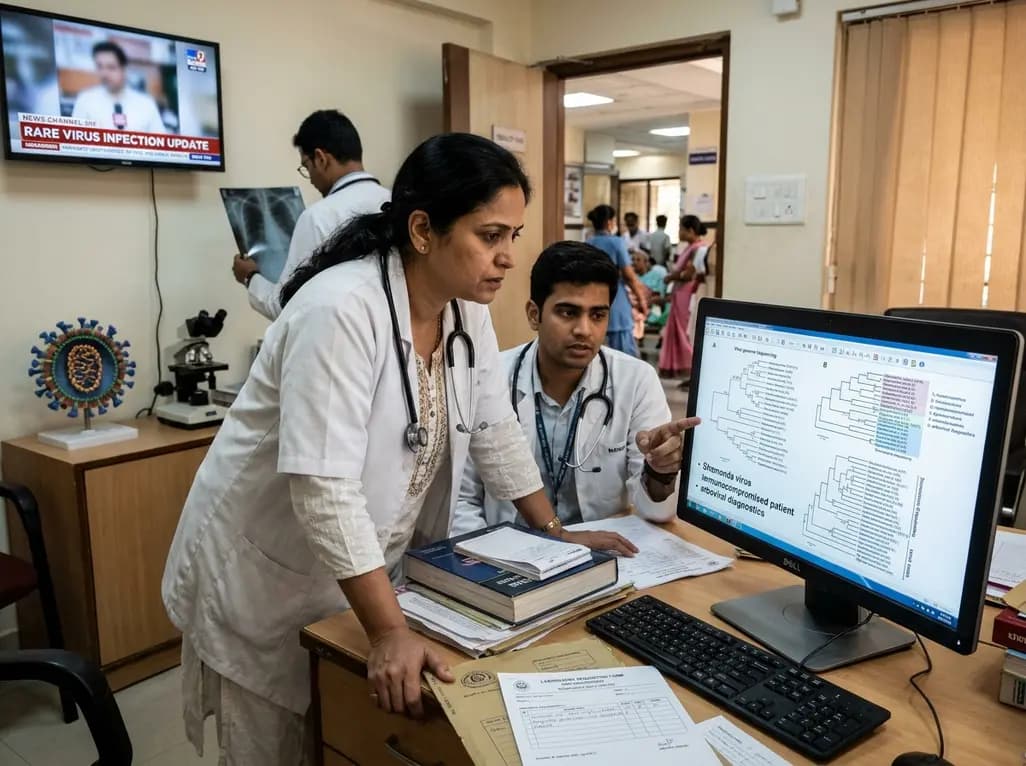
Health authorities recently identified the first documented human infection of Shamonda virus in an immunocompromised individual in France. While the World Health Organization currently assesses wider transmission risk as very low, the event highlights critical One Health vectors and arboviral diagnostic awareness.
Today
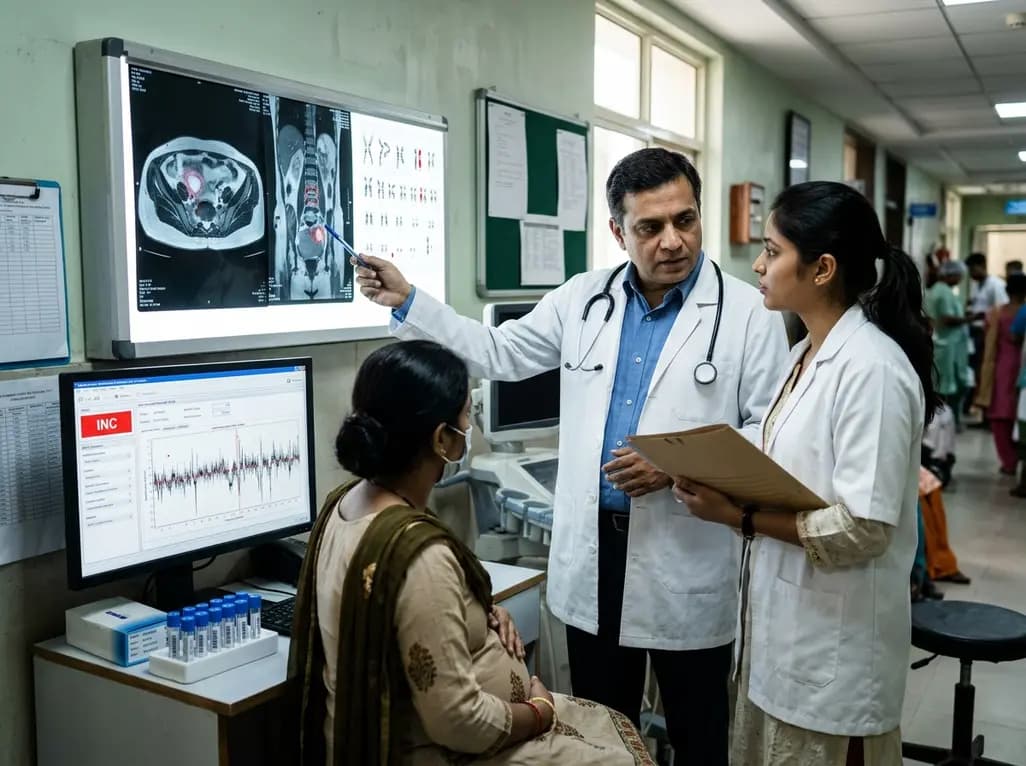
Occult maternal malignancy accounts for 3.82% of persistent unreportable NIPT results with genomic noise. Multiple chromosomal aberrations, notably on chromosome 18, warrant thorough oncological evaluation and whole-body MRI to ensure timely maternal diagnosis while preserving fetal care.
Today
This article reviews the forensic and clinical complexities of acute myocarditis arising on left ventricular hypertrophy in children, highlighting early diagnostic red flags and multidisciplinary postmortem autopsy protocols.
Today

A randomized controlled trial demonstrates that an eight-week dual-task training intervention significantly improves static and dynamic postural control over standard balance exercises in individuals with chronic ankle instability, addressing critical neurocognitive deficits during athletic and daily activities.
Today

A retrospective cohort study of 7,716 ICU patients from the MIMIC-IV database demonstrates that Gradient Boosting Decision Trees significantly outperform traditional SOFA scores in predicting in-hospital mortality among patients with sepsis and diabetes, with SHAP analysis providing clinical interpretability.
Today
