.webp&w=384&q=75)

Loading, please wait...
Loading, please wait...
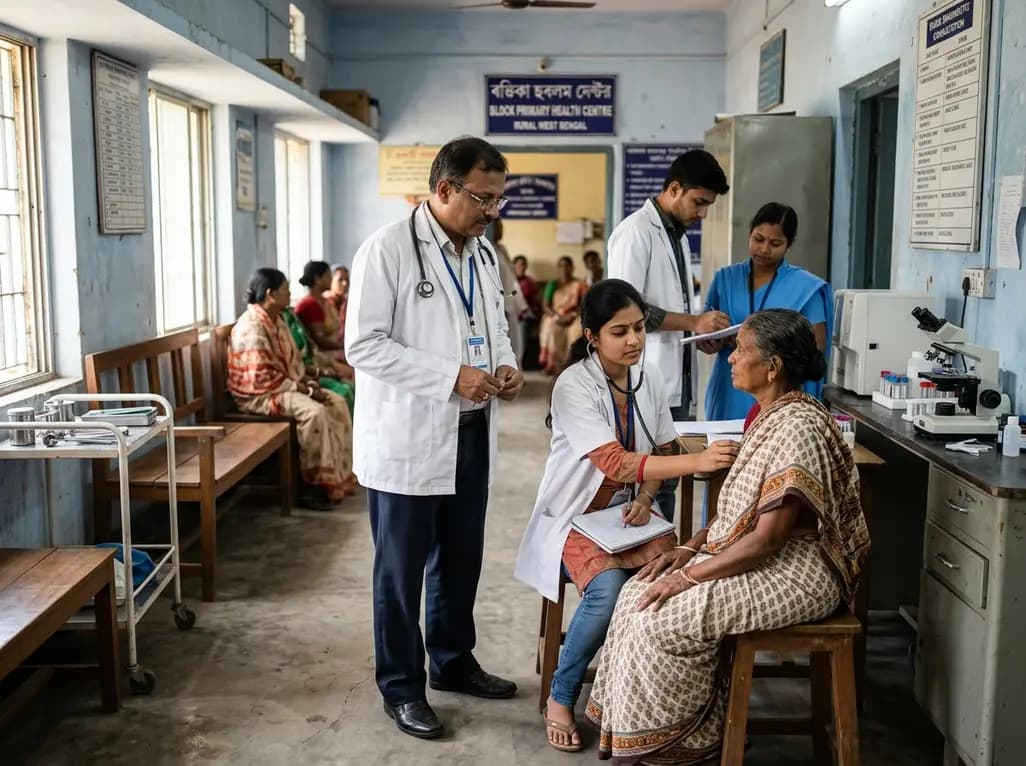
The West Bengal government is actively formulating a pioneering public-private collaboration to revitalize primary health infrastructure across rural districts. State health authorities are exploring an operational framework that connects established private medical colleges with government-administered Block Primary Health Centres (BPHCs). This proposed rural healthcare partnership aims to address critical diagnostic gaps while simultaneously broadening clinical exposure for undergraduate and postgraduate medical trainees. By establishing a symbiotic resource-sharing network, the administration plans to elevate primary healthcare standards and bridge existing geographic health disparities throughout peripheral communities.
The structural blueprint of this initiative relies on a reciprocal operational model between state health authorities and private medical academies. Currently, West Bengal houses 17 operational private medical institutions. Under the preliminary roadmap, the health department plans to assign approximately 10 BPHCs to each private medical institution for sustained mentorship and technical support. Consequently, this distribution could extend institutional support to roughly 170 peripheral health centres across diverse districts.
Health officials have outlined a balanced division of institutional responsibilities. The state government will actively channel rural patient flow to these primary centres through established administrative pathways. In return, private medical colleges will invest in critical diagnostic equipment and deploy skilled paramedical personnel. Therefore, the collaboration creates a self-sustaining ecosystem where neither sector carries the entire operational burden alone.
Furthermore, this framework facilitates structured administrative oversight without altering the public ownership of rural health centres. State authorities maintain regulatory governance, while private institutions provide operational dynamism and specialized management expertise. As a result, rural populations gain direct access to enhanced primary care services without navigating complex administrative barriers.
Peripheral healthcare facilities in India frequently face resource bottlenecks, particularly regarding advanced diagnostic instrumentation and specialized nursing personnel. Many rural BPHCs struggle to deliver timely investigations due to the absence of modern laboratory analysers and imaging tools. Consequently, patients often travel long distances to tertiary district hospitals for routine clinical tests.
Under the new collaborative model, private medical colleges will directly supply essential diagnostic machinery to their assigned BPHCs. Specifically, these institutions will install ultrasonography units and semi-automated biochemistry analysers to facilitate rapid bedside investigations. In addition, private colleges will deploy trained nursing professionals to assist local health teams and standardize nursing protocols.
Simultaneously, the state government will provide qualified medical officers, general duty doctors, and administrative staff to manage routine clinical operations. This dual deployment strategy prevents workforce burnout among existing government clinicians while modernizing basic healthcare delivery. Moreover, rapid point-of-care diagnostics will significantly shorten diagnostic turnaround times for acute conditions. Ultimately, strengthening peripheral facilities reduces unnecessary referrals, allowing tertiary medical centres to focus resources on complex, high-acuity interventions.
Clinical education in modern medicine depends fundamentally on direct and diversified patient interaction. Medical trainees require continuous bedside exposure to understand the natural history of diseases and primary care management. However, urban private medical colleges occasionally experience limited inpatient bed occupancy or skewed demographic representation. Consequently, students may encounter fewer community-acquired infectious diseases and maternal-child health presentations.
Standard BPHCs typically house approximately 20 indoor beds and cater to 30 or more daily admissions, alongside heavy outpatient footfalls. Therefore, integrating these centres into academic curricula provides trainees with an expansive, real-world clinical base. Undergraduate students and interns can observe common tropical illnesses, obstetric emergencies, pediatric infections, and chronic lifestyle disorders at their point of origin.
Furthermore, direct involvement in rural health delivery instills essential community medicine competencies in future medical practitioners. Trainees learn to appreciate epidemiological determinants of health, including sanitation, nutrition, and local socioeconomic barriers. As a result, students develop empathetic communication skills and resourceful diagnostic acumen in resource-limited settings. Medical educators emphasize that treating real patients in high-volume rural clinics builds clinical confidence far more effectively than theoretical simulations.
The mentorship model establishes a functional bridge between peripheral health clinics and advanced tertiary medical institutions. When primary centres identify complex clinical cases, they can leverage formal referral pathways directly into mentoring medical college hospitals. Consequently, critically ill patients receive timely escalation of care without enduring prolonged diagnostic delays.
In addition, the collaborative arrangement fosters continuous medical education and peer-to-peer knowledge exchange. Senior faculty members and specialists from private teaching hospitals can conduct periodic specialty outreach camps at assigned BPHCs. For instance, visiting consultants in obstetrics, pediatrics, and internal medicine can review challenging cases alongside rural medical officers.
Simultaneously, local healthcare staff gain valuable hands-on exposure to updated clinical management protocols and modern diagnostic technologies. This continuous professional interaction elevates the general standard of practice across primary care units. Moreover, structured digital health linkages and telemedicine connections can enable real-time tele-consultations between BPHC clinicians and tertiary specialists. Ultimately, these integrated care networks strengthen health system resilience and build community trust in local primary care delivery.
The proposed mentorship initiative represents one component of a broader strategic overhaul of West Bengal's healthcare landscape. Alongside public-private collaborations, the state government is establishing six new government medical colleges to expand undergraduate medical seats. Furthermore, administrative planning is underway to develop an AIIMS-like apex medical institute in North Bengal and a specialized trauma care centre in South Bengal.
However, transitioning this BPHC partnership from conceptual policy to ground-level implementation requires comprehensive multi-stakeholder consultations. State health administrators are currently conducting structured discussions with private medical college associations to address operational parameters. Key aspects under evaluation include medico-legal responsibilities, equipment maintenance protocols, paramedical duty rosters, and transportation logistics for rotating medical students.
In addition, transparent performance benchmarks and digital monitoring mechanisms will prove essential to assess program outcomes over time. Authorities must ensure clear clinical audit frameworks to track patient satisfaction, diagnostic accuracy, and referral efficiency. If successfully implemented, this innovative model could serve as a national template for integrating private academic infrastructure with public health delivery systems across rural India.
Q1: What is the primary objective of the proposed BPHC partnership in West Bengal?
The primary objective is to establish a collaborative operational framework between private medical colleges and government-run Block Primary Health Centres. The partnership seeks to upgrade grassroots diagnostic infrastructure, provide skilled nursing personnel, and expand clinical patient exposure for medical students. Consequently, rural populations receive superior primary care services while medical trainees gain indispensable practical experience managing diverse community pathology.
Q2: What specific contributions will private medical colleges make under this arrangement?
Private medical colleges will contribute advanced diagnostic equipment, including bedside ultrasonography machines and semi-automated biochemistry analysers, to their assigned primary centres. In addition, these institutions will deploy qualified nursing professionals and technical staff. In return, the state government maintains patient inflow and supplies medical officers, establishing a balanced partnership that strengthens rural healthcare delivery without overburdening public resources.
Q3: How many health centres will each private medical college mentor?
Under the proposed administrative framework, each of West Bengal's 17 operational private medical colleges will mentor approximately 10 Block Primary Health Centres. Therefore, this initiative can potentially modernize infrastructure and diagnostic capacity across roughly 170 peripheral facilities statewide. This extensive coverage ensures that rural communities receive standardized diagnostic care while medical colleges maintain robust community-based clinical teaching bases.
Disclaimer: This content is for informational and educational purposes only. It does not constitute medical advice or replace professional judgment. Refer to the latest local and national guidelines for clinical practice.
References

Read summarized clinical updates, watch expert medical content, and earn CME certifications right from your smartphone.
Open your smartphone camera to scan and install.





West Bengal is evaluating a collaborative model linking 17 private medical colleges with Block Primary Health Centres (BPHCs). The initiative aims to upgrade rural diagnostic infrastructure, enhance nursing staffing, and provide medical students with essential clinical patient exposure at grassroots facilities.
4 weeks back
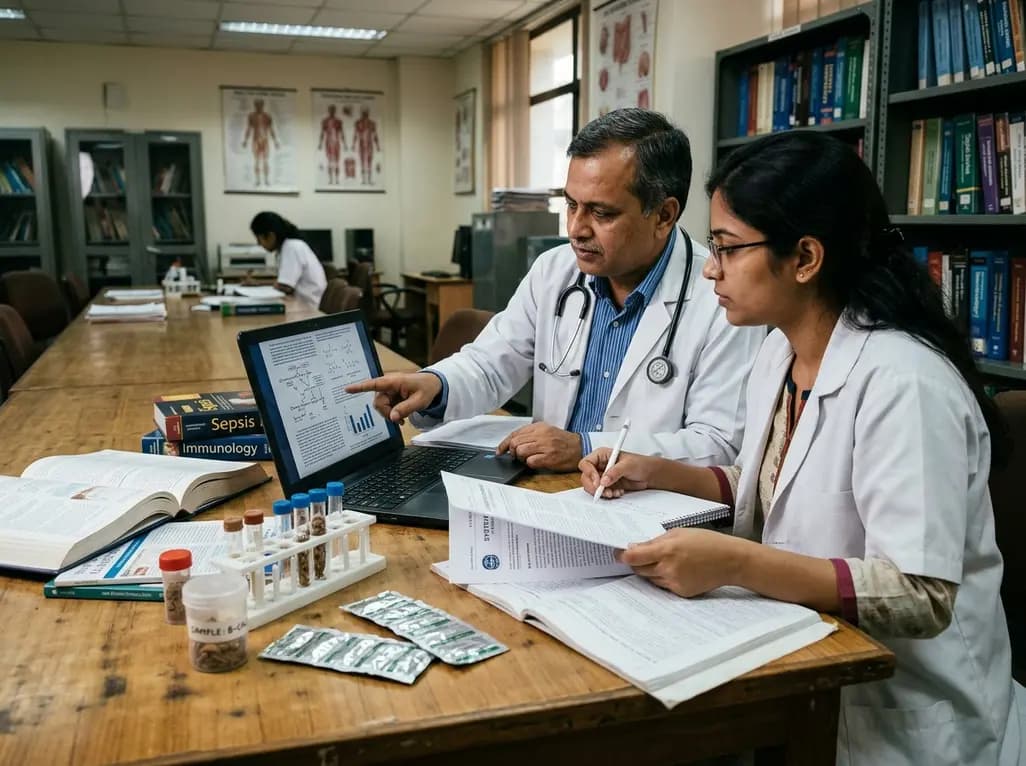
A systematic review of 41 preclinical studies reveals that baicalin dampens systemic inflammation, inhibits NF-κB and NLRP3 pathways, and improves organ preservation in sepsis models. However, substantial study heterogeneity and a complete lack of human clinical trials highlight the need for further translational research.
Today

Discover the crucial distinctions between mesonephric and mesonephric-like proliferations of the female genital tract. Learn the key histomorphologic, immunohistochemical, and molecular differences essential for accurate diagnosis and clinical management.
Today
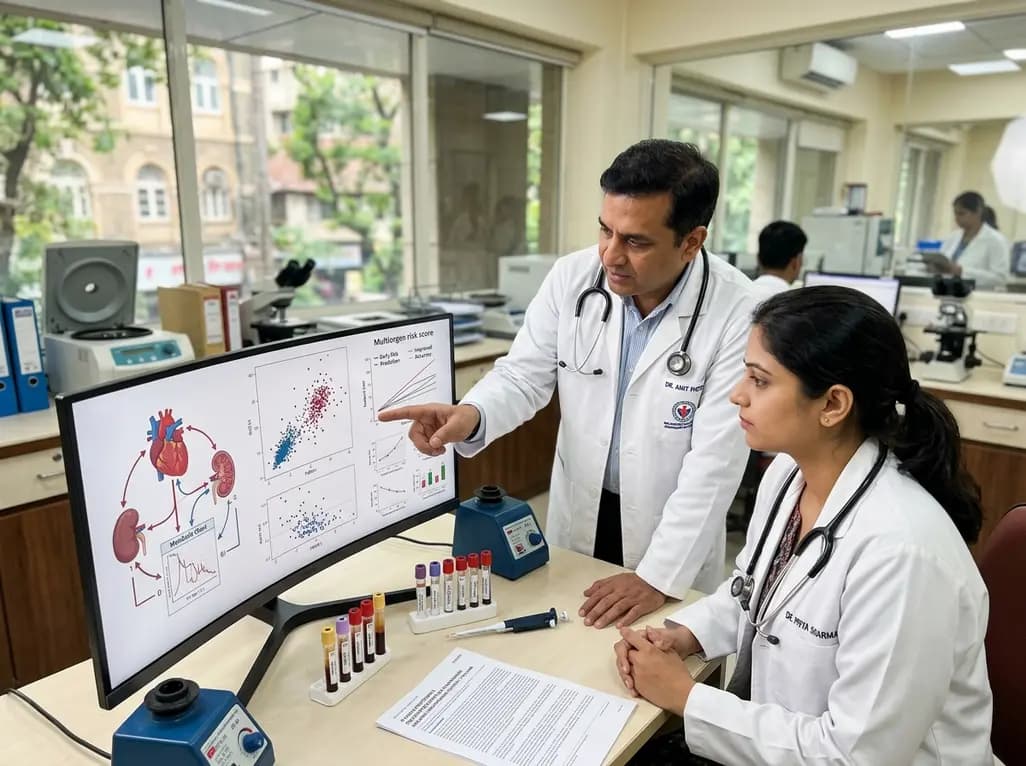
A large UK Biobank study reveals that plasma proteomic signatures capture preclinical organ damage and improve multiorgan risk prediction across early CKM syndrome stages 0 to 2 beyond traditional PREVENT clinical models.
Today
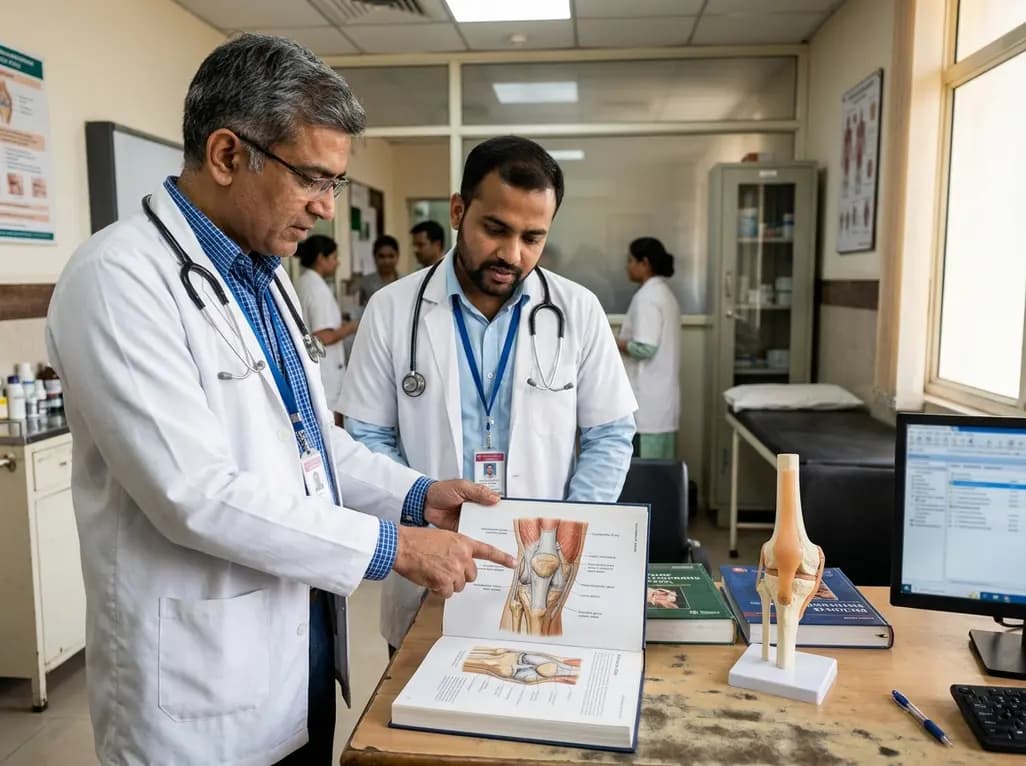
A narrative review investigates whether the articularis genus muscle functions as an independent anatomical entity or blends with the vastus intermedius. We evaluate its morphology, role in retracting the suprapatellar bursa, and direct clinical significance in anterior knee pain and arthroplasty.
Today

A Bayesian multilevel meta-analysis reveals that aerobic training combined with moderate carbohydrate restriction modestly lowers HbA1c in type 2 diabetes. However, sparse data and very low certainty leave incremental benefits over exercise or diet alone unproven, highlighting the need for individualized care.
Today
