.webp&w=384&q=75)

Loading, please wait...
Loading, please wait...

Sepsis remains a formidable clinical challenge across intensive care units worldwide, driving substantial morbidity, multi-organ failure, and mortality. In recent years, researchers have actively explored adjunctive therapeutic molecules to mitigate the devastating systemic inflammatory cascade. Investigating the molecular effects of baicalin in sepsis provides intriguing mechanistic insights into immune modulation and tissue preservation. Baicalin, a naturally occurring flavonoid glycoside extracted from the roots of Scutellaria baicalensis, exhibits potent cytoprotective capabilities. A systematic review published in Natural Product Research critically examined 41 preclinical investigations evaluating this bioactive compound. Although contemporary clinical protocols prioritize fluid resuscitation, antimicrobials, and organ support, novel host-directed therapeutics continue to command scientific attention. Consequently, understanding how natural flavones interact with dysregulated host responses remains vital for critical care practitioners and translational researchers.
During severe sepsis, pathogenic triggers such as lipopolysaccharide prompt immediate cellular signaling that accelerates widespread organ destruction. Preclinical models demonstrate that baicalin substantially reduces the expression of classic pro-inflammatory cytokines, specifically tumor necrosis factor-alpha, interleukin-1 beta, and interleukin-6. Furthermore, this flavonoid exerts prominent inhibitory actions on nuclear factor-kappa B (NF-κB) transcription factor activation. Under septic stress, NF-κB translocates to the nucleus and triggers massive transcription of lethal inflammatory mediators. Baicalin effectively halts this nuclear translocation by stabilizing the inhibitor kappa B protein. Additionally, experimental studies confirm that baicalin directly attenuates Toll-like receptor 4 (TLR4) signaling pathways. By interrupting the TLR4 cascade, the compound blocks the downstream propagation of pathogen-associated signals. Moreover, investigators observed consistent suppression of high mobility group box 1 (HMGB1), a late-acting inflammatory mediator that sustains systemic tissue damage and lethal endotoxemia. Thus, baicalin concurrently restrains both early alarmins and persistent late mediators. Consequently, these coordinated biochemical actions temper harmful innate immune overactivation while maintaining baseline host defenses. Animal models show that this dual modulation preserves microvascular architecture and mitigates capillary leakage during experimental endotoxemia.
Excessive activation of intracellular inflammasomes represents another fundamental driver of septic multiorgan failure. Specifically, the nucleotide-binding oligomerization domain-like receptor pyrin domain-containing 3 (NLRP3) inflammasome facilitates caspase-1 cleavage, resulting in maturation of interleukin-18 and interleukin-1 beta. Furthermore, active caspase-1 cleaves gasdermin D, which perforates cell membranes to induce inflammatory programmed cell death, known as pyroptosis. Preclinical evidence shows that baicalin directly disrupts NLRP3 assembly and impairs subsequent caspase-1 enzymatic activation. Therefore, baicalin treatment effectively limits the downstream release of highly destructive cytokines from circulating monocytes and resident tissue macrophages. Additionally, experimental models reveal that by preventing membrane permeabilization, baicalin preserves vascular endothelial integrity. This preservation significantly reduces endothelial swelling, plasma extravasation, and disseminated intravascular microthrombosis. In contrast to single-target monoclonal antibodies, baicalin dampens both the priming and triggering phases of inflammasome activation. Consequently, pulmonary capillary permeability decreases, and tissue perfusion improves across experimental animals. Clinicians recognize that unchecked pyroptosis leads to rapid circulatory collapse. Hence, pharmacological agents that inhibit the NLRP3 inflammasome offer promising pathways for developing targeted therapeutic adjuncts against septic shock and acute microvascular injury.
The systematic review analyzed data from 41 rigorous preclinical investigations assessing baicalin in sepsis across diverse animal models. Researchers frequently utilized cecal ligation and puncture (CLP) or lipopolysaccharide injection in rodents to simulate clinical sepsis. Across these standardized protocols, baicalin administration consistently enhanced survival rates compared to untreated septic controls. Furthermore, experimental subjects receiving baicalin demonstrated substantial improvements in key biochemical parameters of organ injury. Specifically, treatment lowered serum levels of alanine aminotransferase and aspartate aminotransferase, indicating robust hepatoprotection. Additionally, baicalin reduced serum creatinine and blood urea nitrogen levels, demonstrating preservation of renal functional integrity. Histopathological analyses corroborated these biochemical findings, revealing diminished neutrophil infiltration, reduced interstitial edema, and preserved alveolar architecture in lung specimens. Similarly, myocardial tissue showed markedly reduced troponin elevation and lower histological disorganization. Investigators administered baicalin through both intravenous and intraperitoneal routes, noting reproducible protective responses across distinct dosage ranges. However, experimental protocols varied substantially regarding the timing of drug delivery relative to the initial septic insult. While prophylactic administration yielded dramatic survival advantages, post-treatment regimens also demonstrated statistically significant benefits.
Sepsis generates overwhelming amounts of reactive oxygen species (ROS), overwhelming endogenous antioxidant defenses and driving lipid peroxidation. Consequently, severe oxidative injury destroys cellular membranes and accelerates mitochondrial dysfunction throughout vital organs. Preclinical investigations show that baicalin operates as a potent antioxidant, directly scavenging free radicals while boosting endogenous enzymatic defenses. Specifically, baicalin administration significantly increases superoxide dismutase (SOD) and catalase activities in septic tissues. Furthermore, it restores intracellular glutathione concentrations, which rapidly deplete during severe inflammatory insults. At the same time, baicalin noticeably diminishes tissue concentrations of malondialdehyde, a primary biomarker of destructive lipid peroxidation. Additionally, baicalin activates the nuclear factor erythroid 2-related factor 2 (Nrf2) pathway, upregulating downstream cytoprotective genes such as heme oxygenase-1. This antioxidant amplification shields vascular endothelial cells from apoptotic death and microvascular thrombosis. Moreover, preserved endothelial cell junctions prevent third-space fluid sequestration and maintain microcirculatory capillary perfusion. Therefore, baicalin supports hemodynamic stability by preventing oxidative breakdown of vascular tone and cellular energy production. Protecting the mitochondrial respiratory chain allows stressed parenchymal cells to maintain ATP synthesis during sustained metabolic crisis.
Despite promising laboratory outcomes, significant translational hurdles prevent immediate clinical adoption of baicalin in sepsis management. First, the systematic review underscored substantial methodological heterogeneity among the included preclinical studies. Variations in animal species, septic insult models, drug dosing schedules, and timing of administration complicate standardized conclusions. Furthermore, many studies utilized pre-treatment designs, which diverge sharply from actual clinical presentations where patients arrive hours after sepsis onset. In addition, the systematic review highlighted an absence of human clinical trials and quantitative meta-analyses. Pharmacokinetic barriers also pose considerable practical challenges for intensive care application. Baicalin exhibits relatively poor oral bioavailability and undergoes rapid glucuronidation in the gastrointestinal tract and liver. Therefore, developing standardized intravenous formulations or bioavailable synthetic analogues represents a vital prerequisite for human investigation. Regulatory authorities require extensive phase 1 pharmacokinetic and toxicology data before approving clinical testing in critically ill cohorts. Currently, clinicians must continue adhering strictly to validated Surviving Sepsis Campaign guidelines, utilizing early broad-spectrum antibiotics, timely source control, and targeted hemodynamic support. Nevertheless, ongoing molecular research continues to illuminate valuable therapeutic targets for future adjunctive critical care trials.
Baicalin is a biologically active flavonoid glucuronide isolated primarily from the dried roots of Scutellaria baicalensis Georgi, a traditional medicinal herb. Chemically, it consists of baicalein bound to a glucuronic acid moiety. In pharmacology, researchers value baicalin for its diverse anti-inflammatory, antioxidant, and immunomodulatory properties. When administered, systemic and intestinal beta-glucuronidases can hydrolyze baicalin into its aglycone form, baicalein, which also exerts significant biological activities across multiple preclinical inflammatory models.
Baicalin modulates multiple critical inflammatory signaling pathways during experimental sepsis. Specifically, it suppresses the Toll-like receptor 4 (TLR4) pathway and inhibits nuclear factor-kappa B (NF-κB) nuclear translocation, reducing pro-inflammatory cytokine release. Additionally, baicalin prevents activation of the NLRP3 inflammasome, blunting caspase-1 cleavage and pyroptosis. Simultaneously, the compound upregulates the Nrf2/HO-1 antioxidant cascade and inhibits high mobility group box 1 (HMGB1) release, collectively protecting tissues against oxidative injury and systemic organ dysfunction.
No, baicalin cannot currently be recommended or prescribed for clinical sepsis management. Although preclinical animal studies demonstrate compelling anti-inflammatory and organ-protective benefits, human clinical trial data remain entirely absent. Furthermore, issues regarding oral bioavailability, human pharmacokinetics, optimal dosing, and drug-drug interactions require rigorous exploration. Intensivists must strictly follow established sepsis guidelines, prioritizing early diagnostic cultures, prompt intravenous antimicrobial therapy, hemodynamic resuscitation, and personalized supportive care in intensive care units.
Disclaimer: This content is for informational and educational purposes only... Refer to the latest local and national guidelines for clinical practice.
References

Read summarized clinical updates, watch expert medical content, and earn CME certifications right from your smartphone.
Open your smartphone camera to scan and install.





A systematic review of 41 preclinical studies reveals that baicalin dampens systemic inflammation, inhibits NF-κB and NLRP3 pathways, and improves organ preservation in sepsis models. However, substantial study heterogeneity and a complete lack of human clinical trials highlight the need for further translational research.
Today
Discover the crucial distinctions between mesonephric and mesonephric-like proliferations of the female genital tract. Learn the key histomorphologic, immunohistochemical, and molecular differences essential for accurate diagnosis and clinical management.
Today
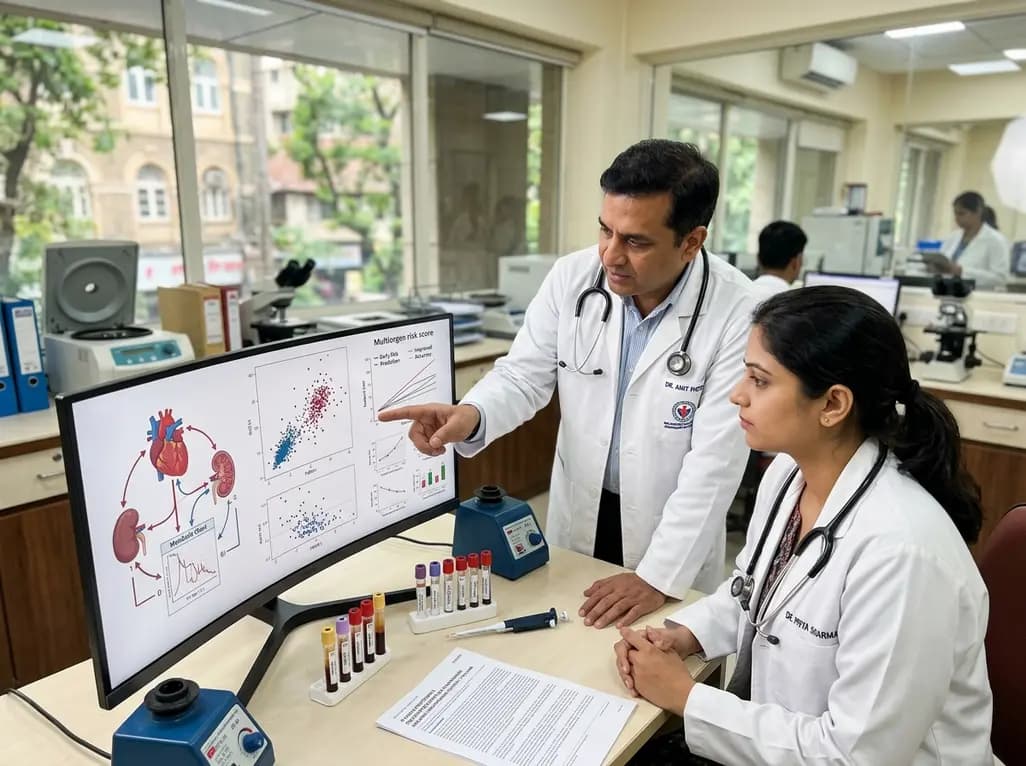
A large UK Biobank study reveals that plasma proteomic signatures capture preclinical organ damage and improve multiorgan risk prediction across early CKM syndrome stages 0 to 2 beyond traditional PREVENT clinical models.
Today
A narrative review investigates whether the articularis genus muscle functions as an independent anatomical entity or blends with the vastus intermedius. We evaluate its morphology, role in retracting the suprapatellar bursa, and direct clinical significance in anterior knee pain and arthroplasty.
Today

A Bayesian multilevel meta-analysis reveals that aerobic training combined with moderate carbohydrate restriction modestly lowers HbA1c in type 2 diabetes. However, sparse data and very low certainty leave incremental benefits over exercise or diet alone unproven, highlighting the need for individualized care.
Today
