.webp&w=384&q=75)

Loading, please wait...
Loading, please wait...

When acute healthcare systems treat individuals across diverse body sizes, clinical teams face unique operational challenges. Providing high-quality care for larger-bodied patients requires an intricate balance of technical skill, specialized infrastructure, and compassionate awareness. A recent comprehensive qualitative evidence synthesis illuminates how amplified physical labour, fragile dignity preservation, and pervasive weight stigma intersect within hospital wards and intensive care units. Consequently, acute care clinicians and hospital leaders must evaluate existing workflows to foster safer, equitable, and dignified clinical environments for all patients.
Bedside nurses frequently experience substantial musculoskeletal strain when assisting individuals with limited mobility. Routine care activities such as repositioning, transferring, hygiene maintenance, and wound assessment demand significant manual exertion. When patients have higher body weights, these daily tasks become exponentially more strenuous for clinical personnel. Consequently, nursing professionals must enlist multiple colleagues to complete basic bed maneuvers safely. This requirement often triggers scheduling bottlenecks and delays timely clinical interventions across busy inpatient units.
Furthermore, severe staffing shortages worsen these physical challenges during acute hospital shifts. When wards lack sufficient personnel, nurses often attempt high-risk manual handling maneuvers alone. Therefore, staff members suffer cumulative spinal injuries, chronic fatigue, and occupational burnout over time. These physical pressures also foster acute safety risks for patients during transfers and position adjustments. For instance, awkward repositioning maneuvers can inadvertently cause skin shearing or distressing falls. Healthcare leaders must recognize that excessive manual demands compromise bedside safety for staff and patients alike. Thus, hospitals must treat safe patient handling as an urgent institutional priority rather than an individual bedside burden.
Modern acute healthcare environments predominantly rely on standardized equipment and rigid architectural designs. However, these conventional resources routinely fail individuals whose physical measurements exceed typical commercial specifications. Standard hospital beds, diagnostic scanners, chairs, and transfer stretchers frequently feature narrow dimensions and strict weight limits. When nurses cannot access appropriately sized equipment immediately, bedside care stalls unpredictably. Consequently, clinicians must search multiple departments to locate specialized bariatric items during critical treatment windows.
Moreover, hospital rooms and ward bathrooms frequently present narrow doorways and cramped configurations. These architectural constraints severely restrict the efficient deployment of mechanical lifts and assistive transfer machinery. Clinicians must therefore improvise awkward manual maneuvers in tight spaces to deliver personal hygiene care. Similarly, standard blood pressure cuffs, diagnostic gowns, and commodes frequently prove ill-fitting or unusable. This systemic friction creates immense practical frustration for care teams attempting to maintain efficient clinical workflows. Healthcare facilities must address these architectural discrepancies by embedding size-inclusive equipment into standard procurement policies. Systematic infrastructural adaptation directly resolves workflow paralysis while protecting patient well-being and clinical efficiency.
Preserving bodily privacy represents a fundamental cornerstone of ethical clinical nursing practice. Nevertheless, providing routine care for larger-bodied patients often strains dignity preservation in crowded hospital environments. For instance, standard hospital gowns frequently provide inadequate coverage, leaving patients feeling unnecessarily exposed and vulnerable. Furthermore, mobilizing a patient who requires assistance from four or five clinicians turns personal care into a public spectacle. Bedside curtains provide auditory permeability, meaning nearby patients and visitors often overhear intimate clinical discussions and logistical deliberations.
Accordingly, patients often experience deep humiliation and acute embarrassment during routine hygiene or turning procedures. Nurses frequently struggle to balance the urgent need for physical safety with compassionate privacy safeguards. In response, empathetic nurses develop creative adaptations, such as utilizing extra sheets to maintain coverage during examinations. They also cultivate deliberate communication strategies, intentionally reassuring patients and explaining every step before executing maneuvers. Clinical teams must proactively safeguard privacy by closing room doors and moderating conversational volume during complex handling tasks. By prioritizing respectful bedside privacy, healthcare providers protect patient vulnerability and uphold core professional nursing values.
Implicit and explicit weight stigma remains widely documented throughout acute medical settings. Unfortunately, healthcare systems often clinicalise weight bias by framing body size solely through lenses of lifestyle failure or non-compliance. When clinical care becomes physically demanding, some staff members unconsciously displace their occupational frustration onto the patient. Consequently, subtle expressions of blame, resentment, or othering can emerge during bedside handoffs and team conferences. Healthcare workers may inadvertently treat higher weight as a voluntary defect rather than a complex medical condition.
Furthermore, this pervasive bias impairs the therapeutic alliance between patients and acute care teams. Patients who sense judgment or annoyance often withdraw emotionally, avoid asking for help, or delay critical bathroom calls. In turn, withholding assistance requests substantially increases the risk of unassisted patient falls and pressure injury development. In addition, clinical teams might incorrectly attribute acute diagnostic signs to elevated weight, thereby missing serious underlying conditions. Clinicians must actively counteract these harmful tendencies through regular reflexive practice and explicit anti-bias training. By recognizing obesity as a multifaceted chronic disease, healthcare workers can replace personal judgment with genuine clinical objectivity.
Addressing these interrelated clinical challenges requires pragmatic strategies that protect staff ergonomics while honoring patient dignity. First, hospital leadership must invest in modern powered patient-handling technologies across all acute care wards. Ceiling-mounted mechanical lifts, motorized lateral transfer mattresses, and expandable bariatric beds drastically reduce physical strain on bedside staff. When nurses operate appropriate mechanical aids, they reposition patients smoothly without exerting dangerous manual forces. Consequently, staff injury rates decline, while patient confidence and physical comfort noticeably improve during bedside maneuvers.
Moreover, healthcare facilities must implement dedicated bariatric resource teams and standardized lifting protocols. In addition, healthcare organizations must foster open, body-size-sensitive communication across all clinical disciplines. Clinicians should use respectful, person-first language when describing mobility requirements during shift handoffs. For example, staff should focus objectively on functional assistance needs rather than subjective body assessments. Additionally, multidisciplinary teams must collaborate closely with physical therapists to design individualized, dignified mobilization plans. Implementing these cohesive ergonomic and cultural adjustments systematically transforms acute care wards into supportive, equitable healing environments.
Intensive manual labour often triggers physical exhaustion, acute musculoskeletal pain, and anxiety among bedside nurses. When acute care facilities lack adequate mechanical lifts and sufficient staffing, routine repositioning tasks become extraordinarily difficult. Consequently, tired healthcare workers may unintentionally displace their physical frustration onto patients with higher body weight. Over time, this unmanaged occupational strain fosters implicit resentment, negative stereotyping, and persistent weight bias during clinical care delivery.
Hospitals must invest in comprehensive structural adaptations to preserve dignity and ensure patient safety. Facilities should procure ceiling-mounted patient lifts, wider hospital beds, and heavy-duty wheelchairs across all units. Additionally, hospital administrations must stock appropriately sized patient gowns, large blood pressure cuffs, and sturdy commodes. Widening bathroom doors and expanding private room spaces also prevent unnecessary exposure, ensuring that larger-bodied individuals receive compassionate, respectful, and dignified healthcare.
Clinical teams can dismantle weight stigma by adopting respectful, person-first language during shift handoffs and multidisciplinary rounds. Healthcare professionals should focus strictly on objective functional mobility needs rather than commenting judgmentally on body habitus. Furthermore, clinicians must recognize obesity as a complex chronic illness rather than a personal failing. Implementing structured handoff tools and collaborative transfer planning encourages objective clinical discussions while eliminating derogatory humor or subtle bias.
Disclaimer: This content is for informational and educational purposes only... Refer to the latest local and national guidelines for clinical practice.
References

Read summarized clinical updates, watch expert medical content, and earn CME certifications right from your smartphone.
Open your smartphone camera to scan and install.





A recent qualitative synthesis highlights how physical labour, dignity preservation, and weight stigma intersect when caring for larger-bodied patients in acute care. Overcoming these challenges requires ergonomic equipment, adequate staffing, flexible workflows, and size-inclusive institutional policies.
Today

Novel preclinical research demonstrates that antisense oligonucleotides targeting essential genes such as DARS1, DYNC1I2, and EIF2S3 selectively induce apoptosis in ovarian and lung cancer cells. Conditional biomarker activation provides a viable strategy to spare normal tissue while overcoming therapy resistance.
Today
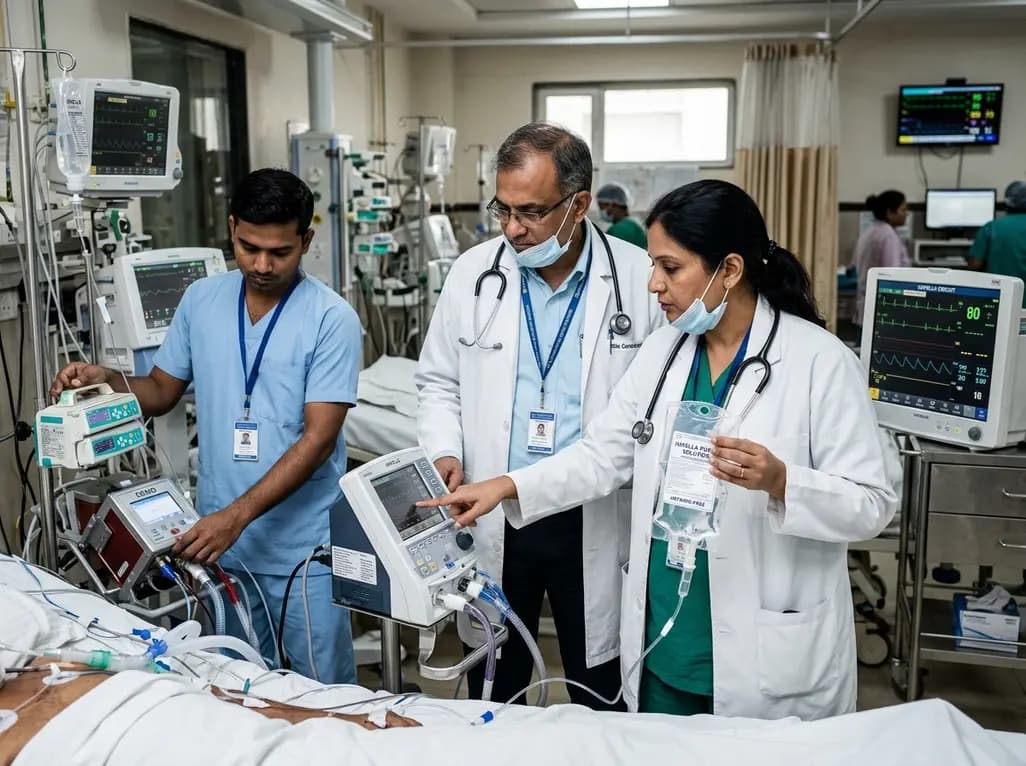
This clinical analysis examines heparin-free versus heparin-containing Impella purge solutions in patients receiving concomitant ECMO support (ECPELLA). Evidence suggests anticoagulant-free purges maintain device patency while reducing bleeding risks, offering a viable strategy alongside systemic anticoagulation.
Today

A 10-year Markov state-transition model shows minimally invasive tubular decompression dominates open laminectomy for pure lumbar spinal stenosis, yielding 5.95 vs 5.91 QALYs and saving $4,167 per patient through reduced complications and lower index costs.
Today

A preclinical study demonstrates that naringin-loaded phytosomes significantly enhance oral bioavailability and provide neuroprotective efficacy in diabetic neuropathy by dampening inflammation, reducing oxidative stress, and relieving neuropathic pain.
Today
