.webp&w=384&q=75)

Loading, please wait...
Loading, please wait...
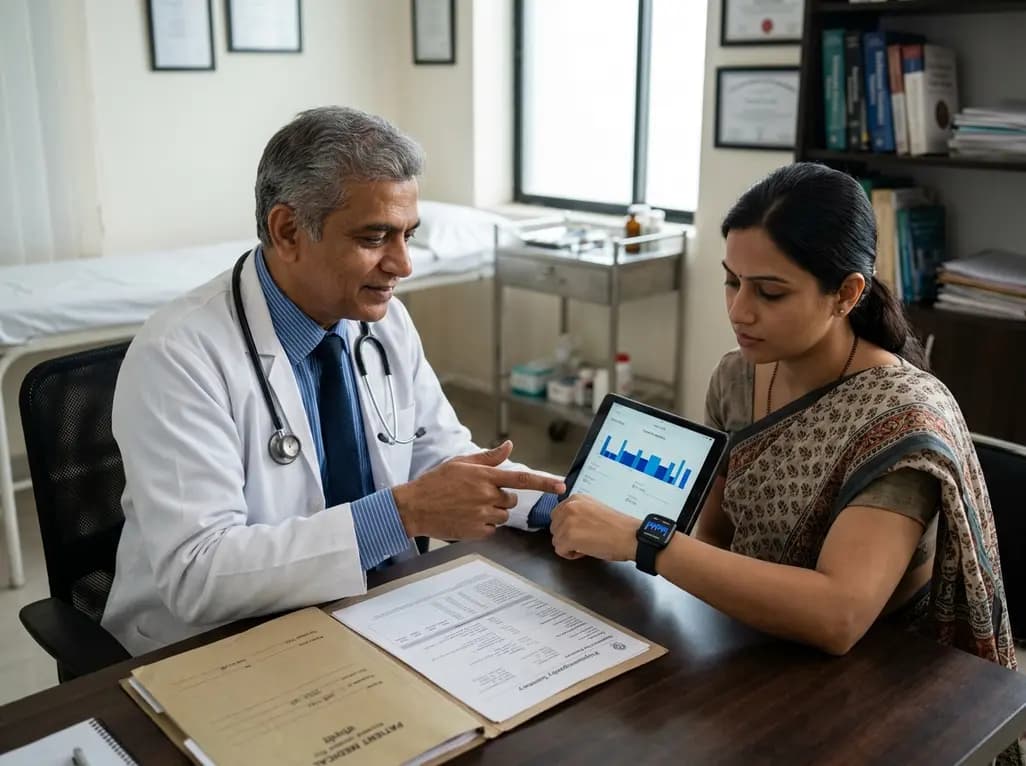
Modern consumer technology has made wearable sleep tracking devices ubiquitous among ambulatory patients seeking objective insights into their daily physical health. Clinicians encounter these patient-generated digital records during routine consultations with increasing frequency. Consequently, medical practitioners must critically evaluate whether these commercial tools yield valid metrics for physiological evaluation. A recent prospective investigation analyzed the feasibility of continuous sleep monitoring across four months. The researchers tracked young adults using consumer smartwatches and smart rings alongside standardized balance testing. Furthermore, the team assessed data completion rates and concordance against subjective sleep diaries. Early findings demonstrate that consumer hardware provides valuable longitudinal trend data under everyday conditions. However, raw technological capability alone cannot overcome inherent behavioral barriers. Clinicians must recognize that patient engagement heavily influences the quality of digital health archives. Therefore, doctors should approach commercial digital metrics with thoughtful analytical rigor rather than unconditional acceptance.
Additionally, wearable sensors capture dynamic bio-signals that reflect nocturnal recovery and circadian regularity. Patients frequently ask whether commercial hardware can illuminate functional impairments like daytime fatigue or postural instability. Accordingly, understanding the methodological boundaries of these tools helps physicians counsel their patients with accurate clinical expectations.
Longitudinal remote monitoring requires high participant compliance to deliver interpretable diagnostic datasets. In the initial phase of the investigation, researchers encountered alarming missing data rates reaching up to 75.2 percent across monitoring days. Consequently, these significant data gaps threatened the validity of longitudinal observations. To resolve this issue, the study team implemented structured weekly check-ins with participants. Notably, this protocol change improved data retention across all platforms. Missing data rates dropped dramatically to 14.1 percent and 20.3 percent for wrist-worn devices. Similarly, missing rates for smart rings fell to 9.4 percent and 25 percent. Sleep diary adherence improved even more substantially, recording missing rates of only zero to 6.25 percent during the optimized phase.
Therefore, active provider communication serves as an essential component of digital health tracking. Clinicians cannot simply prescribe a remote tracker and assume continuous compliance. Furthermore, technical failures, dead batteries, and skin irritation often interrupt user adherence. When healthcare teams institute structured follow-up routines, data completeness increases predictably. Hence, digital health monitoring requires human guidance to maintain research-quality adherence over several months.
The investigation evaluated how accurately consumer sensors captured fundamental sleep parameters compared to sleep diaries. Specifically, devices demonstrated divergent performance when estimating time in bed. The Apple Watch Series 5 showed the least estimation bias, underestimating time in bed by merely 0.6 minutes on average. In contrast, the Fitbit Charge 5 and the OURA ring consistently overestimated total time in bed. However, devices achieved remarkable consistency when evaluating total sleep time. Within-participant agreement across different sensors remained exceptionally high, showing intraclass correlation coefficients between 0.97 and 0.99.
Nevertheless, analytical reliability declined sharply when devices classified discrete sleep stages. Agreement among wearable sensors proved remarkably poor for identifying specific light, deep, and rapid-eye-movement cycles. Proprietary photoplethysmography algorithms frequently misinterpret motionless wakefulness as restful sleep. In addition, movement artifacts create notable discrepancies in sleep architecture classification. Consequently, physicians should trust commercial devices for aggregate sleep duration while disregarding granular sleep-staging claims. Longitudinal duration trends remain clinically meaningful, but proprietary stage estimates lack medical diagnostic validity.
A central exploratory goal of the study involved examining potential connections between sleep disruption and postural stability. Researchers measured postural equilibrium monthly using the computerized sensory organization test. Notably, descriptive visual trends revealed that substantial fluctuations in sleep timing and duration coincided with shifts in balance scores. In particular, the sensory organization test visual subscale exhibited noticeable variations following nights with fragmented rest. These visual patterns suggest that inconsistent sleep schedules might temporarily degrade sensory integration during postural control tasks.
However, clinicians must interpret these physiological observations with substantial caution. The study evaluated only two participants over a four-month period, which naturally prevents broad generalization. Furthermore, repeated monthly sensory assessments introduce potential practice effects that can artificially improve equilibrium scores over time. Consequently, these findings serve as preliminary, hypothesis-generating clues rather than definitive scientific proof. Sleep deprivation clearly impairs neuromuscular reaction times and executive cognitive processing in broader literature. Nevertheless, rigorous multi-center clinical trials must confirm whether wearable metrics can reliably anticipate balance degradation or fall risks.
As digital health devices proliferate rapidly across India, urban clinicians encounter tech-savvy patients presenting multi-month biometric charts. Patients frequently experience anxiety after observing low deep sleep percentages on their mobile dashboards. Therefore, primary care practitioners and neurologists must educate individuals regarding the technical limitations of consumer algorithms. Doctors should emphasize that commercial wearables cannot diagnose obstructive sleep apnea, parasomnias, or neurological movement disorders. Instead, physicians should validate patient lifestyle efforts while redirecting attention toward consistent sleep hygiene.
Moreover, clinicians can leverage aggregated duration trends to identify erratic bedtime habits or chronic sleep deficits. In sports medicine and occupational health, wearable tracking offers convenient visibility into systemic physical recovery. Similarly, structured monitoring protocols can support geriatric patients who face potential fall risks from severe insomnia. When Indian physicians evaluate wearable metrics, they must integrate objective clinical history, physical exams, and formal polysomnography when indicated. Thus, wearable devices should function as supportive behavioral tools rather than independent diagnostic determinants.
No, consumer wearable devices cannot replace laboratory polysomnography. While commercial trackers estimate total sleep duration with high intraclass agreement, they struggle to classify specific sleep stages accurately. Furthermore, consumer algorithms frequently misidentify quiet wakefulness as light sleep. Polysomnography records electroencephalography, electromyography, and respiratory airflow, providing definitive diagnostic precision. Therefore, clinicians must use wearables solely for longitudinal lifestyle observation rather than diagnosing sleep apnea or complex neurological disorders.
Sleep disruption impairs central nervous system processing and diminishes neuromuscular coordination. Specifically, inadequate rest attenuates cognitive attention and visual-vestibular integration, which directly compromises postural stability. During computerized sensory organization testing, sleep fluctuations frequently coincide with reduced visual subscale scores. Consequently, individuals display increased postural sway when visual or proprioceptive inputs become challenged. Although preliminary findings remain exploratory, maintaining consistent sleep timing appears critical for optimal motor control and everyday injury prevention.
Healthcare teams can minimize missing data by establishing structured, recurring check-in protocols. In longitudinal tracking, missing data rates often exceed 70 percent without active support. However, weekly clinician interactions, reminders to recharge hardware, and concurrent digital sleep diaries dramatically improve participant compliance. Furthermore, educating patients on proper device placement prevents sensor dropouts and skin discomfort. Therefore, implementing proactive communication frameworks ensures high data completeness and preserves analytical validity in remote digital health programs.
Disclaimer: This content is for informational and educational purposes only... Refer to the latest local and national guidelines for clinical practice.
References

Read summarized clinical updates, watch expert medical content, and earn CME certifications right from your smartphone.
Open your smartphone camera to scan and install.





Consumer wearable sleep tracking devices offer reliable duration metrics when supported by active adherence protocols. However, sleep staging remains inaccurate, and balance links remain exploratory. Physicians must interpret commercial wearable data cautiously alongside formal clinical diagnostics.
Today

Sedentary habits such as continuous gaming, binge-watching, and desk work significantly elevate venous thromboembolism risks among adolescents and young adults. Vascular surgeons emphasize that immobility impairs the calf muscle pump, creating venous stasis and warranting proactive lifestyle counseling.
Today

Maternal anaemia contributes to nearly half of pregnancy-related fatalities across India. To prevent complications, Uttar Pradesh has added single-dose parenteral iron to its essential medicines list. This clinical transition aims to restore haemoglobin rapidly and protect high-risk mothers across rural facilities.
Today
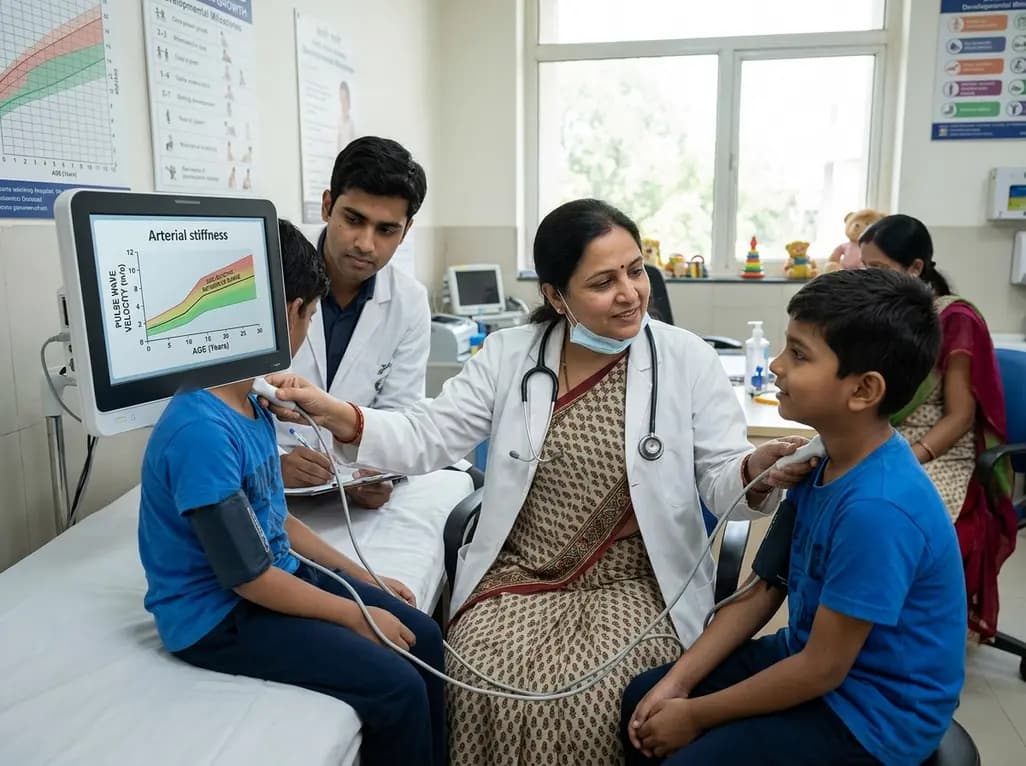
A landmark systematic review and meta-analysis establishes age-specific normative reference values for pediatric pulse wave velocity, revealing a nonlinear trajectory of arterial stiffness from early childhood through adolescence.
Today
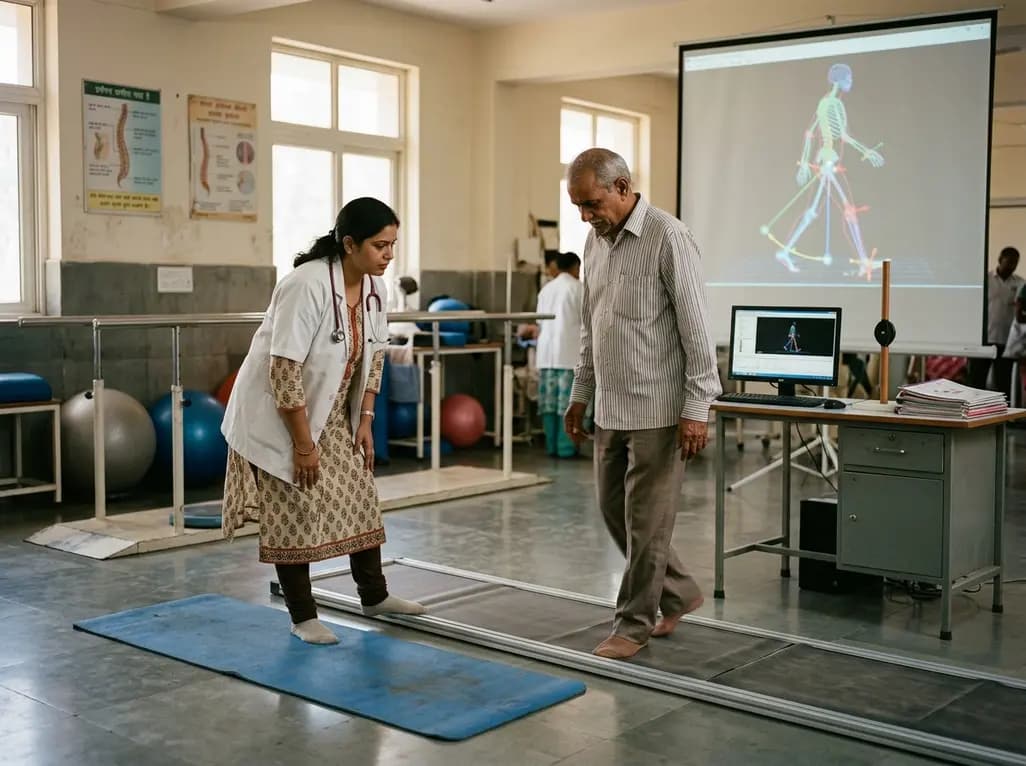
New biomechanical research reveals how postural stabilization mechanisms coordinate delayed sensory feedback and ground reaction forces to preserve pendulum-like center of mass motion across standing and walking, providing vital insights for balance rehabilitation and fall prevention.
Today

A landmark cross-sectional study in Asian adults with type 2 diabetes identifies novel urinary metabolites linked to mild cognitive impairment. Elevated urinary sucrose and altered metabolites highlight non-invasive pathways for early cognitive risk stratification and targeted metabolic management.
Today
