.webp&w=384&q=75)

Loading, please wait...
Loading, please wait...
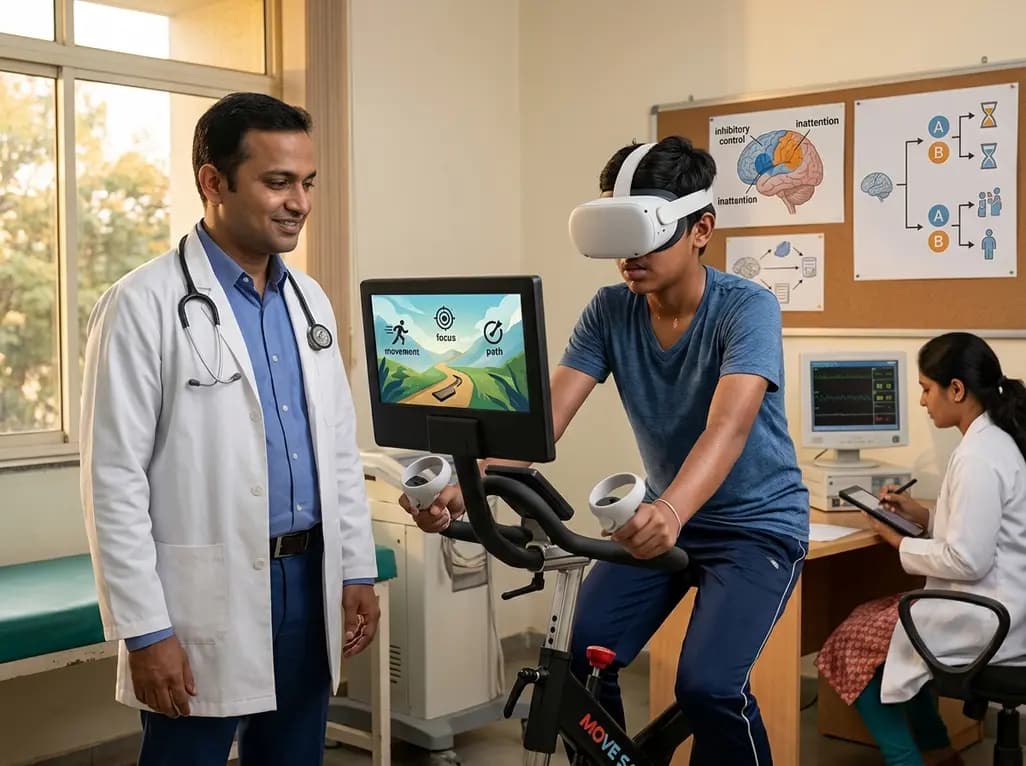
Attention-deficit/hyperactivity disorder (ADHD) remains a significant challenge for approximately 7% to 8% of children and adolescents globally. This neurodevelopmental condition often manifests through persistent inattention, hyperactivity, and impulsivity. While pharmacological treatments serve as the first line of defense, they frequently encounter hurdles such as adverse side effects and suboptimal adherence. Consequently, the medical community is actively seeking non-pharmacological adjuncts that can bolster executive function. Specifically, VR exergaming for ADHD has emerged as a potentially transformative tool. This technology combines physical exertion with digital engagement to address the unique needs of a younger population. Traditionally, adolescents struggle with the repetitive nature of standard exercise protocols. Therefore, integrating immersive technology might offer the stimulation necessary to maintain long-term commitment. Furthermore, this approach aligns with the digital-first lifestyle of modern teenagers. By transforming a clinical intervention into an entertaining experience, providers may improve patient outcomes significantly. This evolution represents a shift toward more holistic and engaging therapeutic strategies.
High-intensity interval training (HIIT) has shown remarkable superiority over moderate-intensity exercise in enhancing cognitive functions. Specifically, vigorous physical activity triggers a cascade of neurobiological changes that benefit the prefrontal cortex. This brain region is critical for inhibitory control and sustained attention. When individuals engage in high-intensity bursts, the brain releases key neurotransmitters like dopamine and norepinephrine. Additionally, the production of brain-derived neurotrophic factor (BDNF) increases significantly. These factors facilitate neuroplasticity and improve the efficiency of neural communication. However, the high perceived exertion of traditional HIIT often leads to early dropout in clinical settings. Adolescents with ADHD find the monotony of a treadmill or stationary bike particularly taxing. To solve this, researchers are exploring how virtual environments can mask physical strain. Instead of focusing on fatigue, the patient focuses on achieving goals within a virtual world. Thus, the physiological benefits of HIIT remain intact while the psychological barrier to entry decreases. This synergy between intense metabolic load and cognitive stimulation is the foundation of modern exergaming research.
Virtual reality offers more than just a visual distraction; it provides a platform for deep cognitive immersion. In the context of VR exergaming for ADHD, the immersion helps maintain intrinsic motivation. This is vital because adherence is often the weakest link in adolescent treatment plans. When a patient wears a VR headset, they enter a controlled environment where distractions are minimized. Simultaneously, the gamified elements provide immediate feedback and rewards. This constant reinforcement loop is particularly effective for the ADHD brain, which thrives on novelty and quick results. Moreover, the "Move Sapiens" protocol utilizes this engagement to push physiological limits. Unlike passive screen time, exergaming requires active physical participation and rapid decision-making. Consequently, the user experiences a "flow state" where time seems to pass faster during intense exertion. Notably, previous studies often lacked active control groups, making it hard to isolate the effects of VR from the effects of exercise. The current trial addresses this by comparing HIIT-VR against a low-intensity VR control. This design ensures that researchers can definitively attribute cognitive gains to the metabolic intensity of the workout.
The Move Sapiens trial is a multisite, parallel-group, single-blind randomized clinical trial designed to provide high-quality evidence. Researchers are currently recruiting 98 adolescents aged 12 to 17 years who have a confirmed ADHD diagnosis. Importantly, the study takes place across two outpatient centers in Brazil, ensuring a diverse participant pool. The participants are allocated in a 1:1 ratio to either the HIIT-based VR exergame intervention or an active control group. The experimental group follows the Move Sapiens protocol, which consists of 20 sessions over four weeks. Interestingly, after an initial laboratory familiarization, the intervention is delivered in a home-based format. This choice reflects the growing trend toward decentralized clinical trials and tele-rehabilitation. The control group uses the same VR platform but without the vigorous physical exertion component. This rigorous matching allows the study to account for the "novelty effect" of the technology itself. By using linear mixed-effects models, the analysis will follow an intention-to-treat approach. Ultimately, this methodology aims to determine if physical exertion is the essential active component for improving ADHD symptoms.
The primary outcomes of this clinical trial focus on two critical areas: subjective symptom severity and objective cognitive performance. Specifically, the team utilizes the SNAP-IV inattention subscale to gather ratings from parents and teachers. Additionally, they measure go/no-go commission errors to assess inhibitory control directly. These metrics are standard in ADHD research, allowing for better comparison with existing data. However, the trial also explores a wide array of secondary outcomes that provide a broader view of patient health. These include assessments of working memory, cognitive flexibility, and processing speed. Furthermore, the researchers are monitoring non-cognitive factors such as sleep quality and anxiety levels. Many adolescents with ADHD suffer from comorbid sleep disturbances and emotional dysregulation. Therefore, an intervention that improves cardiovascular health might also stabilize sleep patterns and reduce stress. Overall, the comprehensive nature of these measurements will help clinicians understand the multifaceted impact of VR-based HIIT. If the results show significant improvements across these domains, it would validate exergaming as a robust adjunctive therapy. This would empower clinicians to recommend structured digital exercise as part of a multimodal treatment plan.
As the trial progresses toward its expected completion in late 2026, the medical community looks forward to a new era of digital therapeutics. The Move Sapiens study could bridge the gap between traditional physical therapy and modern technology. Furthermore, it addresses the urgent need for accessible, home-based treatments for adolescents. Because the equipment is increasingly affordable, such interventions could eventually reach underserved populations. Moreover, the results will likely influence how we view the role of exercise in neurodevelopmental care. Instead of viewing exercise as a general wellness tool, we may start prescribing specific digital protocols tailored to cognitive needs. This trial's emphasis on an active control condition provides the scientific rigor needed for clinical adoption. Consequently, healthcare providers can have greater confidence in the efficacy of these novel interventions. In summary, VR exergaming for ADHD represents more than just a game; it is a sophisticated medical tool designed to harness the power of movement. By merging neurobiology with immersive entertainment, we can offer teenagers a treatment they actually enjoy. This shift toward patient-centered, engaging care is essential for the future of adolescent psychiatry.
Adolescents with ADHD often struggle with the monotonous nature of traditional exercise, which leads to poor long-term adherence. VR exergaming addresses this by providing an immersive, gamified environment that offers constant novelty and immediate rewards. By focusing on reaching in-game goals, participants often experience less perceived exertion despite the high physiological intensity. This increased engagement makes it easier for teenagers to complete the necessary sessions compared to standard aerobic routines.
Safety is a priority in the Move Sapiens protocol, which includes an initial supervised laboratory familiarization phase. This allows clinicians to monitor the patient’s initial response to high-intensity training and ensure they can use the VR equipment correctly. Common concerns like cybersickness, including dizziness or nausea, are mitigated through calibrated hardware and specific game design. The home-based format also requires a clear physical space to prevent accidental collisions during vigorous movements.
This trial uses a sophisticated active control group where participants use the exact same VR hardware and software environment as the experimental group. However, the control group performs tasks that do not require vigorous physical exertion. By keeping the level of technological immersion and cognitive engagement identical between the two groups, researchers can isolate the specific metabolic and neurobiological effects of high-intensity interval training on ADHD symptoms and inhibitory control.
Disclaimer: This content is for informational and educational purposes only... Refer to the latest local and national guidelines for clinical practice.
References
Romero Meller M et al. High-Intensity Virtual Reality Exergaming for Adolescents With Attention-Deficit/Hyperactivity Disorder: Protocol for a Randomized Clinical Trial. JMIR Res Protoc. 2026 Jul 14. doi: 10.2196/94797. PMID: 42446902.
Liang X et al. Effects of virtual reality-based exercise intervention in young people with attention-deficit/hyperactivity disorder: a systematic review. PMC. 2025. doi: 10.1186/s12984-025-01671-3.
ClinicalTrials.gov. Effects of HIIT VR Exergame on Attention and Executive Function in Young People With ADHD (NCT06632249). Available at: https://clinicaltrials.gov/study/NCT06632249.

Read summarized clinical updates, watch expert medical content, and earn CME certifications right from your smartphone.
Open your smartphone camera to scan and install.





The Move Sapiens randomized clinical trial investigates whether high-intensity virtual reality (VR) exergaming can improve inhibitory control and inattention in adolescents with ADHD. By combining HIIT with immersive technology, researchers aim to overcome traditional exercise adherence challenges.
3 months ago

A retrospective cohort study of 7,716 ICU patients from the MIMIC-IV database demonstrates that Gradient Boosting Decision Trees significantly outperform traditional SOFA scores in predicting in-hospital mortality among patients with sepsis and diabetes, with SHAP analysis providing clinical interpretability.
Today

A prenatal case highlights severe glutaric acidemia type II presenting as bilateral hyperechoic cystic kidneys at 18 weeks. Whole-exome sequencing revealed a novel homozygous ETFDH frameshift variant, demonstrating the power of rapid genetic testing in fetal renal anomalies.
Today
This article reviews the forensic and clinical complexities of acute myocarditis arising on left ventricular hypertrophy in children, highlighting early diagnostic red flags and multidisciplinary postmortem autopsy protocols.
Today

This comparative study evaluates posterior labral tears with and without glenohumeral instability, highlighting distinct demographic patterns, MRI underestimation in stable shoulders, and successful arthroscopic repair outcomes.
Yesterday

A clinical study demonstrates that early intervention with tocilizumab, either as monotherapy or bridged with corticosteroids, achieves significant proptosis reduction and resolves active inflammation in treatment-naive thyroid eye disease.
Yesterday
