.webp&w=384&q=75)

Loading, please wait...
Loading, please wait...
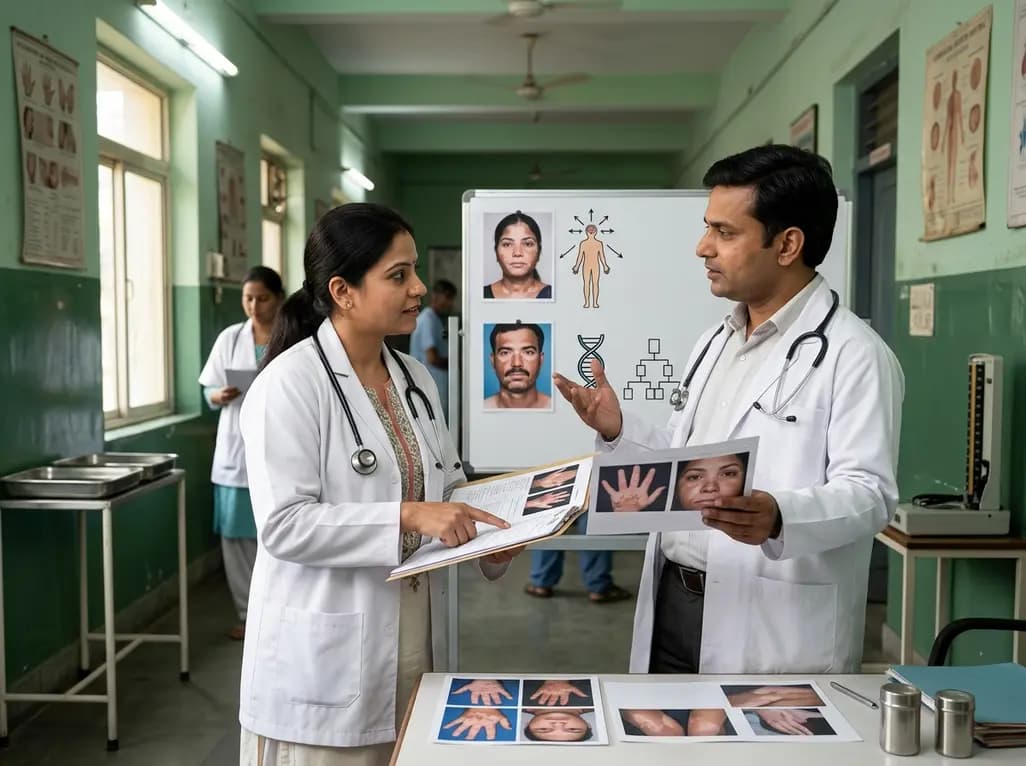
Vitiligo is a chronic autoimmune condition that significantly affects patient quality of life. Recent evidence explores how vitiligo triggers and gender influence patient perceptions and progression factors. Understanding these explanatory models is vital for holistic clinical management. Furthermore, patients often develop unique accounts to explain their condition's onset and spread. Consequently, these accounts shape how individuals cope with the disease and engage in treatment.
A recent study in Brazil investigated how 232 adults perceive their illness. Specifically, researchers mapped triggers like stress and genetics across different genders. The results revealed that psychological attributions dominated the patients' narratives. However, the study identified significant differences between men and women. Women cited stress, depression, and anxiety as primary triggers more frequently than men. Conversely, men were four times more likely to attribute their condition to genetic inheritance.
Therefore, clinicians must consider these gendered scripts during patient consultations. Additionally, progression factors were often linked to generalized psychological states across both groups. This suggests that emotional well-being plays a central role in how patients view disease advancement. Similarly, cultural scripts about masculinity and femininity influence how patients disclose emotional distress. For instance, women may feel more comfortable discussing the emotional toll of the disease.
In contrast, men might rely more on biomedical explanations to maintain cultural standards of masculinity. Moreover, integrated dermatological-mental health pathways can improve patient outcomes significantly. Validating patient explanatory models helps build trust and improves treatment adherence. Finally, gender-responsive psychological assessment should be a core component of vitiligo care.
Research suggests that women more frequently attribute vitiligo onset to psychological factors like stress and anxiety. In contrast, men are significantly more likely to cite genetic inheritance as the primary cause.
Patients often follow cultural scripts regarding emotional disclosure. Women may experience higher levels of reported psychological distress, whereas men may emphasize biomedical factors. Tailoring care helps address these specific psychosocial needs.
While the biological mechanism involves autoimmune melanocyte destruction, patients across all genders frequently report that psychological stress serves as a key factor in the spread of depigmented patches.
Disclaimer: This content is for informational and educational purposes only and does not constitute professional medical advice, diagnosis, or treatment. Always seek the advice of your physician or other qualified healthcare provider with any questions you may have regarding a medical condition. Refer to the latest local and national guidelines for clinical practice.
References
Do Bú E et al. Gender differences in perceived triggers and progression factors of vitiligo: evidence from Brazil. Psychol Health Med. 2026 May 31. doi: 10.1080/13548506.2026.2680333. PMID: 42218733.
Pahwa P, Mehta M, Khaitan BK, Sharma VK, Ramam M. The psychosocial impact of vitiligo in Indian patients. Indian J Dermatol Venereol Leprol 2013;79:679-685.
Silverberg JI, Silverberg NB. Association between vitiligo and depression: a systematic review and meta-analysis. ScientificWorldJournal. 2013;2013:150391.

Read summarized clinical updates, watch expert medical content, and earn CME certifications right from your smartphone.
Open your smartphone camera to scan and install.





A recent Brazilian study highlights how gender shapes vitiligo perceptions, with women citing stress and men focusing on genetics as primary triggers....
4 months ago

A retrospective cohort study of 7,716 ICU patients from the MIMIC-IV database demonstrates that Gradient Boosting Decision Trees significantly outperform traditional SOFA scores in predicting in-hospital mortality among patients with sepsis and diabetes, with SHAP analysis providing clinical interpretability.
Today

Occult maternal malignancy accounts for 3.82% of persistent unreportable NIPT results with genomic noise. Multiple chromosomal aberrations, notably on chromosome 18, warrant thorough oncological evaluation and whole-body MRI to ensure timely maternal diagnosis while preserving fetal care.
Today

This article reviews the forensic and clinical complexities of acute myocarditis arising on left ventricular hypertrophy in children, highlighting early diagnostic red flags and multidisciplinary postmortem autopsy protocols.
Today

This comparative study evaluates posterior labral tears with and without glenohumeral instability, highlighting distinct demographic patterns, MRI underestimation in stable shoulders, and successful arthroscopic repair outcomes.
Yesterday

A clinical study demonstrates that early intervention with tocilizumab, either as monotherapy or bridged with corticosteroids, achieves significant proptosis reduction and resolves active inflammation in treatment-naive thyroid eye disease.
Yesterday
