.webp&w=384&q=75)

Loading, please wait...
Loading, please wait...

Veteran polypharmacy management is a complex but essential part of healthcare for former service members. As soldiers transition from military to civilian life, they often face multiple health conditions that require various medications. A recent study published in Australas Psychiatry examined the prevalence of this issue among Australian Defence Force (ADF) veterans. Researchers analyzed electronic medical records from 1,210 veterans to identify trends in medication use.
The study found that 19.1% of veterans experienced general polypharmacy, defined as taking five or more medications. Furthermore, 9.8% of participants were on psychotropic polypharmacy. These findings suggest that the transition period is a high-risk time for medication-related issues. Specifically, the psychiatric comorbidity burden proved to be the strongest predictor of psychotropic polypharmacy. Clinicians must recognize these patterns to prevent adverse drug events and improve patient safety.
Post-traumatic stress disorder (PTSD) plays a massive role in the complexity of veteran health. In this cohort, veterans with PTSD had significantly higher rates of both general and psychotropic medication use. For instance, psychotropic polypharmacy affected 25.9% of veterans with PTSD compared to only 4.5% of those without the condition. Consequently, PTSD independently doubled the odds of a veteran receiving multiple psychotropic prescriptions. Therefore, mental health screening must remain a cornerstone of every clinical review.
Additionally, other N-class polypharmacy—which includes medications for pain and central nervous system disorders—occurred in 14.6% of veterans. Medical comorbidities also increased the risk of general polypharmacy. Because of these factors, a multi-disciplinary approach is necessary. General practitioners and psychiatrists should collaborate to streamline treatment plans. By doing so, they can minimize the risks associated with long-term multiple drug use.
Transitioning to civilian life often disrupts established healthcare routines. This disruption can lead to fragmented care and uncoordinated prescribing. However, targeted interventions can mitigate these risks. For example, medication reconciliation during the initial post-discharge visits ensures that all prescriptions remain appropriate. Moreover, patient education empowers veterans to understand their medications better. Effective veteran polypharmacy management requires both clinical vigilance and supportive healthcare systems.
General polypharmacy is typically defined as the concurrent use of five or more medications. In psychiatric contexts, psychotropic polypharmacy refers to the use of two or more medications within the psychotropic class.
PTSD often co-occurs with other mental health issues like depression or chronic pain. This complexity frequently leads to trials of multiple medications to manage overlapping symptoms, increasing the total pill burden.
Disclaimer: This content is for informational and educational purposes only and does not constitute medical advice or a professional relationship. Always seek the advice of a physician or other qualified health provider with any questions you may have regarding a medical condition. Refer to the latest local and national guidelines for clinical practice.
References
Mellor R et al. Prevalence and predictors of polypharmacy and psychotropic use among Australian Defence Force veterans transitioning from military to civilian life. Australas Psychiatry. 2026 May 31. doi: 10.1177/10398562261455779. PMID: 42219544.
Raut S et al. Prevalence and factors associated with polypharmacy in military and veteran populations: A systematic review and meta-analysis. Journal of Affective Disorders. 2025 Jan 15. doi: 10.1016/j.jad.2024.10.025. PMID: 39389120.
Australian Government Department of Veterans' Affairs. Quality Use of Medicines. 2024.

Read summarized clinical updates, watch expert medical content, and earn CME certifications right from your smartphone.
Open your smartphone camera to scan and install.





A study of 1,210 ADF veterans reveals that nearly 20% experience polypharmacy during transition, with PTSD significantly doubling the risk of psychotropic u...
4 months ago
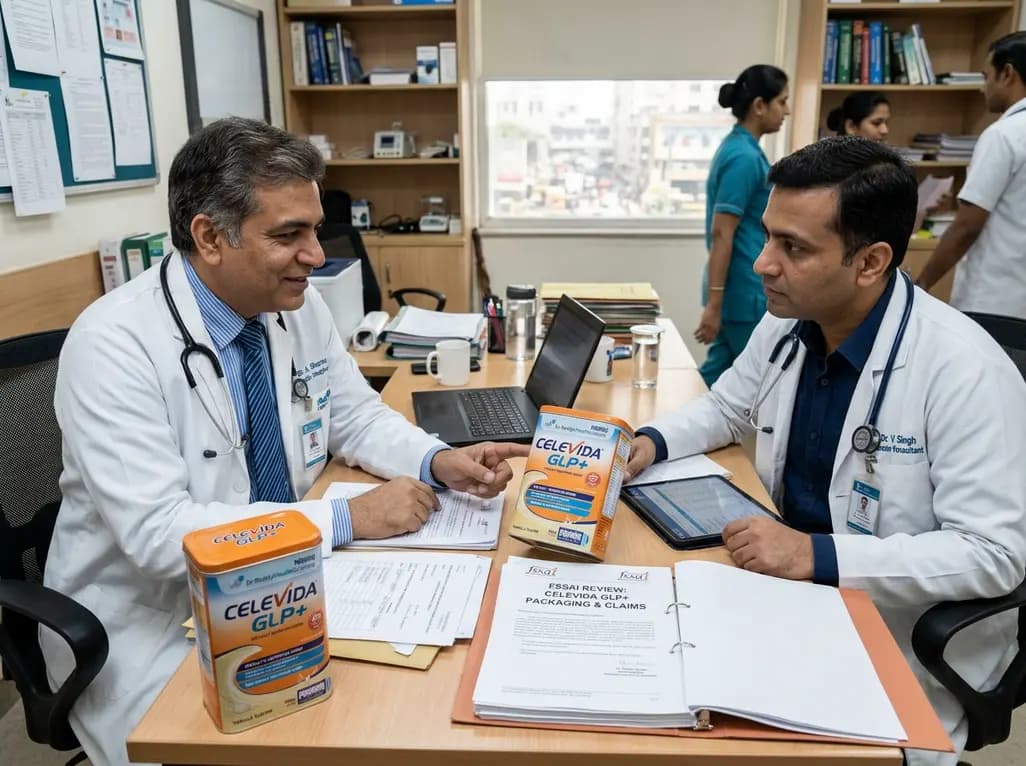
Following regulatory scrutiny from FSSAI regarding promotional representations and lean muscle preservation claims, Dr. Reddy's Laboratories and Nestlé Health Science are currently reviewing the branding and marketing strategy for their joint nutritional supplement Celevida GLP+.
Today

A comprehensive scoping review synthesises evidence linking prenatal maternal mental health to long-term offspring neurodevelopment, evaluating neuroendocrine, inflammatory, and epigenetic pathways while highlighting clinical screening and future research priorities.
Today

The Directorate General of Health Services directs Indian states to halt the hazardous reuse and reprocessing of single-use medical devices. Discover regulatory implications under the Drugs and Cosmetics Act, critical infection risks, legal liabilities, and operational changes required across clinical specialties.
Today

A 25-year multi-institutional cohort reveals high recurrence rates in pediatric giant cell tumor of bone, particularly in patients with open physes and bone marrow edema on preoperative MRI. Early surveillance and careful balance between growth plate preservation and tumor clearance are essential.
Today

India is advancing preventive healthcare by integrating genomics, artificial intelligence, and quantum technologies. With the SANGAM programme sequencing one million Indian genomes, clinicians can unlock personalized therapies, detect cardiometabolic risks early, and curb the burden of diabetes and heart disease.
Today
