.webp&w=384&q=75)

Loading, please wait...
Loading, please wait...

Venetoclax has revolutionized the treatment landscape for patients with acute myeloid leukemia (AML) and chronic lymphocytic leukemia (CLL). However, this potent BCL-2 inhibitor exhibits significant pharmacokinetic variability and a narrow therapeutic index. Consequently, clinicians often require therapeutic drug monitoring (TDM) to manage potential toxicities and optimize efficacy. Recent research into venetoclax microsampling validation provides a promising solution for decentralized patient care.
A clinical study recently evaluated the accuracy of dried blood spots (DBS) and volumetric absorptive microsampling (VAMS) in adult leukemia patients. Initially, uncorrected concentrations from both methods underestimated plasma levels by 21% and 14%, respectively. This discrepancy was primarily due to hematocrit dependence. Therefore, researchers developed individualized hematocrit-based conversion models. Following this adjustment, 95% of DBS samples and 91% of VAMS samples fell within 20% of the venous plasma concentrations. These results demonstrate that capillary microsampling meets strict international validation criteria for clinical use.
Besides technical accuracy, the study assessed whether patients could successfully perform self-sampling at home. Most participants (18 out of 21) managed to collect samples independently without professional assistance. Furthermore, 76% of the returned samples were suitable for laboratory analysis. Interestingly, patients reported higher usability ratings for VAMS devices compared to traditional DBS cards. These findings suggest that venetoclax microsampling validation in a home setting is highly feasible for the leukemia population.
The successful validation of these microsampling techniques supports a shift toward decentralized pharmacokinetic monitoring. Moreover, this approach reduces the need for frequent hospital visits, which is particularly beneficial for elderly or immunocompromised patients. Clinicians can now consider using capillary samples to tailor venetoclax dosing, provided that individualized hematocrit correction is applied. Consequently, this method could improve the safety profile and convenience of venetoclax therapy in real-world clinical practice.
Hematocrit levels influence the distribution of venetoclax between whole blood and plasma. Because capillary microsamples use whole blood, uncorrected results often underestimate plasma concentrations. Individualized correction ensures that the microsampling data accurately reflects the systemic drug exposure seen in standard plasma tests.
While both methods achieved high clinical accuracy, the study found that patients generally preferred VAMS devices. These devices are often perceived as more user-friendly and less prone to the volumetric errors that can occur with traditional dried blood spot cards.
Disclaimer: This content is for informational and educational purposes only and does not constitute medical advice, diagnosis, or treatment. Always seek the advice of a physician or other qualified health provider with any questions regarding a medical condition. Refer to the latest local and national guidelines for clinical practice.
References
Levens AD et al. Clinical Validation of Venetoclax Volumetric Microsampling in Patients with Leukemia with Assessment of Whole-Blood-to-Plasma Conversion Strategies and Self-Microsampling Feasibility. Clin Pharmacokinet. 2026 Apr 22. doi: 10.1007/s40262-026-01635-3. PMID: 42020921.
"
Read summarized clinical updates, watch expert medical content, and earn CME certifications right from your smartphone.
Open your smartphone camera to scan and install.





Study confirms that capillary microsampling (DBS and VAMS) is a valid, feasible tool for decentralized Venetoclax monitoring in leukemia patients....
6 months ago
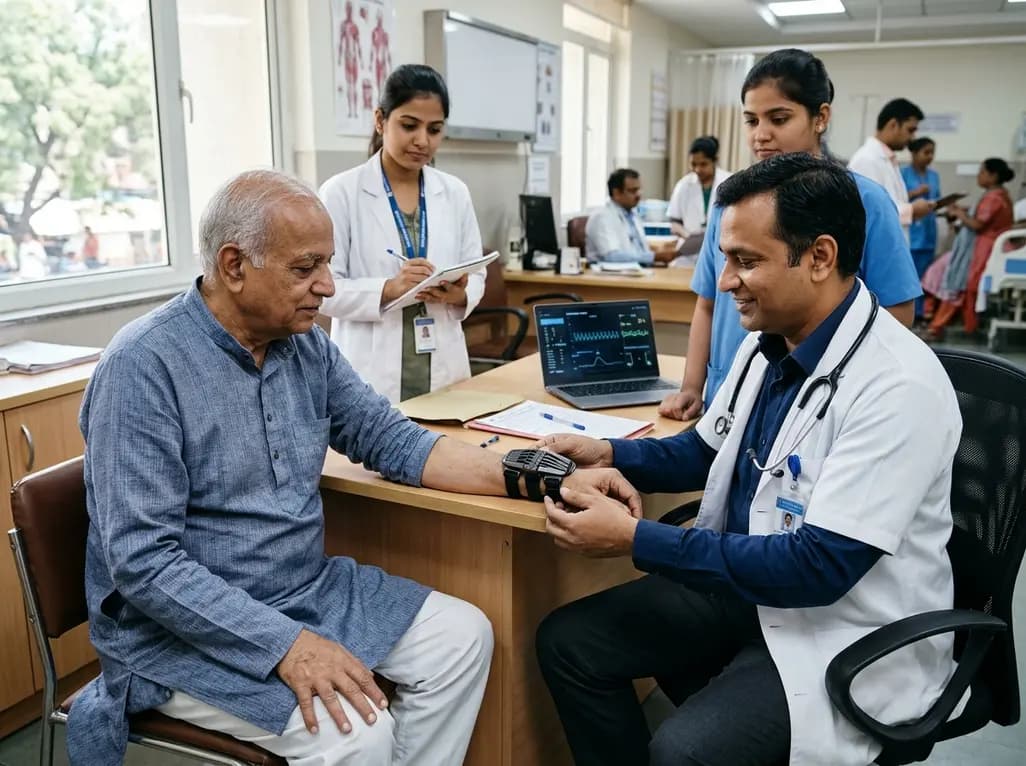
The TREM-AB open-label pilot study evaluated a wearable passive nonlinear vibration absorber for essential tremor. The Nonlinear Energy Sink bracelet reduced clinical Fahn-Tolosa-Marin tremor scores by 32.1% and electrophysiological tremor power by 49.2% with no adverse effects reported.
Today

A population-based study of 20,928 children reveals that small vulnerable newborns face sex-divergent mental capital outcomes at ages 6-7: term SGA girls show higher behavioral difficulties and lower resilience, while preterm non-SGA boys experience increased behavioral problems.
Today
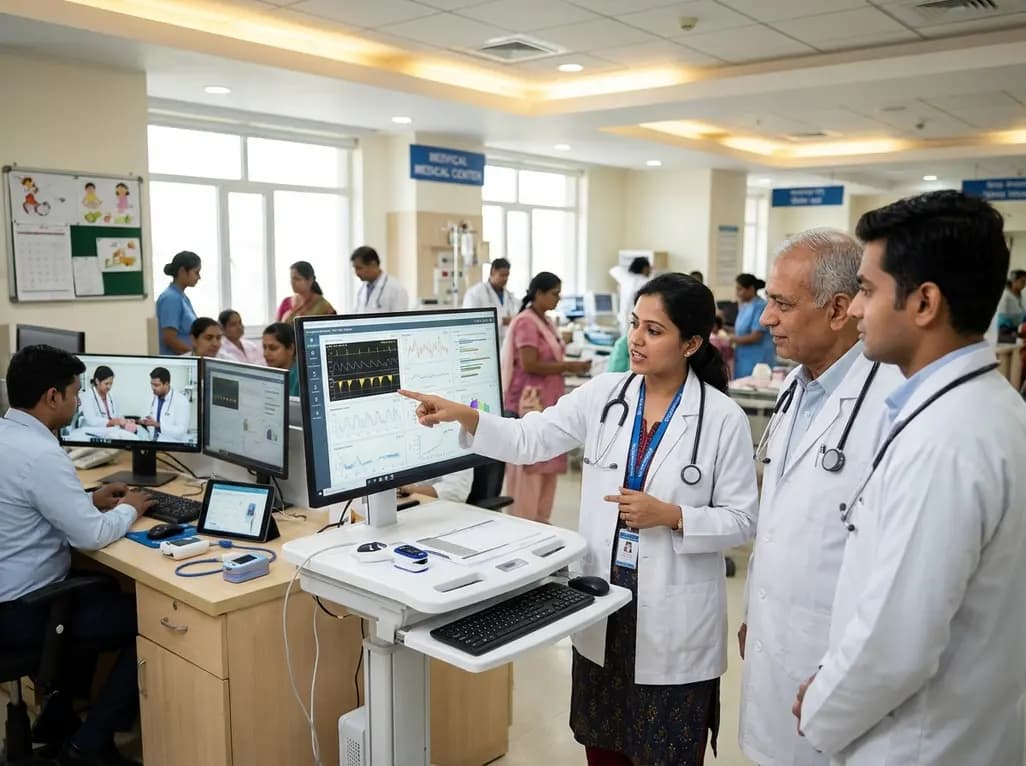
A landmark study details how an enterprise pediatric remote patient management model expanded from a single cardiology pilot to 16 diverse specialty programs by combining centralized digital operations with specialty clinical leadership.
Today

A comparative review of tension band wiring and intramedullary screw fixation in thumb metacarpophalangeal arthrodesis, evaluating union rates, hardware complications, and clinical outcomes.
Today

A breakthrough ultrathin multimodal sensor decouples physical hemodynamic monitoring from disposable electrochemical calibration, achieving long-term wearable glucose prediction with 81.36% accuracy and a 9.12% MARD. This offers a robust, drift-free solution for outpatient metabolic surveillance.
Today
