.webp&w=384&q=75)

Loading, please wait...
Loading, please wait...

Understanding peripheral and cerebral vasomotion is vital for medical professionals who manage patients with obstructive sleep apnea or chronic respiratory failure. A recent physiological study explored how the human body regulates blood flow when exposed to simultaneous low oxygen (hypoxemia) and high carbon dioxide (hypercapnia). These gas conditions frequently occur together during apneic events. However, their combined impact on the vascular system has remained poorly understood until now.
Specifically, the research team discovered a synergistic interaction between these two gases in the peripheral circulation. The researchers exposed healthy adults to combined gas stressors and observed that systemic vasoconstriction was significantly more intense than the sum of isolated effects. Consequently, leg vascular conductance decreased more sharply during the combined trial. This suggests that the peripheral limbs respond with a compensatory narrowing of blood vessels to help redirect circulation toward vital organs.
In contrast to the limbs, the brain exhibits a different regulatory pattern regarding peripheral and cerebral vasomotion. The data reveals that hypercapnia-induced cerebral vasodilation remains remarkably robust even when oxygen levels drop. The research showed that the middle cerebral artery velocity continued to increase primarily due to the rising levels of carbon dioxide. Therefore, the brain prioritizes its metabolic needs by responding to hypercapnic triggers. This ensuring that blood flow remains sufficient despite hypoxemia.
Furthermore, these results help explain the cardiovascular risks linked to sleep-disordered breathing. Frequent episodes of peripheral vasoconstriction can ultimately contribute to systemic hypertension and long-term vascular dysfunction. Additionally, the preservation of cerebral vasodilation suggests a resilient mechanism that protects neural tissue from immediate ischemic injury. Future clinical practice should consider these distinct vascular pathways when treating patients with complex respiratory stressors.
They work together synergistically in the peripheral system to increase vasoconstriction, which limits blood flow to the limbs. In the brain, hypercapnia usually overrides the effects of hypoxemia to maintain vasodilation.
OSA patients experience repeated cycles of low oxygen and high carbon dioxide. Understanding how these gases regulate blood flow helps explain the increased risk for heart disease and high blood pressure in this population.
Yes. While the peripheral vessels constrict significantly under combined stress, the cerebral vessels dilate to ensure the brain receives enough blood. This response is primarily driven by carbon dioxide levels.
Disclaimer: This content is for informational and educational purposes only. It is not intended to provide medical advice or to substitute for professional clinical judgment. Refer to the latest local and national guidelines for clinical practice.
References
Horiuchi M et al. Hypoxemia and hypercapnia synergistically mediates peripheral vasoconstriction whereas hypercapnia mediates cerebral vasodilation in resting humans. Am J Physiol Regul Integr Comp Physiol. 2026 May 04. doi: 10.1152/ajpregu.00085.2026. PMID: 42077182.
Reichmuth KJ et al. Impaired vascular regulation in patients with obstructive sleep apnea: effects of continuous positive airway pressure treatment. Am J Respir Crit Care Med. 2009;180(11):1143-1150.
Foster GE et al. Human cerebrovascular and ventilatory responses to combined hypoxia and hypercapnia. J Physiol. 2005;563(Pt 3):899-911.

Read summarized clinical updates, watch expert medical content, and earn CME certifications right from your smartphone.
Open your smartphone camera to scan and install.





A new study reveals that hypoxemia and hypercapnia synergistically drive peripheral vasoconstriction, while the brain maintains vasodilation via hypercapnia...
5 months ago

A retrospective cohort study reveals that frailty quadruples the odds of pressure injuries in hospitalized older adults. Integrating the Clinical Frailty Scale with comprehensive geriatric care is crucial for identifying vulnerability early and implementing targeted multidisciplinary prevention.
Today

Occult maternal malignancy accounts for 3.82% of persistent unreportable NIPT results with genomic noise. Multiple chromosomal aberrations, notably on chromosome 18, warrant thorough oncological evaluation and whole-body MRI to ensure timely maternal diagnosis while preserving fetal care.
Today

This article reviews the forensic and clinical complexities of acute myocarditis arising on left ventricular hypertrophy in children, highlighting early diagnostic red flags and multidisciplinary postmortem autopsy protocols.
Today
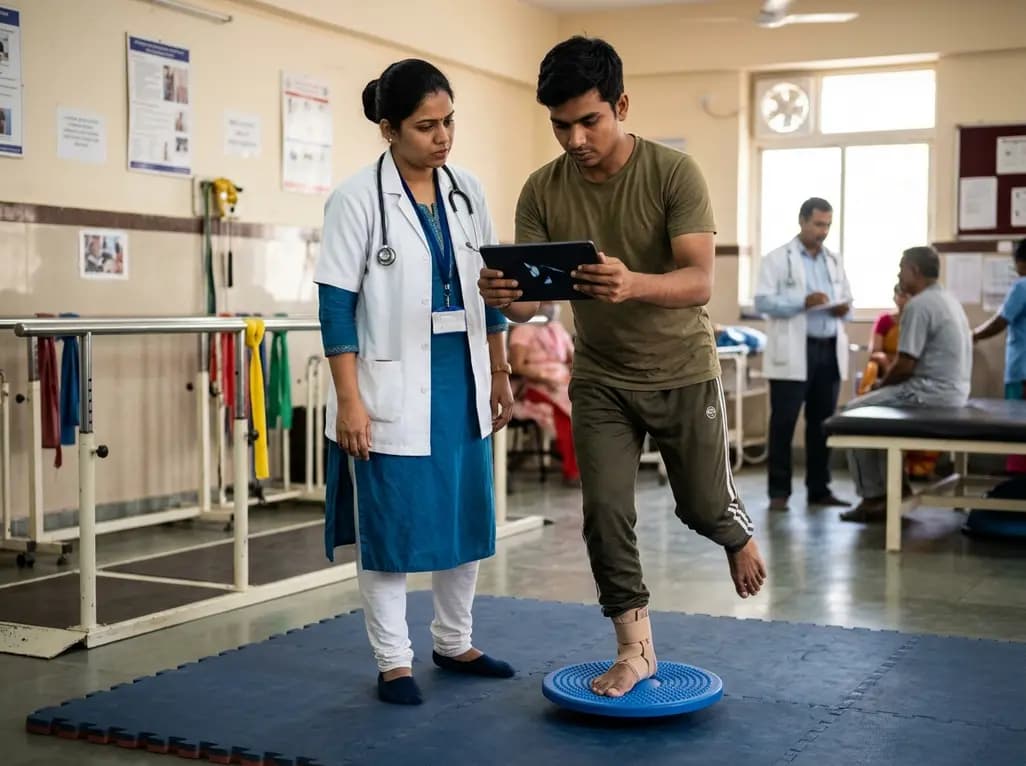
A randomized controlled trial demonstrates that an eight-week dual-task training intervention significantly improves static and dynamic postural control over standard balance exercises in individuals with chronic ankle instability, addressing critical neurocognitive deficits during athletic and daily activities.
Today

A retrospective cohort study of 7,716 ICU patients from the MIMIC-IV database demonstrates that Gradient Boosting Decision Trees significantly outperform traditional SOFA scores in predicting in-hospital mortality among patients with sepsis and diabetes, with SHAP analysis providing clinical interpretability.
Today
