.webp&w=384&q=75)

Loading, please wait...
Loading, please wait...

The United States government has announced a substantial increase in international emergency assistance to mitigate the escalating public health crisis in Central Africa. Specifically, new allocations for Ebola response funding will almost double direct aid to the Democratic Republic of Congo. This decision addresses the second-largest Ebola epidemic documented in global history. The State Department confirmed that an additional $242 million will support field operations over the next six months. Consequently, total direct bilateral financial assistance for this containment effort has reached $512 million. International relief organizations emphasize that rapid financial mobilization is vital to slow viral transmission across affected healthcare zones and neighboring borders.
International aid organizations have highlighted the urgent necessity for expanded resource deployment in response to the growing outbreak. The latest financial commitment by the United States government will sustain direct operational support for field teams over a six-month window. Consequently, frontline workers can continue essential containment activities across eastern Congo. Spokesperson Tommy Pigott stated that U.S. direct assistance now exceeds $512 million. Furthermore, this funding complements broader humanitarian relief packages distributed across East and Central Africa.
Despite these significant financial contributions, health officials stress that funding gaps remain a critical challenge. Humanitarian agencies note that effective disease suppression requires sustained, multi-sectoral investments rather than periodic emergency injections. Moreover, rapid allocation of funds ensures that international partners can procure supplies without administrative delays. Additionally, regional health authorities require resources to maintain laboratory infrastructure, contact tracing, and safe burial practices. Without continuous financial backing, containment efforts risk severe disruption. Therefore, public health leaders urge global donors to match these financial commitments. Coordinated financial action remains essential to stabilize the regional healthcare ecosystem and protect vulnerable populations from further viral spread.
The current Ebola outbreak in eastern Democratic Republic of Congo represents an exceptionally complex public health emergency. Official national figures indicate nearly 3,874 confirmed cases and over 1,751 fatalities. However, the World Health Organization warns that actual infection numbers could be two to four times higher. This discrepancy stems directly from surveillance gaps, delayed case reporting, and logistical barriers in active conflict zones. Furthermore, French medical charity MSF reported that early mortality rates in this outbreak exceed those observed during equivalent periods of the 2014–2016 West African epidemic.
Epidemiologists emphasize that strain-specific characteristics significantly complicate the clinical response. Unlike previous outbreaks involving the Zaire ebolavirus, the current circulating viral strain lacks widely available licensed vaccines or targeted monoclonal antibody treatments. Consequently, clinical management relies heavily on supportive care, early rehydration, and rigorous infection control. Active armed conflict in eastern Congo further severely restricts mobile medical teams from accessing remote communities. As a result, delayed diagnosis remains widespread, accelerating community transmission. Addressing these epidemiological challenges requires comprehensive field strategies, robust community engagement, and rapid diagnostic deployment to isolate suspected cases early.
Translating high-level financial aid into effective clinical outcomes requires robust on-the-ground healthcare infrastructure. United States assistance has directly sustained over 180 health facilities throughout affected provinces. Additionally, emergency logistics channels have delivered nearly 300 tons of critical medical supplies, including personal protective equipment, laboratory reagents, and sanitation materials. These resources enable local medical staff to maintain basic infection control standards despite overwhelming patient volumes.
However, healthcare workers face severe operational hurdles when managing highly infectious viral hemorrhagic fevers in resource-constrained environments. Sustained funding allows implementing partners to construct dedicated isolation units and establish triage protocols at facility entrances. Furthermore, field logistics teams utilize funding to supply clean water and reliable power generation for remote diagnostic clinics. Local healthcare capacity strengthening is essential to prevent nosocomial transmission among clinical staff. Consequently, continuous resource allocation helps safeguard frontline health personnel while preserving essential primary care services for non-Ebola illnesses. Through targeted facility support, international responders aim to rebuild trust within local communities and ensure early presentation of symptomatic patients.
The governance and structural management of international health aid have sparked intense debate among policy experts. Critics from global humanitarian agencies argue that earlier structural changes, including the reorganization of global development bodies, reduced initial preparedness. They contend that shifting operational oversight diminished response speed during early outbreak stages. Consequently, first responders faced immediate gaps in surveillance tools and field logistics when the initial cases emerged.
Conversely, State Department representatives defend the administrative restructuring. Official statements assert that consolidating foreign assistance under streamlined diplomacy protocols improved operational efficiency. Spokesperson Tommy Pigott noted that direct intervention prevented the outbreak from reaching even more catastrophic levels. Nevertheless, global health policy experts emphasize that organizational transitions must prioritize field readiness. Seamless communication between diplomatic authorities, public health institutes, and non-governmental medical providers remains imperative. For clinical professionals monitoring global health security, this debate highlights the vital role of predictable, transparent governance in managing large-scale biological threats.
For medical educators and clinicians worldwide, the evolving Ebola crisis offers crucial lessons in global health security and clinical vigilance. Although the immediate geographic focus remains in Central Africa, global travel patterns create potential risks for cross-border disease importation. Therefore, healthcare providers must maintain high clinical index of suspicion when evaluating patients presenting with unexplained fever, hemorrhagic manifestations, or acute systemic illness following international travel.
Furthermore, clinicians must understand the operational importance of early isolation and rapid reporting. Timely notification of public health authorities prevents localized transmission within clinical facilities. Educational programs for healthcare workers should emphasize differential diagnosis, protective equipment protocols, and strict adherence to infection control standards. Additionally, the absence of specific antiviral countermeasures for certain Ebola strains underscores the necessity of standard supportive management. Physicians must stay updated on national guidelines for viral hemorrhagic fevers to ensure rapid identification and safe referral. Ultimately, strengthening individual clinical surveillance forms the first line of defense against emerging global infectious threats.
Q1: Why is the current Ebola outbreak in the Democratic Republic of Congo particularly difficult to contain?
The outbreak is severely complicated by active armed conflict, major gaps in disease surveillance systems, and delayed initial case detection. Furthermore, the circulating strain lacks widely distributed licensed vaccines or specific antiviral therapeutics. Consequently, containment relies heavily on early supportive clinical care, rigorous contact tracing, and strict barrier nursing protocols, which are difficult to execute in volatile security environments.
Q2: How is the increased United States financial assistance being utilized on the ground?
The additional financial allocation directly supports key operational response activities over a six-month period. Funding supports more than 180 healthcare facilities in affected zones, facilitates the procurement and delivery of nearly 300 tons of essential medical supplies, and strengthens local laboratory diagnostic capabilities. Additionally, it funds frontline healthcare worker training, community surveillance initiatives, and emergency isolation infrastructure.
Q3: What clinical precautions should healthcare providers take regarding international viral hemorrhagic fever threats?
Healthcare providers must maintain high clinical suspicion for patients presenting with acute febrile illness or unexplained bleeding who have recent travel history to endemic regions. Immediate patient isolation, strict adherence to personal protective equipment guidelines, and prompt reporting to local public health authorities are essential. Clinicians should also review local protocols for standard supportive therapy and rapid diagnostic testing.
Disclaimer: This content is for informational and educational purposes only. It does not constitute medical advice or replace professional judgment. Refer to the latest local and national guidelines for clinical practice.
References

Read summarized clinical updates, watch expert medical content, and earn CME certifications right from your smartphone.
Open your smartphone camera to scan and install.





The U.S. State Department announced an additional $242 million allocation to combat the rapidly expanding Ebola outbreak in the Democratic Republic of Congo. This brings total direct assistance to $512 million. Health officials highlight surveillance gaps, active conflict, and therapeutic shortages as major hurdles.
Today

Michigan reports thousands of cyclosporiasis cases linked to contaminated iceberg lettuce. Learn about Cyclospora cayetanensis transmission, clinical symptoms, laboratory diagnostic stool tests, first-line trimethoprim-sulfamethoxazole treatment, and key public health prevention measures for healthcare providers.
Yesterday

A systematic review involving over 31,000 opioid-exposed children across 10 countries reveals that in utero exposure is linked to long-term visual impairment, attention deficits, and academic difficulties. Clinicians emphasize early developmental screening and family-centered support across health and education.
2 days back
Global buyout firm KKR is set to acquire Medicover India in a landmark $1.5 billion transaction. The deal provides primary capital to clear debt, expand tertiary care, and strengthen high-acuity specialties like cardiology and oncology across 26 hospitals.
Today
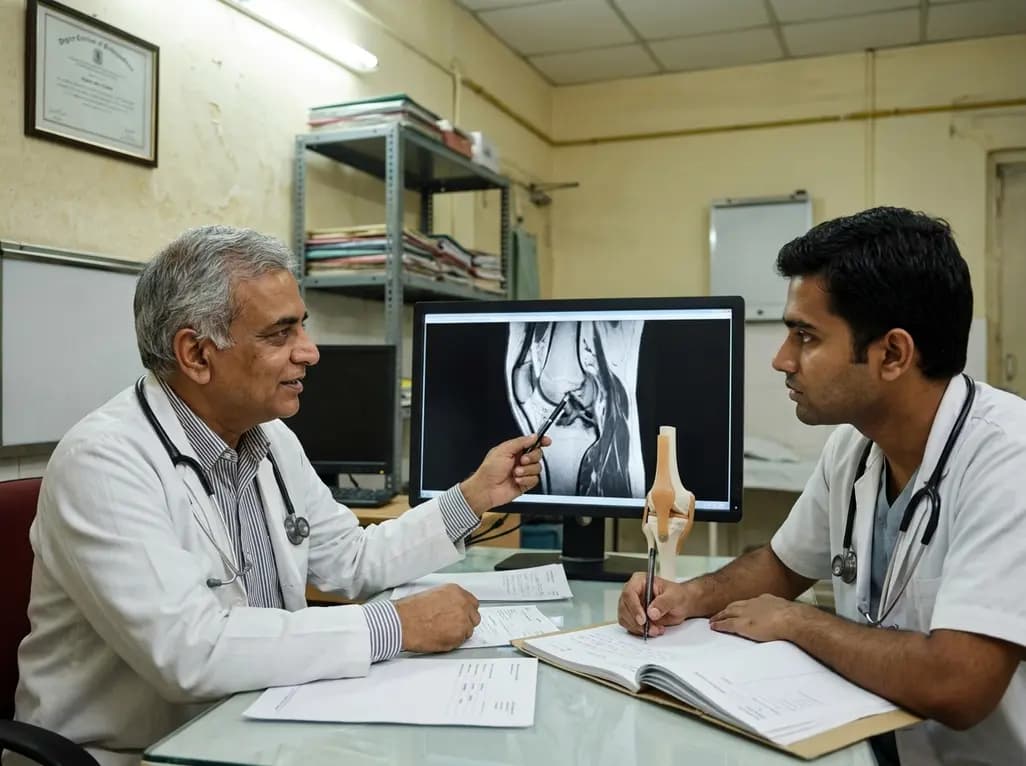
Anterior cruciate ligament reconstruction failure lacks uniform definition. A narrative review proposes an integrative framework incorporating objective and subjective instability, persistent pain, restricted motion, graft rupture, and secondary meniscal injury to standardize clinical reporting.
Last week
Union Health Minister J P Nadda reported significant progress in tuberculosis control in India, with incidence dropping by 21% and mortality falling by 25% between 2015 and 2024. Furthermore, national screening initiatives for diabetes and common cancers have expanded clinical access across district-level facilities.
Yesterday
