.webp&w=384&q=75)

Loading, please wait...
Loading, please wait...
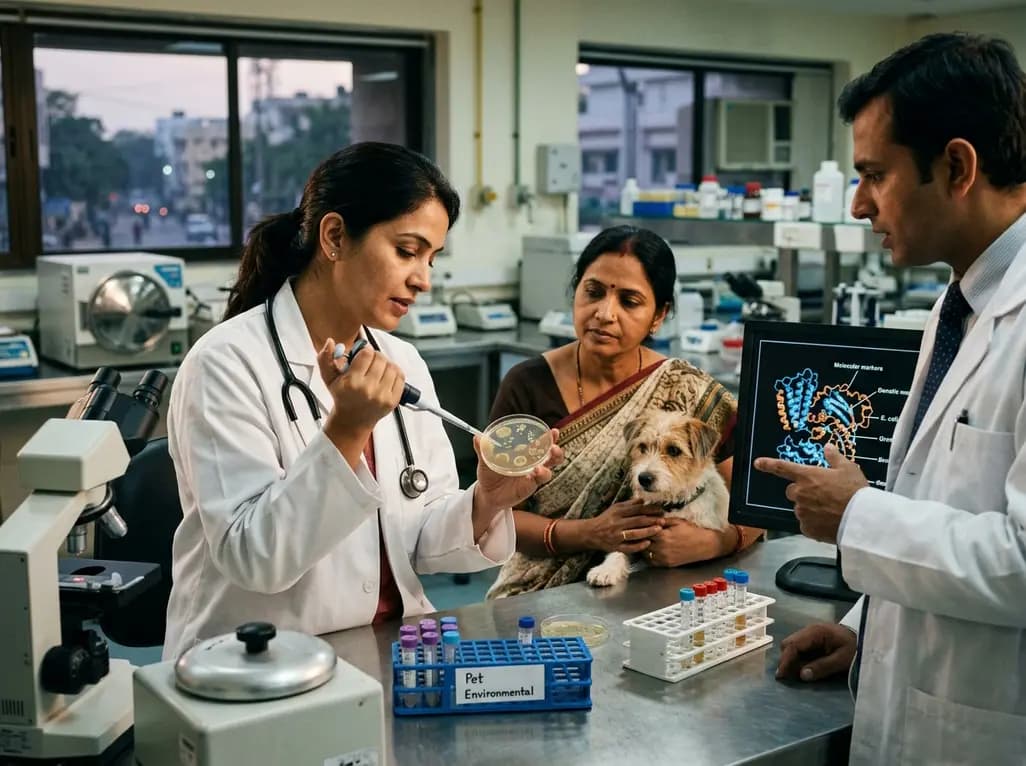
Urinary tract infections present significant diagnostic and therapeutic challenges across clinical environments. Emerging microbiological evidence highlights that uropathogenic Escherichia coli strains isolated from companion animals share striking similarities with human extraintestinal pathogens. This cross-species overlap emphasizes the urgent need to understand bacterial reservoirs and transmission pathways to safeguard human and animal health.
Urinary tract infections represent one of the most common bacterial diseases encountered in both veterinary medicine and human healthcare. Historically, clinicians viewed animal and human urinary pathogens as largely separate entities. However, modern molecular epidemiology reveals substantial overlap among pathogenic clones. Recent investigations into companion animals show that uropathogenic strains frequently exhibit hemolytic activity on blood agar, which correlates with heightened tissue destructiveness. Furthermore, these hemolytic isolates frequently belong to specific evolutionary lineages capable of colonizing host mucosal surfaces effectively.
Consequently, identifying bacterial lineages in domestic pets provides crucial insights into broader community transmission dynamics. In many households, intimate contact between owners and their pets creates direct opportunities for bacterial sharing. Therefore, when companion animals harbor extraintestinal pathogenic strains, they may serve as unrecognized reservoirs. In addition, persistent colonization in household pets can complicate the management of recurrent urinary tract infections in human family members. Clinicians must recognize these shared ecological niches. Accordingly, integrating veterinary data into clinical microbiology discussions helps medical teams anticipate potential pathogen exposure patterns in community settings.
Extraintestinal pathogenic strains rely on an extensive repertoire of virulence-associated genes to establish infection beyond the gastrointestinal tract. Recent genomic evaluations demonstrate that the vast majority of feline and canine urinary isolates belong to phylogenetic group B2, with occasional isolates categorized into phylogroup B1. Notably, phylogenetic group B2 encompasses the most virulent human extraintestinal pathogens. Through specialized mechanisms such as two-locus sequence typing and DNA microarray assays, researchers have identified diverse clonotypes circulating among household pets.
Moreover, these bacteria possess dedicated genetic machinery encoding adhesins, toxins, and iron acquisition systems. Hemolytic phenotypes often indicate the production of alpha-hemolysin, a pore-forming toxin that disrupts host epithelial barriers and promotes renal tissue damage. In addition, fimbrial adhesins such as type 1 and P fimbriae allow organisms to adhere firmly to uroepithelial surfaces despite constant urinary flow. Because these virulence factors mirror those found in severe human pyelonephritis, they highlight a high pathogenic potential. Consequently, strains originating from animals can readily colonize human urinary tissues if transfer occurs, underscoring the intrinsic biological capabilities of these shared clonal lineages.
Antimicrobial resistance represents an escalating global health crisis that transcends individual species boundaries. When companion animals receive empirical antimicrobial therapy for recurrent urinary infections, selective pressure promotes the emergence of resistant phenotypes. Microarray and phenotypic susceptibility analyses show that animal uropathogens frequently harbor resistance determinants against commonly prescribed oral antimicrobials. For instance, resistance to aminopenicillins, potentiated sulfonamides, and fluoroquinolones regularly emerges in treated veterinary cohorts.
Furthermore, transferable resistance plasmids facilitate horizontal gene transfer among different bacterial populations within shared environments. As a result, resistance determinants can move fluidly between animal commensals and human pathogens. This dynamic directly threatens the clinical utility of front-line therapeutics in both human and animal medicine. Medical professionals must therefore appreciate the interconnectedness of human, animal, and environmental ecosystems under the One Health framework. In addition, unmonitored antibiotic usage in veterinary clinics can accelerate the regional dissemination of multidrug-resistant clones. Therefore, interdisciplinary collaboration between physicians, veterinarians, and public health authorities remains essential to track resistance trends and preserve critical antimicrobial classes for future generations.
Close physical interactions between humans and their domestic pets create viable routes for microbial exchange. Transmission typically occurs through the fecal-oral route, direct mucosal contact, or contaminated household surfaces. Consequently, household members who handle litter boxes, clean animal bedding, or share sleeping spaces face potential exposure to colonized pathogens. For healthy adults, brief exposure may result in transient gastrointestinal carriage without clinical disease. However, vulnerable individuals face considerably higher risks.
Specifically, pediatric patients, elderly individuals, pregnant women, and immunocompromised hosts are particularly susceptible to opportunistic infection following bacterial transmission. If an individual acquires a virulent extraintestinal clone from a companion animal, the organism can colonize the human gut and subsequently ascend the urinary tract. As a result, patients may present with complicated cystitis, acute pyelonephritis, or systemic urosepsis. Furthermore, shared clonal carriage within a household often explains enigmatic cases of recurrent urinary tract infections that fail conventional management. Thus, clinicians should consider taking detailed social histories regarding pet ownership when investigating refractory or clustered household urinary infections.
Mitigating the risks associated with shared uropathogens requires proactive surveillance and robust diagnostic stewardship across both human and veterinary settings. Routine urine cultures, combined with definitive species identification and standardized susceptibility testing, should always guide antimicrobial selection. Clinicians must actively discourage empirical broad-spectrum antibiotic prescribing for simple cystitis when targeted alternatives exist. In addition, advanced molecular surveillance, including sequence typing and genomic profiling, provides vital data on emerging high-risk clones.
Moreover, patient education serves as a fundamental pillar of disease prevention in community medicine. Healthcare providers should routinely counsel pet owners on essential hygiene practices, such as rigorous handwashing after handling animals and regular sanitation of pet living areas. When treating patients with recurrent urinary infections, inquiring about unwell pets in the home can uncover hidden reservoirs of infection. Accordingly, coordinated One Health surveillance programs enable early detection of cross-species transmission events before widespread outbreaks occur. By uniting human medical diagnostics with veterinary epidemiology, public health systems can substantially reduce the community-wide burden of multidrug-resistant extraintestinal pathogens.
Companion animals harbor extraintestinal bacterial strains in their gastrointestinal tracts and urinary systems. Close physical contact, handling pets, and cleaning contaminated domestic environments facilitate fecal-oral transmission to human cohabitants. Once transferred, these virulent strains can colonize the human gut and ascend the urinary tract. Consequently, colonized household pets can serve as persistent reservoirs, potentially triggering recurrent urinary tract infections among susceptible family members.
Hemolytic extraintestinal strains possess specialized virulence factors that facilitate tissue invasion and immune evasion. Key factors include alpha-hemolysin, which causes erythrocyte lysis and urothelial cellular damage, along with specialized fimbrial adhesins that mediate mucosal adherence. In addition, these strains utilize siderophores for iron acquisition and protective polysaccharide capsules. Together, these genetic mechanisms enable bacteria to persist within hostile urinary environments and induce acute inflammatory responses.
A One Health approach integrates human medicine, veterinary healthcare, and environmental monitoring to combat antimicrobial resistance collaboratively. By tracking high-risk bacterial clones across species, health authorities can detect zoonotic transmission early and harmonize antibiotic stewardship guidelines. Furthermore, this interdisciplinary framework promotes rational antimicrobial prescribing, prevents environmental contamination, and educates the public on household hygiene, thereby preserving the efficacy of vital antimicrobial therapies for both humans and animals.
Disclaimer: This content is for informational and educational purposes only and should not be considered medical advice. Always consult a qualified healthcare professional for medical diagnosis, treatment, or personalized healthcare guidance. Refer to the latest local and national guidelines for clinical practice.
References
Büttner S et al. Characterisation of Haemolytic Uropathogenic Escherichia coli Isolated From Dogs and Cats. Vet Med Sci. 2026 Sep undefined. doi: 10.1002/vms3.71200. PMID: 42675015.
Jousserand N et al. Zoonotic potential of uropathogenic Escherichia coli lineages from companion animals. Vet Res. 2025;56(1):45. doi: 10.1186/s13567-025-01493-0.
World Health Organization. One Health: A holistic approach to health. WHO Guidelines and Reports. 2026.

Read summarized clinical updates, watch expert medical content, and earn CME certifications right from your smartphone.
Open your smartphone camera to scan and install.





A recent molecular study highlights shared clonal lineages and virulence traits in uropathogenic Escherichia coli from dogs and cats, emphasizing potential zoonotic transmission, antimicrobial resistance risks, and the necessity of One Health surveillance in companion animal populations.
4 weeks back

This clinical review examines the dangerous intersection of climate change and antimicrobial resistance (AMR). It highlights thermal selection, altered transmission pathways, and the imperative for One Health and Planetary Health adaptation frameworks to preserve therapeutic efficacy.
Today
Discover the crucial distinctions between mesonephric and mesonephric-like proliferations of the female genital tract. Learn the key histomorphologic, immunohistochemical, and molecular differences essential for accurate diagnosis and clinical management.
Today
A large UK Biobank study reveals that plasma proteomic signatures capture preclinical organ damage and improve multiorgan risk prediction across early CKM syndrome stages 0 to 2 beyond traditional PREVENT clinical models.
Today

A narrative review investigates whether the articularis genus muscle functions as an independent anatomical entity or blends with the vastus intermedius. We evaluate its morphology, role in retracting the suprapatellar bursa, and direct clinical significance in anterior knee pain and arthroplasty.
Today

A Bayesian multilevel meta-analysis reveals that aerobic training combined with moderate carbohydrate restriction modestly lowers HbA1c in type 2 diabetes. However, sparse data and very low certainty leave incremental benefits over exercise or diet alone unproven, highlighting the need for individualized care.
Today
