

Loading, please wait...
Loading, please wait...

Recent clinical developments highlight urinary glycosaminoglycan profiling as a transformative approach to early cancer risk detection. Traditional screening programs often exclude millions of asymptomatic adults. This exclusion occurs because conventional protocols rely on rigid demographic criteria such as age or tobacco use. Consequently, clinicians frequently miss malignancies that develop in individuals who lack conventional risk indicators. Furthermore, existing liquid biopsy methods focus heavily on circulating tumor DNA. However, circulating tumor DNA often lacks adequate sensitivity for stage I malignancies. In contrast, profiling metabolomic alterations offers an innovative strategy. This method captures systemic oncogenic processes long before overt anatomical lesions emerge. Therefore, measuring biochemical shifts in biofluids provides an unprecedented opportunity to refine cancer prediction. By establishing robust metabolic baselines, healthcare professionals can identify high-risk individuals who require targeted screening. Ultimately, this paradigm shift moves oncology from reactive diagnosis toward proactive surveillance. As a result, preventive oncology now embraces multi-cancer risk assessment tools. These tools help clinicians personalize longitudinal monitoring schedules effectively. Thus, patients gain valuable lead time for curative therapeutic interventions.
Glycosaminoglycans represent complex, linear polysaccharides that reside predominantly within the extracellular matrix and on cellular surfaces. During malignant transformation, cellular metabolism undergoes extensive reprogramming to facilitate cellular proliferation, tissue invasion, and immune evasion. Consequently, tumor cells alter the biosynthesis, sulfation patterns, and degradation of these polysaccharides. These biochemical shifts release characteristic fragments into the systemic circulation, which the renal filtration system subsequently clears into urine. Therefore, urinary glycosaminoglycan profiling captures widespread physiological changes that accompany early neoplastic growth. Unlike genomic biomarkers that depend entirely on shed tumor DNA, metabolomic profiles reflect active host-tumor interactions. For example, chondroitin sulfate and heparan sulfate disaccharides demonstrate distinctive composition changes across diverse cancer types. Moreover, researchers can quantify these molecular signatures using high-throughput tandem mass spectrometry. This non-invasive analytical technique yields a comprehensive composite score that summarizes cumulative cancer risk. As a consequence, clinicians obtain a holistic metabolic readout rather than searching for an isolated organ-specific signal. Hence, glycosaminoglycan biomarkers represent an exceptionally versatile substrate for population-level multi-cancer risk prediction.
To evaluate the predictive validity of this biomarker, investigators conducted a rigorous case-cohort investigation. They evaluated 5,436 healthy asymptomatic adults enrolled in the prospective Lifelines Cohort Study in the Netherlands. Among these participants, 827 individuals received a confirmed cancer diagnosis within five years of baseline urine collection. Researchers analyzed baseline urinary profiles and synthesized the multi-analyte measurements into a standardized GAGome score. Next, they utilized Cox proportional hazards modeling while adjusting for established demographic and lifestyle risk factors. Specifically, each standard deviation increase in the score produced a 66% elevation in incident cancer risk (hazard ratio 1.66). Furthermore, the biomarker score accounted for 36% of the overall variance in cancer risk. When investigators stratified subjects into four distinct categories, the observed 5-year cancer risks showed remarkable divergence. Participants in the Low risk tier exhibited an observed 5-year cancer incidence of only 0.18%. In comparison, individuals in the Intermediate and High risk groups displayed rates of 2.3% and 7.6%, respectively. Most remarkably, subjects in the Very High risk category faced a dramatic 32% 5-year cancer risk. Accordingly, these data confirm that metabolic profiling delivers robust prognostic discrimination in asymptomatic populations.
Current cancer screening paradigms rely heavily on single-organ assessments, including mammography, computed tomography, and colonoscopy. While these modalities save lives, they fail to identify individuals who lack conventional risk factors. In this study, targeted surveillance of individuals classified as High risk successfully detected 54% of incident cancers. Crucially, this screening threshold also captured 54% of in situ carcinomas at a 17% false-positive rate. As a result, incorporating metabolic risk stratification could fundamentally optimize how healthcare systems deploy intensive diagnostic procedures. Instead of offering invasive imaging indiscriminately, physicians can prioritize patients who exhibit verified biological risk. Moreover, this strategy facilitates earlier intervention for occult lesions before malignant cells metastasize or develop resistance. Therefore, primary care practitioners and oncologists can design personalized surveillance pathways based on objective metabolic metrics. In addition, identifying high-risk individuals prompts targeted secondary diagnostics, such as advanced cross-sectional imaging. Consequently, patients receive prompt clinical attention when therapeutic interventions achieve their highest cure rates. Furthermore, low-risk classification reassures healthy individuals and prevents unnecessary, invasive procedures. Thus, metabolic stratification balances diagnostic sensitivity with clinical efficiency across modern healthcare systems.
Although these findings demonstrate remarkable potential, clinicians must interpret metabolic profiling within an evolving diagnostic framework. Currently, no solitary biomarker serves as a universal multi-cancer screening standard in everyday clinical practice. Consequently, investigators must execute prospective interventional trials to prove that GAGome-guided surveillance significantly reduces disease-specific mortality. Furthermore, medical teams must formulate standardized clinical pathways for individuals who test into high-risk strata. For instance, selecting the most effective combination of full-body imaging, endoscopy, and serial biomarker checks remains essential. Physicians must also investigate whether coexisting renal, metabolic, or chronic inflammatory disorders alter urinary glycosaminoglycan excretion. Therefore, rigorous validation across diverse ethnic groups, including Indian populations with unique cancer epidemiology, represents a vital milestone. In addition, combining metabolic biomarkers with genomic assays could produce synergistic multi-modal diagnostic platforms. Such combined testing strategies would maximize clinical specificity while avoiding excessive false-positive investigations. Ultimately, non-invasive urinary surveillance offers an accessible, scalable tool to detect lethal malignancies at treatable stages. Accordingly, clinicians should monitor these rapid translational advancements as personalized cancer prevention moves into routine medicine.
Glycosaminoglycans are structural polysaccharides found on cell surfaces and within the extracellular matrix. During early carcinogenesis, malignant cells reprogram their metabolism to support uninhibited growth, tissue invasion, and neoangiogenesis. Consequently, tumors alter the synthesis and degradation of chondroitin and heparan sulfates. The kidneys clear these altered polysaccharide fragments into urine. Therefore, urinary profiling captures systemic metabolomic shifts driven by early oncogenesis across multiple organ sites through a simple, non-invasive collection method.
In the Lifelines Cohort Study, investigators classified asymptomatic individuals into four distinct risk categories based on their urinary GAGome scores. The observed 5-year cancer incidence was only 0.18% in the Low risk group, 2.3% in the Intermediate risk group, and 7.6% in the High risk cohort. Most strikingly, subjects classified into the Very High risk category exhibited a 32% 5-year cancer rate. Thus, the biomarker score provides powerful, objective risk stratification.
Standard screening models depend on rigid age thresholds and smoking history, leaving non-smokers and younger individuals largely unmonitored. By incorporating urinary GAGome profiling, clinicians can identify asymptomatic individuals at heightened oncological risk regardless of traditional exposures. In clinical studies, screening high-risk individuals detected 54% of incident cancers and in situ tumors at a 17% false-positive rate. Consequently, healthcare providers can allocate expensive radiological and endoscopic evaluations more efficiently to patients facing the greatest danger.
Disclaimer: This content is for informational and educational purposes only and is not intended as medical advice or a substitute for professional clinical judgment. Refer to the latest local and national guidelines for clinical practice.
References

Read summarized clinical updates, watch expert medical content, and earn CME certifications right from your smartphone.
Open your smartphone camera to scan and install.





A breakthrough study demonstrates that urinary glycosaminoglycan profiling predicts 5-year multi-cancer risk in asymptomatic adults, identifying individuals missed by current screening guidelines.
Today

A Swedish nationwide registry study of over 405,000 vaginal births shows that third-trimester SSRI exposure is linked to increased rates of labor induction, postpartum hemorrhage, and lower 5-minute Apgar scores, highlighting the need for balanced clinical risk-benefit counseling.
Today
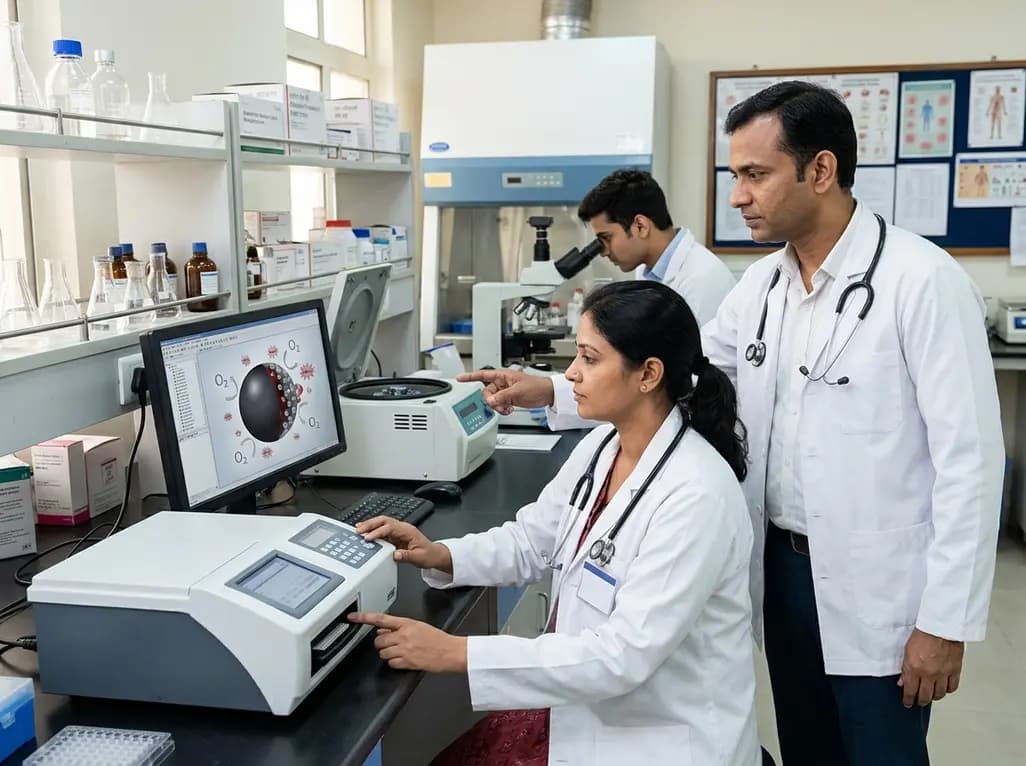
A novel MOF-based platform encapsulates hemoglobin with catalytic platinum and ceria nanozymes to deliver oxygen while scavenging toxic reactive oxygen species. This study highlights key design principles for managing hypoxia and reperfusion injury while resolving crucial stability challenges.
Today
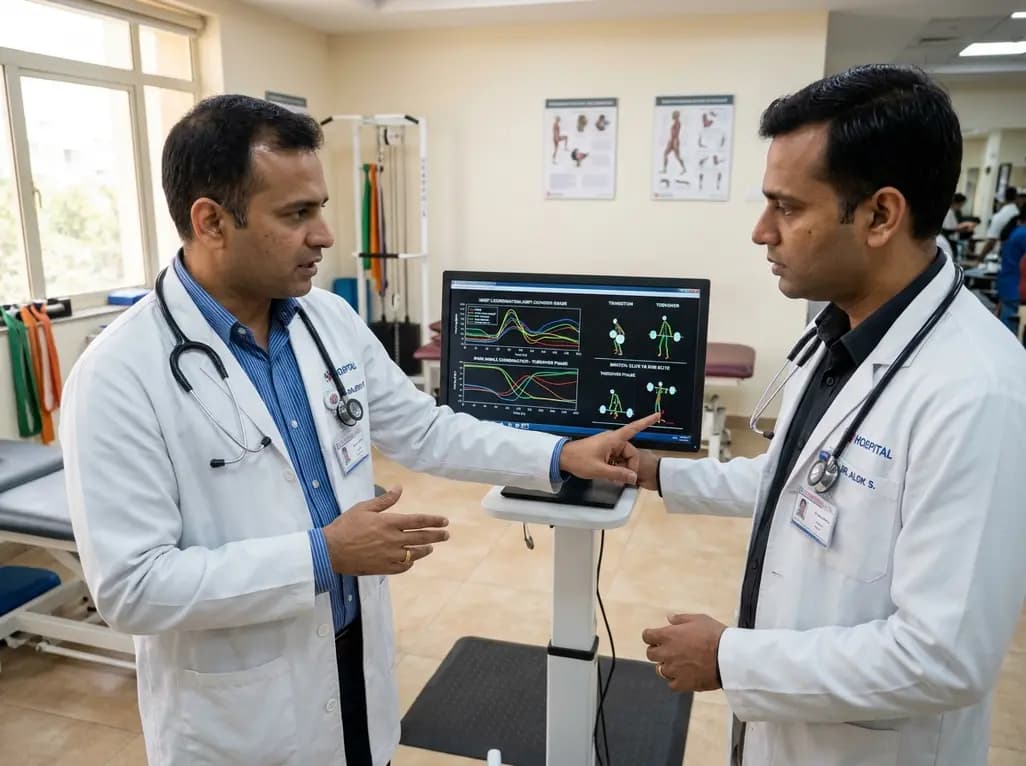
A vector coding study compares elite and sub-elite weightlifters during maximal snatch attempts, revealing that performance differences stem from phase-dependent knee-ankle coordination during transition and turnover phases rather than overall trajectory patterns.
Today

A nationwide Danish study confirms a strong association between DPP-4 inhibitors and bullous pemphigoid in type 2 diabetes. Risk is markedly elevated with current vildagliptin and linagliptin use compared to sitagliptin, highlighting crucial clinical considerations for prescribing physicians.
Today
