.webp&w=384&q=75)

Loading, please wait...
Loading, please wait...

Non-specific chronic low back pain presents a major public health challenge across outpatient clinics worldwide, including in India. Clinicians conventionally focus on spinal posture, core stabilizers, and lower limb biomechanics during clinical functional assessments. However, recent evidence suggests that functional restrictions extend well beyond the lumbar vertebral segments. Specifically, measuring upper extremity exercise capacity provides novel clinical insights into whole-body impairment. Patients suffering from persistent lumbar discomfort frequently alter their overall movement patterns. Consequently, evaluating arm and shoulder endurance uncovers concealed functional limitations that standard regional back exams routinely overlook.
Human functional movement relies on uninterrupted kinetic chains linking the upper limbs, axial skeleton, and pelvis. When lumbar tissues undergo persistent strain, muscular coordination alters throughout the entire torso. Therefore, clinicians must recognize that upper limb activities require significant lumbopelvic stabilization. For example, lifting, carrying, and overhead reaching demand coordinated isometric contraction of deep spinal stabilizers. If trunk muscles fail to maintain dynamic equilibrium, peripheral movements quickly become inefficient. In addition, chronic back discomfort frequently induces widespread motor avoidance behaviors. Patients intentionally limit prolonged arm elevation to prevent compensatory torque on injured lumbar facets. Consequently, upper limb functional endurance deteriorates gradually over time. Furthermore, this compensatory stabilization strategy accelerates global deconditioning. Thus, evaluating movement limitations exclusively at the lumbar spine provides an incomplete clinical picture of functional restriction.
To capture upper limb endurance objectively, investigators utilized the six-minute pegboard and ring test. This standardized tool evaluates unsupported upper extremity exercise capacity during continuous arm elevation. Participants move lightweight rings across vertically arranged pegs over a six-minute period. Because the test demands continuous shoulder flexion without arm support, it stresses both scapulothoracic stabilizers and postural trunk muscles. A recent cross-sectional study analyzed forty-four individuals diagnosed with non-specific chronic low back pain. Researchers systematically recorded pegboard scores alongside standardized disability indices. The findings demonstrated a statistically significant negative correlation between pegboard performance and Oswestry Disability Index scores. Patients exhibiting lower pegboard scores experienced substantially higher functional disability. Importantly, this relationship remained robust even after controlling for age, sex, body mass index, and movement pain. Hence, unsupported arm capacity mirrors overall physical impairment.
Interestingly, the study evaluated several physiological parameters to uncover the drivers of this association. The researchers assessed maximal inspiratory and expiratory pressures, thoracoabdominal mobility, and peripheral strength. In addition, they evaluated kinesiophobia using the Tampa Scale. Surprisingly, pegboard test scores showed no significant correlation with isolated handgrip strength or shoulder abductor force. Similarly, respiratory muscle strength and fear of movement did not correlate directly with upper limb performance. Therefore, isolated isometric muscle strength fails to reflect functional endurance during sustained dynamic tasks. While a patient may demonstrate adequate grip force, sustained unsupported arm activities provoke postural fatigue. Moreover, the lack of correlation with thoracoabdominal mobility underscores that muscular endurance, rather than chest expansion, dictates performance. Clinicians should consequently avoid relying solely on static strength dynamometry when evaluating patient work readiness.
In Indian clinical practice, patients with chronic spinal pain often present with multifaceted physical demands. Manual laborers, agricultural workers, and desk-bound office professionals all rely on sustained arm postures throughout daily tasks. Furthermore, domestic activities such as lifting water vessels or cooking require prolonged unsupported upper limb engagement. When physicians evaluate chronic back pain exclusively through walking distance or forward flexion, they underestimate functional disability. Therefore, integrating upper limb endurance assessments into routine orthopedic examinations offers immense diagnostic value. Identifying diminished upper extremity capacity helps clinicians stratify patients who appear structurally stable yet remain functionally disabled. In addition, early detection of upper limb fatigue allows targeted occupational rehabilitation. Multidisciplinary pain clinics can thereby formulate individualized goals that reflect real-world domestic and vocational challenges.
Modern physiotherapy for non-specific chronic low back pain must evolve beyond isolated lumbar flexion exercises. Because upper extremity exercise capacity directly predicts functional disability, exercise regimens should incorporate kinetic chain conditioning. Physiotherapists should prescribe unsupported arm endurance drills combined with active lumbo-pelvic stabilization. For instance, clinicians can introduce progressive arm ergometry, light overhead repetitive tasks, and rhythmic stabilization exercises. Additionally, clinicians must educate patients that arm fatigue often stems from inefficient trunk bracing. As stabilizing trunk muscles gain endurance, patients sustain arm tasks with minimal lumbar irritation. Moreover, graded exposure to sustained reaching decreases fear-avoidance beliefs during heavy occupational lifting. By restructuring exercise therapy around full-body functional endurance, rehabilitation teams can achieve sustainable pain reduction and enhance patient independence.
Upper limb tasks require active trunk stabilization to transfer forces safely across the kinetic chain. When chronic back pain impairs deep spinal stabilizers, sustained arm tasks provoke early fatigue and functional decline. Evaluating upper limb endurance reveals compensatory movement restrictions and overall disability that standard lumbar range-of-motion assessments often miss, enabling more effective rehabilitation planning.
The six-minute pegboard and ring test is a validated clinical assessment of unsupported upper limb endurance. Patients repeatedly move lightweight rings between pegs positioned at shoulder height for six minutes. The test assesses sustained scapular and postural endurance under aerobic conditions without requiring heavy resistance or expensive clinical machinery.
Demonstrating reduced upper limb capacity encourages therapists to prescribe holistic kinetic chain exercises rather than isolated core contractions. Clinicians can integrate unsupported arm elevation drills, overhead functional tasks, and postural endurance exercises. This comprehensive approach rebuilds real-world stamina for occupational tasks, domestic chores, and prolonged manual labor.
Disclaimer: This content is for informational and educational purposes only and should not be considered medical advice. Always consult a qualified healthcare professional for individual clinical decisions. Refer to the latest local and national guidelines for clinical practice.
References
Firat M et al. Extending beyond the spine: Upper extremity exercise capacity and disability in non-specific chronic low back pain - A cross-sectional study. Physiother Theory Pract. 2026 Oct 18. doi: 10.1080/09593985.2026.2749507. PMID: 42892753.
Hayden JA et al. Some types of exercise are more effective than others for people with chronic low back pain: a network meta-analysis. J Physiother. 2021;67(4):252-262.
Barros CFd et al. Dynamic hyperinflation induced by the 6-minute pegboard and ring test in hospitalized patients with exacerbated COPD. PLoS One. 2020;15(11):e0241639.

Read summarized clinical updates, watch expert medical content, and earn CME certifications right from your smartphone.
Open your smartphone camera to scan and install.





A cross-sectional study reveals that reduced upper extremity exercise capacity measured by the 6-minute pegboard and ring test significantly correlates with higher disability in non-specific chronic low back pain, highlighting the necessity of assessing whole-body functional chains in rehabilitation.
Today

A retrospective study of over 96,000 hospitalized adults reveals that early dietitian-led nutrition intervention within 72 hours lowers the odds of unplanned ICU transfer, major GI events, and systemic inflammation in patients at nutritional risk, highlighting an urgent need to close the inpatient implementation gap.
Today
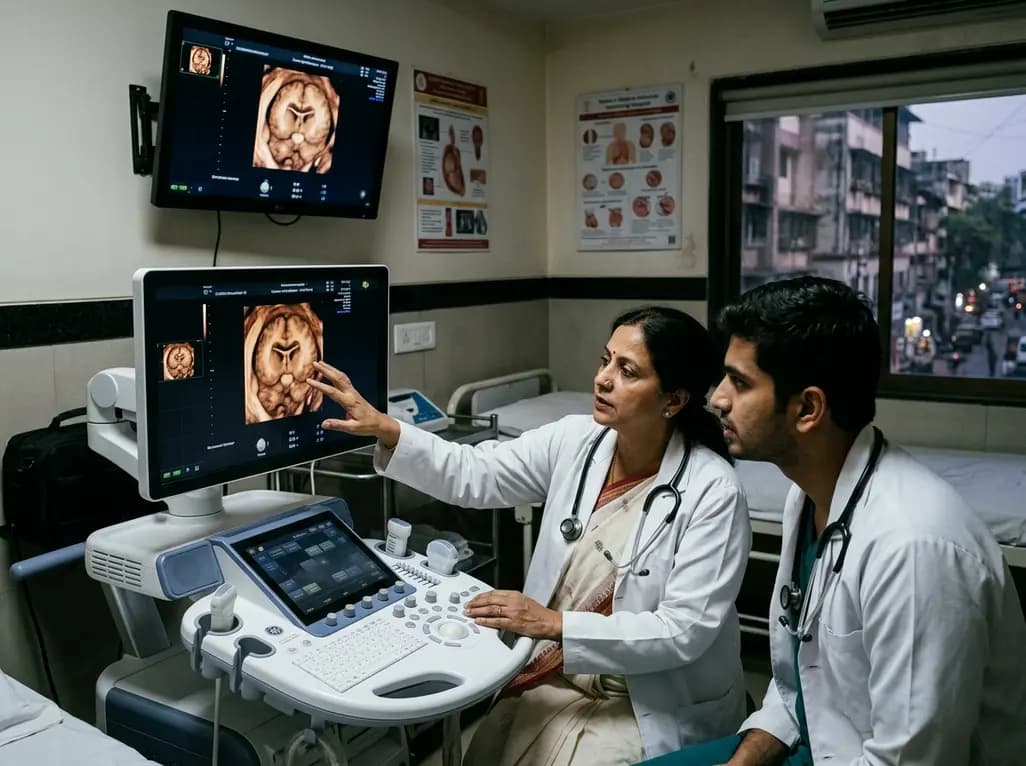
A 3D transvaginal neurosonography study shows the fetal cavum septi pellucidi develops fluid cavitation around 19 weeks and a corpus callosal length of 11.25 mm. These insights help clinicians prevent premature false-positive diagnoses of absent septum pellucidum during second-trimester anomaly scans.
Today
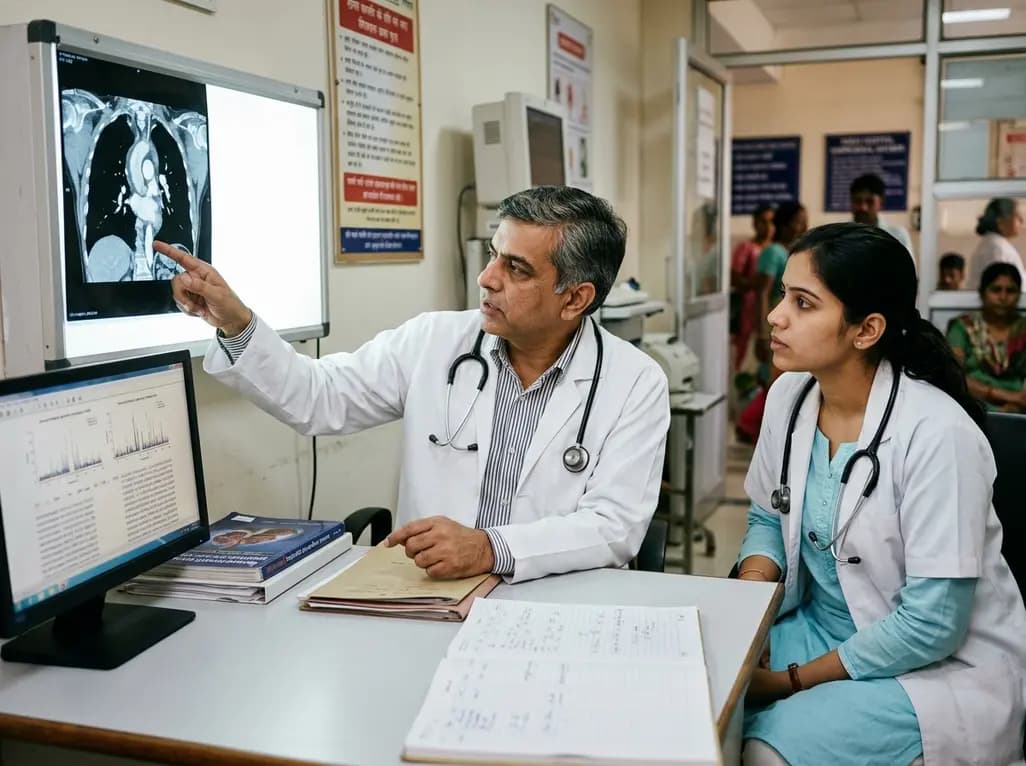
A study reveals that the MYLK c.4079G>A, p.(Gly1360Asp) variant is linked to high-penetrance heritable thoracic aortic disease and early-onset aortic dissection, showing a founder effect in Finnish cohorts. Findings emphasize early cascade screening and vigilant surveillance.
Today

A higher Life's Crucial 9 score substantially reduces MAFLD risk, with every 10-point gain lowering odds by 49%. An exploratory mediation analysis highlights the CALLY index as a vital immunometabolic pathway, offering practical insights for cardiovascular and liver health management in clinical practice.
Today
