.webp&w=384&q=75)

Loading, please wait...
Loading, please wait...
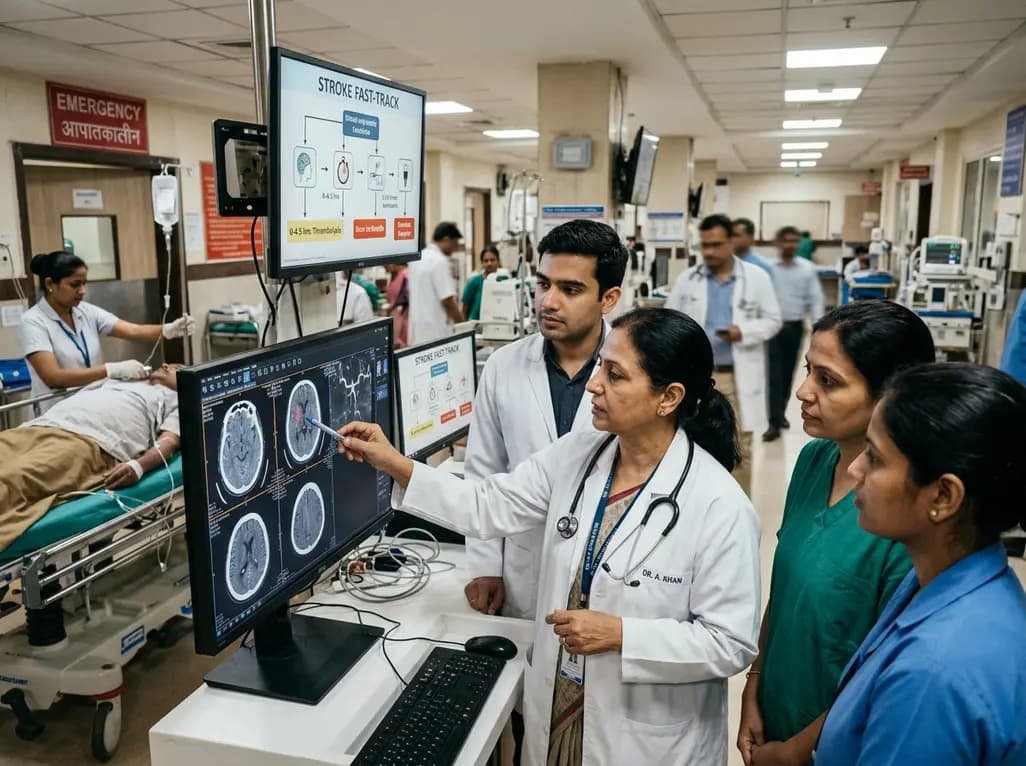
Acute ischaemic stroke remains a leading cause of long-term disability and mortality globally. Timely intervention using evidence-based stroke reperfusion therapy significantly improves functional outcomes and reduces severe neurological deficits. Recently, the Chinese Stroke Association released updated guidelines that synthesise recent high-quality clinical trial data. These recommendations redefine patient eligibility, incorporate innovative pharmacologic agents, and optimize hyperacute clinical workflows. Consequently, emergency clinicians and neurologists must understand these contemporary updates to enhance patient survival and functional recovery.
Modern acute stroke management focuses heavily on rapid tissue salvage. Therefore, clinicians must assess both time-based eligibility and tissue-based viability. The updated guidelines emphasize that intravenous thrombolysis remains foundational for eligible patients presenting within standard therapeutic windows. Furthermore, clinicians should rapidly screen patients for large vessel occlusions to facilitate swift transition to mechanical thrombectomy. Baseline assessment requires rapid National Institutes of Health Stroke Scale scoring alongside non-contrast computed tomography. However, advanced neuroimaging now plays an increasingly vital role in patient stratification. Perfusion imaging effectively identifies salvageable ischaemic penumbra in patients presenting beyond standard windows or with unknown symptom onset. Additionally, clinicians should not delay intravenous thrombolysis while awaiting secondary vascular imaging if the patient meets standard criteria. Streamlined triage protocols ensure that eligible candidates receive appropriate interventions without therapeutic inertia. By carefully balancing baseline stroke severity, imaging findings, and clinical timelines, multidisciplinary stroke teams can significantly reduce ischemic brain injury and improve long-term functional independence.
Recombinant tissue plasminogen activator, or alteplase, has long served as the benchmark thrombolytic agent. However, recent large-scale trials have expanded the pharmacologic armamentarium for acute stroke care. Specifically, tenecteplase has emerged as an effective and convenient alternative due to its higher fibrin specificity and longer half-life. The guidelines highlight that a single intravenous bolus of tenecteplase at 0.25 mg/kg demonstrates non-inferiority to standard alteplase infusions in patients presenting within 4.5 hours of onset. Moreover, this single bolus administration considerably simplifies emergency administration and facilitates rapid inter-facility transfers. In addition, the guideline evaluates other thrombolytic agents, including reteplase and recombinant human prourokinase, which offer beneficial clinical profiles in selected populations. Clinicians must meticulously verify patient eligibility, checking absolute contraindications such as active internal bleeding, recent major surgery, or severe coagulopathy. Monitoring blood pressure before and after thrombolysis is crucial; therefore, clinicians should maintain values below 180/105 mmHg. These expanded pharmacological choices allow stroke teams to tailor reperfusion strategies effectively.
Historically, the strict 4.5-hour time window restricted thrombolysis eligibility for many acute stroke patients. Nevertheless, modern perfusion imaging has revolutionized this paradigm by shifting focus from clock time to tissue physiology. The updated guidelines recommend intravenous thrombolysis for patients presenting between 4.5 and 9 hours from known onset if advanced imaging confirms core-perfusion mismatch. Specifically, clinicians can evaluate mismatch criteria using automated CT perfusion or diffusion-perfusion magnetic resonance imaging. Similarly, patients who awaken with stroke symptoms or present with unwitnessed onset can qualify for thrombolysis when MRI demonstrates a DWI-FLAIR mismatch. This imaging finding indicates that the ischemic event occurred recently, thereby confirming that viable tissue persists. Consequently, advanced neuroimaging prevents unnecessary exclusion of patients who arrive outside conventional time thresholds. Stroke teams must establish standardized rapid imaging protocols to calculate ischemic core volumes and hypoperfused tissue accurately. Thus, perfusion-guided reperfusion therapy provides a viable therapeutic avenue for previously ineligible patient cohorts, maximizing functional recovery.
Mechanical thrombectomy represents the definitive standard of care for acute ischaemic stroke caused by emergent large vessel occlusion. The updated recommendations emphasize immediate endovascular intervention for eligible patients presenting within 6 hours of symptom onset with anterior circulation occlusions. Furthermore, the guideline supports extending the thrombectomy window up to 24 hours in carefully selected patients who satisfy rigorous clinical and imaging criteria. Clinicians should utilize automated perfusion software or multiphase CT angiography to evaluate collateral circulation and infarct core boundaries. Notably, eligible patients presenting within the thrombolytic window should receive intravenous thrombolysis promptly prior to thrombectomy, without delaying the endovascular procedure. Recent evidence also supports considering mechanical thrombectomy in patients with large baseline infarct cores, as intervention often improves functional outcomes compared to medical therapy alone. In addition, endovascular teams should aim for rapid and complete recanalization using modern stent retrievers, aspiration catheters, or combined techniques. Minimizing puncture-to-recanalization time directly correlates with superior neurological recovery.
Optimizing the organizational structure of hyperacute stroke care is critical for reducing treatment delays. The guidelines introduce structured green channel flowcharts designed to accelerate decision-making from triage to recanalization. Emergency medical services must provide pre-hospital notification to the receiving stroke center to activate the acute response team before the patient arrives. Consequently, the multidisciplinary team can prepare the neuroimaging suite and laboratory testing in advance. The guidelines advocate for minimizing door-to-needle times for thrombolysis and door-to-puncture times for thrombectomy through parallel workflow processing. Moreover, dedicated emergency stroke units centralize triage, advanced imaging, and rapid interventions within a single specialized environment. Clinicians should eliminate redundant steps, such as waiting for non-essential blood test results, unless specific clinical indications exist. Continuous quality improvement initiatives, regular team simulations, and performance metrics tracking ensure adherence to hyperacute benchmarks. Ultimately, streamlined green channel workflows ensure that acute stroke patients receive timely and effective reperfusion therapy, drastically improving clinical outcomes.
The updated guidelines recommend alteplase as the standard intravenous thrombolytic agent, alongside tenecteplase at a dose of 0.25 mg/kg administered as a single bolus within 4.5 hours of symptom onset. Additionally, reteplase and recombinant human prourokinase are recognized as viable therapeutic alternatives in specific clinical scenarios.
Yes, patients presenting between 4.5 and 9 hours from symptom onset, or those with wake-up stroke, can receive intravenous thrombolysis if advanced neuroimaging demonstrates salvageable brain tissue. Clinicians must confirm a core-perfusion mismatch on CT perfusion or a DWI-FLAIR mismatch on MRI before initiating extended-window thrombolytic therapy.
Mechanical thrombectomy is strongly recommended within 6 hours of symptom onset for anterior circulation large vessel occlusions. Furthermore, the treatment window extends up to 24 hours for carefully selected patients who meet specific clinical and perfusion imaging criteria demonstrating significant penumbral tissue and limited core infarction.
Disclaimer: This content is for informational and educational purposes only. It is not intended to serve as medical advice, clinical diagnosis, or treatment guidance. Healthcare professionals must exercise their independent clinical judgment when managing individual patients. Refer to the latest local and national guidelines for clinical practice.
References

Read summarized clinical updates, watch expert medical content, and earn CME certifications right from your smartphone.
Open your smartphone camera to scan and install.





The 2024 Chinese Stroke Association guidelines provide updated evidence-based recommendations on stroke reperfusion therapy, including expanded thrombolysis windows, tenecteplase adoption, endovascular thrombectomy criteria, and streamlined emergency green channel workflows for acute ischaemic stroke.
last month

A review of incidental intestinal parasitic infections detected during colonoscopy, highlighting diagnostic morphology, the absence of peripheral eosinophilia, and tailored antihelminthic treatment.
Today

A nationwide South Korean study shows underreporting of smoking among women dropped from 57.4% to 36.4% between 2008 and 2021. However, over one-third of female smokers still conceal their habit, highlighting the critical role of cotinine verification in clinical risk assessment.
Today

PepsiCo and Monster Beverage have challenged the FSSAI ban on the energy drink label in Indian courts. While companies highlight supply disruptions, regulatory actions spotlight severe cardiovascular and metabolic risks associated with excessive caffeine, sugar, and taurine consumption, especially in adolescents.
Today
Persistent and recurrent musculoskeletal pain in youth athletes is often dismissed as simple growing pains. A developmentally informed biopsychosocial framework is essential to guide return-to-sport decisions, addressing biological vulnerabilities, psychological appraisals, and sociocultural expectations.
Today

A Bayesian multilevel meta-analysis reveals that aerobic training combined with moderate carbohydrate restriction modestly lowers HbA1c in type 2 diabetes. However, sparse data and very low certainty leave incremental benefits over exercise or diet alone unproven, highlighting the need for individualized care.
Yesterday
