.webp&w=384&q=75)

Loading, please wait...
Loading, please wait...

The rise of multidrug-resistant bacterial pathogens represents an alarming global health crisis that severely compromises empirical antibiotic regimens. Consequently, clinical teams urgently require innovative therapeutic modalities to eradicate deep-seated infections without inducing microbial drug resistance. Advanced antibacterial photodynamic therapy provides a powerful alternative by deploying light-activated photosensitizers to generate cytotoxic reactive oxygen species. Traditional photodynamic methods, however, suffer from poor tissue penetration because ultraviolet and visible wavelengths scatter rapidly in biological matrices. Upconversion nanoparticles effectively eliminate this biological limitation through nonlinear anti-Stokes luminescence under near-infrared irradiation. Therefore, converting deep-penetrating near-infrared photons into high-energy visible emissions enables targeted microbial destruction within dense infected tissues. In addition, this photonic approach offers exceptional spatial precision, sparing adjacent uninfected host tissues from collateral damage.
Lanthanide-doped upconversion nanoparticles display distinctive anti-Stokes optical behaviors that fundamentally distinguish them from conventional fluorophores. Specifically, these inorganic nanocrystals absorb multiple low-energy near-infrared photons and sequentially emit shorter-wavelength, higher-energy visible light. Because biological tissues exhibit minimal absorption and autofluorescence within the near-infrared optical window, excitation light travels centimeters into infected tissues. Consequently, clinicians can target deep subcutaneous abscesses, osteomyelitis, and complex surgical site infections with remarkable efficiency. Furthermore, researchers engineer these nanocrystals using host dielectric matrices, such as sodium yttrium fluoride, doped with trivalent lanthanide ions. Ytterbium functions as an optimal sensitizer because it exhibits a large absorption cross-section near 980 nanometers. Subsequently, ytterbium transfers harvested energy to nearby activator ions like erbium or thulium through non-radiative pathways. This sequential energy accumulation produces robust emissions across green, red, and ultraviolet spectra. In addition, tight spectral matching between emitter wavelengths and photosensitizer absorption bands maximizes reactive oxygen species generation. Thus, rational control over these photophysical processes establishes a reliable platform for non-invasive, deep-tissue antimicrobial interventions.
Generating cytotoxic reactive oxygen species requires efficient energy coupling between upconversion nanocrystals and adjacent photosensitizers. Most conventional nanosystems rely on Förster resonance energy transfer to convey excited-state energy across nanoscale distances. However, Förster resonance energy transfer depends strongly on physical separation and decreases rapidly beyond ten nanometers. Therefore, investigators synthesize compact core-shell architectures to position photosensitizers directly on nanoparticle surfaces. Under intimate contact conditions, direct excitation and short-range Dexter electron exchange also enhance radical yields significantly. Furthermore, these energetic pathways activate molecular oxygen to generate singlet oxygen and hydroxyl radicals. These short-lived reactive oxygen species rapidly destroy bacterial cell membranes, denature essential enzymes, and fragment chromosomal DNA. Consequently, microbial cells die rapidly without activating typical enzymatic resistance pathways. Moreover, dual-functional systems can simultaneously trigger localized photothermal heating alongside photodynamic oxidative stress. This multimodal synergy dismantles protective polysaccharide matrixes within thick biofilms. Additionally, researchers incorporate catalytic nanozymes into these matrices to sustain oxygen availability under hypoxic conditions. As a result, the combined attack completely eliminates persistent colonies that evade conventional systemic antibiotics. Thus, engineered nanosystems maintain potent bactericidal activity even inside poorly vascularized abscess cavities.
Rational dopant selection and structural shielding remain paramount for maximizing upconversion luminescence output in biological media. Unprotected nanoparticles suffer from severe surface quenching because surrounding water molecules dissipate excitation energy through high-energy vibrational oscillations. To counteract this energy loss, engineers construct inert epitaxial shells such as sodium yttrium fluoride over active cores. These protective shells isolate lanthanide activators from external solvent molecules while suppressing deleterious surface defect traps. In addition, researchers manipulate local crystal fields to alter emission spectra precisely. For instance, tuning dopant ratios between thulium and erbium adjusts the balance between ultraviolet and red emissions. Consequently, clinicians can tailor photonic outputs to match distinct photosensitizers, such as chlorin e6 or rose bengal. Furthermore, advanced dye-sensitized shells expand light absorption toward biocompatible 808-nanometer wavelengths. This adaptation prevents local tissue overheating caused by strong water absorption at 980 nanometers. Moreover, multi-shell configurations facilitate cascade energy transfers that multiply luminescence efficiency several times. Similarly, optimized shell thickness preserves structural integrity without diminishing energy transfer to surface-bound photosensitizers. Accordingly, mechanism-guided nanocrystal engineering substantially elevates overall photodynamic potency while safeguarding adjacent healthy host tissues.
Eradicating dense microbial biofilms demands advanced carrier designs that release therapeutics selectively at infectious foci. Microenvironments surrounding active bacterial colonies typically exhibit acidic pH, elevated enzymes, and localized hypoxia. Therefore, researchers coat upconversion nanoparticles with stimuli-responsive polymers that undergo conformational changes within acidic biofilm channels. For example, pH-cleavable linkages release encapsulated antimicrobial peptides and photosensitizers directly onto bacterial surfaces. In addition, functionalizing nanoparticles with targeting ligands, such as vancomycin, aptamers, or mannose, enhances binding affinity toward bacterial walls. This affinity ensures intimate contact, which dramatically amplifies local reactive oxygen species deposition. Meanwhile, certain nanocomposites incorporate manganese dioxide or catalase-like nanozymes to decompose endogenous hydrogen peroxide into molecular oxygen. This in-situ oxygen generation relieves severe hypoxic conditions within deep necrotic tissue. Furthermore, enzyme-responsive shells degrade specifically upon exposure to bacterial hyaluronidase or gelatinase. This localized degradation exposes positive surface charges that rapidly adhere to negatively charged bacterial membranes. As a result, the photodynamic reaction sustains continuous singlet oxygen production even in poorly perfused wounds. Such smart architectures transform passive light converters into autonomous therapeutic engines.
Despite striking in vitro successes, translating upconversion phototherapy into routine medical practice presents notable pharmacological obstacles. Lanthanide-based inorganic nanocrystals exhibit prolonged systemic retention because mammalian organs lack endogenous pathways to degrade fluoride crystals. Consequently, non-biodegradable particles accumulate within hepatic Kupffer cells and splenic tissues, raising valid long-term biosafety questions. To address this bioaccumulation dilemma, scientists currently formulate ultra-small renal-clearable particles and biocompatible hybrid matrices. Furthermore, optical dosimetry requires strict standardization across diverse clinical indications. Clinicians must balance sufficient near-infrared laser penetration against inadvertent photothermal tissue injury. In addition, manufacturing scalable batches under good manufacturing practice conditions demands rigorous quality controls. Standardized assessments must also confirm therapeutic efficacy in rigorous animal models mimicking deep human osteomyelitis. Similarly, investigators must clarify how nanoparticle accumulation influences host immune responses over prolonged observation intervals. Moving forward, collaborative research between materials scientists, clinical microbiologists, and infectious disease clinicians will drive meaningful progress. Establishing clear safety margins and validated clinical protocols remains essential for future therapeutic adoption.
Conventional photodynamic therapy relies on visible light, which scatters extensively within human soft tissues and limits therapeutic efficacy to superficial lesions. In contrast, upconversion nanoparticles utilize near-infrared excitation light located within the optical window of biological tissues. Because tissue components absorb minimal near-infrared radiation, light penetrates several centimeters into deep structures. The nanoparticles sequentially absorb these near-infrared photons and emit high-energy visible light locally, activating photosensitizers to eradicate deep-seated bacterial colonies effectively.
Bacterial pathogens rarely develop resistance to photodynamic therapy because the mechanism of action is non-specific and multitargeted. The therapy generates abundant reactive oxygen species, including singlet oxygen and hydroxyl radicals, upon light excitation. These potent oxidants immediately oxidize membrane lipids, cross-link vital surface proteins, and sever genomic DNA molecules simultaneously. Because this rapid oxidative devastation overwhelms endogenous enzymatic defenses, bacteria cannot adapt through single-gene mutations or typical drug-efflux pump mechanisms.
The primary translational barrier involves long-term biocompatibility and particle clearance from mammalian tissues. Because inorganic fluoride crystals do not readily degrade biologically, nanoparticles often accumulate within reticuloendothelial organs such as the liver and spleen. In addition, clinicians require standardized near-infrared laser dosimetry guidelines to prevent unwanted thermal damage to surrounding healthy tissue. Researchers must complete comprehensive chronic toxicity evaluations and develop scalable manufacturing techniques before initiating human clinical trials.
Disclaimer: This content is for informational and educational purposes only and should not be considered as medical advice. Always consult a qualified healthcare professional regarding any medical condition or treatment. Refer to the latest local and national guidelines for clinical practice.
References

Read summarized clinical updates, watch expert medical content, and earn CME certifications right from your smartphone.
Open your smartphone camera to scan and install.





Upconversion nanoparticles offer a groundbreaking approach to antibacterial photodynamic therapy against multidrug-resistant pathogens. By converting near-infrared light into visible emission, these nanoplatforms overcome tissue penetration limits, generating reactive oxygen species to eradicate deep-seated infections.
Today

A recent clinical report details an atypical presentation of bilateral proptosis as the primary manifestation of aggressive multiple myeloma. Explore the diagnostic pathway, imaging findings, and critical multidisciplinary management strategies essential for handling extramedullary plasma cell dyscrasias.
Today

Prenatal evaluation of fetal growth restriction requires an integrated diagnostic approach. While chromosomal microarray remains fundamental, exome sequencing offers significant diagnostic yield in isolated and syndromic cases, especially when ultrasound shows skeletal anomalies or normal placental function.
Today
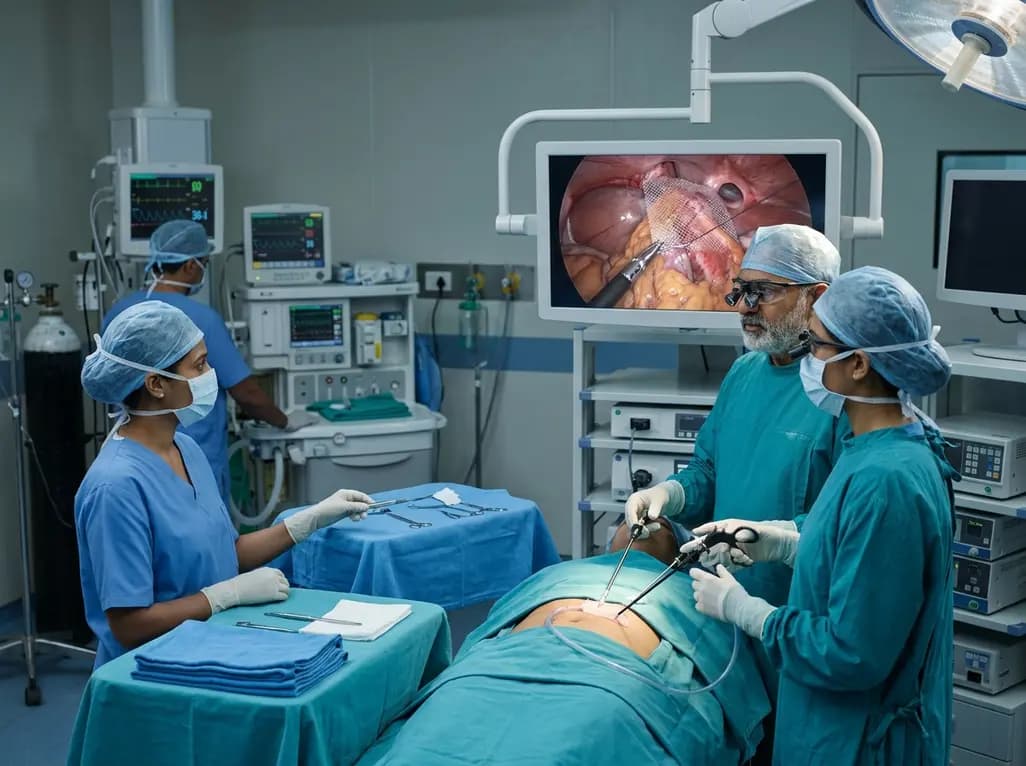
Discover a novel laparoscopic approach for iatrogenic diaphragmatic hernia repair following pedicled omentoplasty. This modified Sugarbaker technique integrates dorsal pedicle lateralization and round ligament reinforcement to secure the diaphragmatic defect while preserving vital omental vascularity.
Today

High-grade trochlear dysplasia disrupts patellofemoral stability. Although the patellotrochlear index measures cartilage overlap on MRI, cartilage contact does not ensure osseous containment. Relying solely on two-dimensional metrics may lead surgeons to overlook necessary tibial tubercle osteotomy procedures.
Today

New research reveals that M1 macrophage-derived exosomes aggravate diabetic nephropathy by transferring WTAP to stabilize S1PR2 mRNA. Silencing WTAP in these vesicles attenuates endothelial injury and renal fibrosis, pointing toward innovative nanomedicine therapies.
Today
