

Loading, please wait...
Loading, please wait...
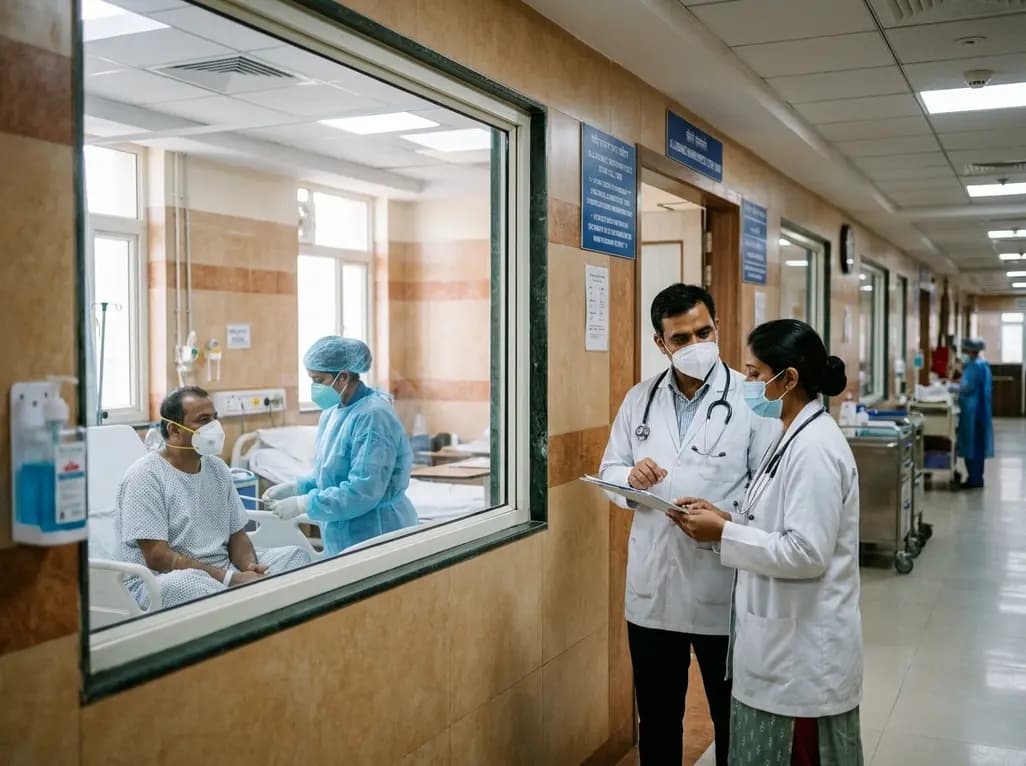
Allogeneic haematopoietic stem cell transplantation represents a curative therapy for high-risk haematological disorders. However, recipients remain profoundly immunocompromised during the peri-engraftment phase. Consequently, respiratory viral infections pose a grave threat to these vulnerable patients. Historically, clinical centres did not enforce universal face masking on transplant wards before the COVID-19 pandemic. Emerging evidence now demonstrates that structured barrier precautions significantly curtail nosocomial transmission. Specifically, routine masking protects severely neutropenic individuals from community and hospital-acquired viral pathogens. Understanding how distinct masking policies alter infectious morbidity provides vital guidance for contemporary transplant units.
Stem cell transplant recipients experience prolonged cellular and humoral immune deficiencies. Consequently, benign community viruses can precipitate life-threatening lower respiratory tract disease. Pathogens such as respiratory syncytial virus, influenza, and parainfluenza frequently trigger acute respiratory failure. In addition, viral pneumonia causes graft failure, severe pneumonitis, and excessive non-relapse mortality. Healthcare personnel and asymptomatic visitors frequently act as unwitting vectors within inpatient units. Because typical protective isolation relies primarily on positive pressure rooms and hand hygiene, airborne droplets often evade containment. Furthermore, pre-engraftment cytopenias blunt initial inflammatory responses, which obscures early clinical symptoms of progressive viral disease. Clinicians therefore struggle to initiate early supportive therapies or antiviral drugs in timely fashion. Therefore, robust barrier control remains the most dependable preventative safeguard against inpatient viral dissemination. Hospital units must recognize that source control minimizes viral shedding from asymptomatic carriers into patient environments. Consequently, establishing strict ward masking significantly lowers baseline exposure to circulating environmental droplets.
A landmark investigation evaluated transplant recipients across three distinct infection control epochs. Specifically, researchers followed consecutive cohorts undergoing allogeneic stem cell transplantation across unmasked, FFP2, and surgical mask intervals. During the initial period without mandatory masking, the cumulative incidence of respiratory infections reached alarming levels. In fact, over one-fifth of hospitalized transplant patients developed laboratory-confirmed viral illness during this baseline era. However, the mandatory implementation of FFP2 respirators triggered a dramatic turnaround. The documented infection rate plummeted from 20.7% down to merely 2.0% among consecutive transplant recipients. This profound decline underscores the immense protective capacity of high-filtration respiratory devices. Subsequently, investigators transitioned to universal surgical masking to assess real-world durability and tolerability. Surgical masks sustained robust barrier defense, maintaining infection rates well below historical baseline numbers. Statistical analyses validated that both masking modalities achieved meaningful clinical superiority over unmasked environments. Consequently, the data demonstrate that organized ward masking directly suppresses nosocomial transmission during critical post-transplant neutropenia.
Understanding the biophysical distinctions between mask types clarifies clinical efficacy. FFP2 respirators provide tight facial adherence and filter at least ninety-four percent of fine airborne particles. As a result, they intercept minute bioaerosols that hang suspended in hospital air. Standard surgical masks, by contrast, fit more loosely across facial contours. Although surgical masks excel at blocking large expelled droplets, they permit minor perimeter leakage of microscopic aerosols. Nevertheless, both masks effectively halt forward droplet propulsion generated by talking, coughing, or sneezing. In transplant units where staff and visitors remain asymptomatic carriers, bidirectional protection plays a pivotal role. Respirators offer superior personal protection for immunocompromised patients during direct contact. Meanwhile, surgical masks deliver effective source control when applied universally to all ward occupants. Clinical trials show that universal adherence often outweighs minor technical discrepancies in filtration fabrics. Therefore, consistent compliance represents the single most crucial factor in halting viral transmission chains.
Mitigating viral exposure produces far-reaching benefits for transplant recipients beyond preventing upper respiratory symptoms. Lower respiratory progression carries devastating prognostic significance in stem cell transplant recipients. For example, severe viral pneumonitis frequently triggers acute respiratory distress syndrome, requiring mechanical ventilation. Furthermore, viral infection causes persistent immune dysregulation and intensifies graft-versus-host disease. Patients struggling with respiratory viruses often require broad-spectrum antimicrobial therapy for secondary bacterial superinfections. Consequently, antimicrobial exposure elevates rates of drug toxicities and encourages fungal breakthrough infections. By implementing strict universal masking, transplant centres substantially suppress these cascaded complications. Recent clinical data confirm that dramatic reductions in viral attack rates correlate with preserved lung function and lowered non-relapse mortality. Similarly, transplant units record fewer intensive care unit transfers and reduced lengths of stay. Therefore, universal masking serves as an indispensable cornerstone of infection prevention programs.
Adopting permanent masking protocols requires clear institutional policies and staff commitment. Transplant centres must establish comprehensive training programs for medical staff, allied health personnel, and family caregivers. In addition, hospitals should ensure an uninterrupted supply of certified protective equipment. During peak respiratory virus seasons, units can prioritize FFP2 or N95 respirators for high-risk clinical interactions. Conversely, surgical masks offer a sustainable, cost-effective baseline option during periods of lower community transmission. Healthcare administrators must also monitor fit testing and proper mask donning procedures. Even minor breaches in barrier protocol can introduce lethal viruses into high-dependency units. Moreover, institutions should pair masking policies with rapid multiplex viral diagnostics. Early detection enables immediate isolation of affected individuals and halts secondary ward outbreaks. Furthermore, routine environmental disinfection and hand hygiene must accompany personal protective equipment. Clinicians should maintain continuous vigilance rather than treating masking as a temporary pandemic reflex.
Allogeneic transplant recipients experience profound immunosuppression from aggressive conditioning chemotherapy and immunosuppressive medications. Consequently, their bodies cannot mount effective antibody or T-cell responses against common pathogens. Benign upper respiratory viruses can rapidly invade the lower respiratory tract, resulting in diffuse alveolar damage. Furthermore, impaired immunity hampers viral clearance, leading to protracted shedding, secondary bacterial superinfections, severe graft dysfunction, and substantial non-relapse mortality during the early post-transplant period.
FFP2 respirators provide high-grade particulate filtration and form an airtight facial seal. Therefore, they effectively trap microscopic airborne droplets and aerosols, offering superior individual protection. In contrast, surgical masks fit loosely and primarily block large expelled respiratory droplets. However, clinical studies reveal that universal compliance with surgical masks still dramatically lowers ward transmission compared to unmasked periods. Consequently, both options represent viable protective tools depending on institutional resources and seasonal risks.
Yes, universal masking warrants permanent continuation on allogeneic transplant wards. Historically, seasonal respiratory viruses like influenza and parainfluenza caused frequent nosocomial outbreaks among immunocompromised patients. Long-term surveillance data confirm that routine masking maintains viral incidence at record low levels. Therefore, continuing universal masking protects vulnerable neutropenic patients from asymptomatic healthcare workers and visitors. Ultimately, institutionalizing continuous face masking remains a simple, highly cost-effective intervention that improves survival and prevents lethal pulmonary complications.
Disclaimer: This content is for informational and educational purposes only... Refer to the latest local and national guidelines for clinical practice.
References
Funke C et al. Progressive Reduction in Respiratory Viral Infections Across no Masking, FFP2-Masks, and Surgical Masks Periods in Allogeneic HSCT. Transpl Infect Dis. 2026 Nov 23. doi: undefined. PMID: 43070150.
Sung AD, Sung JAM, Thomas S, et al. Universal Mask Usage for Reduction of Respiratory Viral Infections After Stem Cell Transplant: A Prospective Trial. Clin Infect Dis. 2016;63(8):999-1006.
Greenhalgh T, MacIntyre CR, Baker MG, et al. Masks and respirators for prevention of respiratory infections: a state of the art review. Clin Microbiol Rev. 2024;37(2):e00124-23.

Read summarized clinical updates, watch expert medical content, and earn CME certifications right from your smartphone.
Open your smartphone camera to scan and install.





Universal masking on allogeneic stem cell transplant wards dramatically reduces respiratory viral infections. Evidence demonstrates significant risk reductions with both FFP2 respirators and surgical masks compared to unmasked periods, supporting permanent barrier precautions for vulnerable patients.
Today

Pulmonary vascular diseases like PAH carry high mortality. While current drugs improve hemodynamics, they fail to halt remodeling. This review examines viral vector engineering and endothelial targeting strategies, highlighting BMPR2 restoration and translational challenges in achieving disease-modifying therapies.
Today

A cross-sectional study of 4,862 women highlights how metabolic phenotypes alter female reproductive impairment. Metabolically unhealthy overweight and obesity presented the greatest odds for infertility and impaired fecundity, underscoring the vital need for comprehensive cardiometabolic screening.
Today

A large network analysis of middle-aged and older adults reveals distinct sex-specific dependency pathways between lifestyle factors and cardiometabolic diseases. Physical activity, smoking, and alcohol exhibit divergent bridging roles in men and women, underscoring the need for tailored clinical prevention.
Today

A breakthrough study reveals that teriparatide alleviates sarcopenia by binding MYH9 rather than PTH1R, activating an AKT/CREB1 axis to promote MYOD transcription and muscle regeneration. This discovery offers a promising biological rationale for repurposing bone anabolic therapies to combat age-related muscle loss.
Today

Researchers have engineered a resilient LC-PAM hydrogel that resolves the trade-off between toughness and elasticity. Incorporating lignin and cellulose nanoparticles alongside selenium, this biomaterial offers durable adhesion and antibacterial activity for complex infected and diabetic wound care.
Today
