

Loading, please wait...
Loading, please wait...
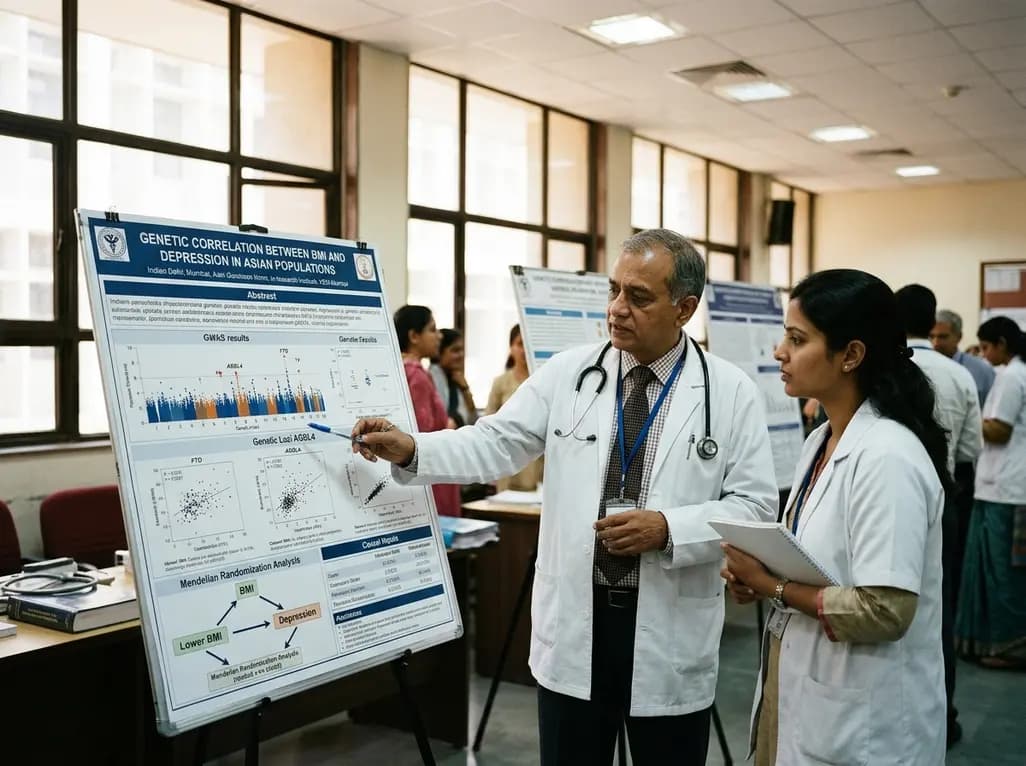
Epidemiological patterns linking body mass index (BMI) to psychiatric disorders vary substantially across global ethnic ancestries. In Western populations of European ancestry, clinical investigations consistently correlate elevated BMI and obesity with higher rates of major depressive disorder. However, clinicians practicing in Asian settings frequently witness an opposite clinical trajectory, observing a persistent correlation between underweight and depression. Until recently, the biological architecture behind this ancestral disparity remained poorly understood. A landmark genomic study published in the Journal of Affective Disorders provides critical clarity. By analyzing extensive biobank cohorts, researchers unraveled the shared genetic etiology, specific pleiotropic loci, and direct causal mechanisms governing lower body weight and depressive traits in East Asian cohorts.
For several decades, psychiatric epidemiologists observed distinct body composition profiles among depressed individuals across diverse ancestral groups. In Western countries, metabolic syndrome and obesity commonly present alongside mood disorders, driven by shared immunometabolic dysregulation. In contrast, observational cohorts throughout East and South Asia consistently report that low body mass index associates with heightened depressive severity. Consequently, clinicians have debated whether this relationship reflects somatic wasting secondary to depressive anhedonia or an independent biological vulnerability. Social determinants, nutritional intake, and lean tissue distribution certainly influence these clinical patterns. Nevertheless, phenotypic confounding in standard observational studies frequently obscures the true direction of etiology. Therefore, dissecting these pathways requires advanced psychiatric genomic methods that isolate hereditary factors from environmental bias. The current investigation addresses this clinical enigma directly. By harnessing high-powered genome-wide datasets, investigators sought to determine whether constitutional underweight status shares intrinsic biological pathways with depressive illness.
To examine this connection, researchers analyzed massive genome-wide association study (GWAS) datasets encompassing hundreds of thousands of individuals of East Asian ancestry. Specifically, the team examined genetic summary statistics from 323,298 participants for body mass index and 286,052 participants for depression phenotypes. First, they conducted linkage disequilibrium score regression (LDSC) to evaluate the genome-wide genetic correlation across both traits. Remarkably, the analysis demonstrated a statistically significant negative genetic correlation between BMI and depression (rg = -0.19, P = 0.002). Furthermore, investigators performed cross-trait meta-analyses to discover specific single nucleotide polymorphisms (SNPs) that simultaneously influence both traits. This rigorous meta-analytic approach successfully pinpointed 26 shared risk SNPs distributed across multiple genomic loci. Importantly, these findings confirm that the link between low body weight and depressive vulnerability is not merely a transient behavioral artifact. Instead, the two conditions share deeply ingrained, polygenic biological foundations in Asian ancestral populations.
Among the 26 pleiotropic loci discovered in the study, several candidate genes offer fascinating pathophysiological clues. Notably, the cross-trait analysis identified shared variants within the well-known FTO (fat mass and obesity-associated) gene locus. While variants in FTO have historically been linked to adipogenesis and energy expenditure, recent functional work underscores its prominent role in central nervous system dopaminergic signaling. Moreover, Bayesian colocalization analysis pinpointed strong evidence for AGBL4 (ATP/GTP binding protein-like 4) as a shared functional risk gene. AGBL4 encodes a cytosolic carboxypeptidase involved in post-translational polyglutamylation of tubulin proteins. Consequently, this enzyme modulates microtubule dynamics, synaptic plasticity, axonal transport, and neurodevelopmental remodeling. In addition, alterations in neurotrophic signaling and central energy homeostasis appear to intersect within these specific genetic regions. Thus, common molecular machinery regulates both metabolic drive and emotional stability in these cohorts.
Establishing genetic correlation does not automatically prove directional causality. Therefore, the investigators conducted bidirectional Mendelian randomization (MR) to establish the true orientation of risk. By employing genetic variants as unconfounded instrumental variables, MR mimics the design of a randomized controlled trial. Using this approach, the investigators discovered that a genetically instrumented lower BMI directly increased the odds of depression by 14% (Odds Ratio: 1.14, 95% Confidence Interval: 1.02 to 1.28, P = 0.021). Conversely, the reverse Mendelian randomization analysis revealed no causal effect of depression liability on body mass index. This vital insight resolves an enduring chicken-or-egg clinical question. Low BMI functions as an active upstream risk factor for mood disorders in this population rather than merely resulting from depressive hyporexia. Hence, metabolic thinness and constitutional underweight directly alter neurobiological susceptibility to affective illnesses.
These genomic insights carry notable significance for physicians managing psychiatric and metabolic health across Asian populations, including South Asia and India. Indian clinical populations exhibit unique body composition phenotypes characterized by lower muscle mass, thin frames, and high visceral adiposity at low BMI cutoffs. Historically, Indian metabolic guidelines have emphasized weight loss to curb cardiometabolic disorders. However, clinicians must recognize that excessive nutritional deficits and severe underweight status generate substantial neuropsychiatric vulnerabilities. In clinical psychiatry, patients presenting with refractory depression should undergo comprehensive nutritional, metabolic, and body composition evaluations. Furthermore, clinicians must avoid viewing severe leanness as an inherently protective physiological marker. Instead, practitioners should interpret severe underweight as a potential herald for affective vulnerability. Tailoring pharmacotherapy also matters significantly. For example, antidepressants with favorable weight-gain or orexigenic profiles might offer dual benefits in severely underweight, depressed Asian patients.
Ultimately, this research accelerates the evolution of metabolic psychiatry by emphasizing population-specific genetic architectures. Modern medicine often erroneously applies European-derived clinical benchmarks to non-European populations. Because genetic correlations between metabolic phenotypes and depression run in opposite directions across ancestries, therapeutic strategies must adapt accordingly. Moving forward, therapeutic interventions targeting central neuroenergetics, mitochondrial efficiency, and synaptic remodeling could benefit individuals carrying these specific pleiotropic risk variants. Additionally, incorporating body composition monitoring into routine psychiatric reviews allows timely lifestyle and dietary modifications. Clinicians can combine balanced caloric rehabilitation with evidence-based psychotherapy and pharmacotherapy. As precision medicine matures, recognizing the shared biology linking somatic habitus to mental well-being will empower practitioners to deliver personalized, ethnically informed interventions.
The study uncovered a significant negative genetic correlation between body mass index and depression in East Asian individuals. Using Mendelian randomization, researchers demonstrated that genetically predicted lower BMI directly increases depression odds by 14%, confirming a unidirectional causal relationship driven by shared genetic variants including FTO and AGBL4.
In European populations, genetic and clinical studies consistently link elevated BMI and obesity to higher depression rates. Conversely, Asian populations demonstrate an inverse relationship where lower BMI and underweight status associate with increased depression risk. This contrast highlights meaningful ancestry-specific differences in underlying genetic architecture and metabolic neurobiology.
Clinicians should screen underweight Asian patients for depressive symptoms and recognize leanness as a potential vulnerability marker. Rather than focusing exclusively on obesity risks, physicians must address nutritional deficits and consider selecting psychiatric medications that support healthy metabolic weight stabilization when treating underweight individuals with major depression.
Disclaimer: This content is for informational and educational purposes only. It is not intended to provide professional medical advice, diagnosis, or treatment. Refer to the latest local and national guidelines for clinical practice.
References
Chen M et al. New insights on underlying shared genetic architectures and causality of underweight and depression in East Asian populations. J Affect Disord. 2025 Jul 01. doi: 10.1016/j.jad.2025.03.126. PMID: 40122258.
Giannakopoulou O, Lin K, Meng X, et al. The Genetic Architecture of Depression in Individuals of East Asian Ancestry: A Genome-Wide Association Study. JAMA Psychiatry. 2021;78(11):1258-1269. doi:10.1001/jamapsychiatry.2021.2099.
Tyrrell J, Mulugeta A, Wood AR, et al. Using genetics to understand the causal influence of higher BMI on depression. Int J Epidemiol. 2019;48(1):48-58. doi:10.1093/ije/dyy223.

Read summarized clinical updates, watch expert medical content, and earn CME certifications right from your smartphone.
Open your smartphone camera to scan and install.





A large-scale genomic study demonstrates a significant negative genetic correlation and unidirectional causality between lower BMI and depression in East Asian populations, highlighting shared loci like FTO and AGBL4 and offering key clinical insights for Asian healthcare settings.
Today

A large retrospective cohort study demonstrates that explainable machine learning models, notably XGBoost, accurately predict hospital admission at emergency triage. By analyzing routine triage parameters, hospitals can streamline bed allocation, decrease boarding times, and alleviate acute care overcrowding.
Today

A new quality-improvement initiative reveals that universal maternal mental health screening in the NICU increased screening rates from 29.5% to 95.0%, with nearly 60% of screened mothers requiring psychosocial referrals, highlighting the urgent need for embedded mental health resources.
Today

The Department of Pharmaceuticals has extended the medical devices PLI scheme to 2035-36 with a Rs 2,700 crore outlay. Featuring relaxed investment barriers and eliminated sales thresholds, the revised framework targets deep manufacturing, high-end diagnostics, critical MedTech components, and supply resilience.
Today
A metabolomic study reveals that aging delays glutathione synthesis and gamma-glutamylcysteine accumulation following muscle injury. Although precursor supplementation targets this enzymatic bottleneck, in vitro tests show no immediate effect on myogenesis, highlighting the complexity of muscle repair in older adults.
Today

A systematic review evaluates psychological interventions for smoking cessation in diabetes, showing short-term success but highlighting challenges in long-term abstinence.
Today
