.webp&w=384&q=75)

Loading, please wait...
Loading, please wait...

Uncounted COVID-19 deaths significantly exceeded official tallies during the first two years of the pandemic, according to recent research. While official certificates recorded approximately 840,000 deaths in 2020 and 2021, AI-driven estimates suggest an additional 155,000 unrecognized fatalities occurred outside hospitals. This data indicates that roughly 16% of total pandemic deaths went unrecorded during that specific period. Experts suggest that these findings highlight systemic failures in diagnostic access and mortality reporting across the United States.
Research indicates that uncounted COVID-19 deaths were most prevalent among Hispanic populations and other people of color. These individuals often died in the early months of the pandemic without receiving a formal diagnosis. Furthermore, geographic location played a critical role in mortality reporting accuracy. States in the South and Southwest, including Alabama and Oklahoma, showed significantly higher rates of missing data. Consequently, structural barriers to healthcare access continue to impact these marginalized communities today.
Several factors contributed to the high number of unrecognized fatalities. Initially, at-home testing was not readily available for those dying outside of hospital settings. Moreover, the death investigation system remains antiquated in many rural areas. Many jurisdictions rely on elected coroners who lack specialized medical training. Additionally, political pressure and social stigma occasionally influenced how causes of death were recorded. Some families even requested that coroners omit COVID-19 from official records to avoid controversy.
To identify these uncounted COVID-19 deaths, researchers utilized advanced machine learning models. They analyzed patterns in death certificates where COVID-19 was confirmed in a hospital setting. Subsequently, the AI evaluated certificates of individuals who died at home from conditions like pneumonia or diabetes. This approach allowed scientists to isolate fatalities likely caused by the coronavirus rather than underlying comorbidities. Although machine learning in medical research is still evolving, experts consider this application highly intriguing for future public health surveillance.
Q1: Why were so many COVID-19 deaths uncounted early in the pandemic?
Many deaths occurred outside of hospitals where testing was unavailable. Additionally, the reliance on elected coroners and social stigma regarding the virus led to inconsistent reporting in several states.
Q2: Which demographics were most affected by these reporting gaps?
The study found that Hispanic people and other people of color were disproportionately represented among the undiagnosed dead, particularly in the Southern and Southwestern United States.
Q3: How did the researchers use artificial intelligence in this study?
Researchers used machine learning to find patterns in hospital death certificates. They then applied these patterns to non-hospital death certificates attributed to pneumonia or diabetes to estimate true COVID-19 mortality.
Disclaimer: This content is for informational and educational purposes only. It does not constitute medical advice or replace professional judgment. Refer to the latest local and national guidelines for clinical practice.
References

Read summarized clinical updates, watch expert medical content, and earn CME certifications right from your smartphone.
Open your smartphone camera to scan and install.





A new study using AI estimates that 155,000 COVID-19 deaths were uncounted early in the pandemic, highlighting major diagnostic and racial disparities....
7 months ago
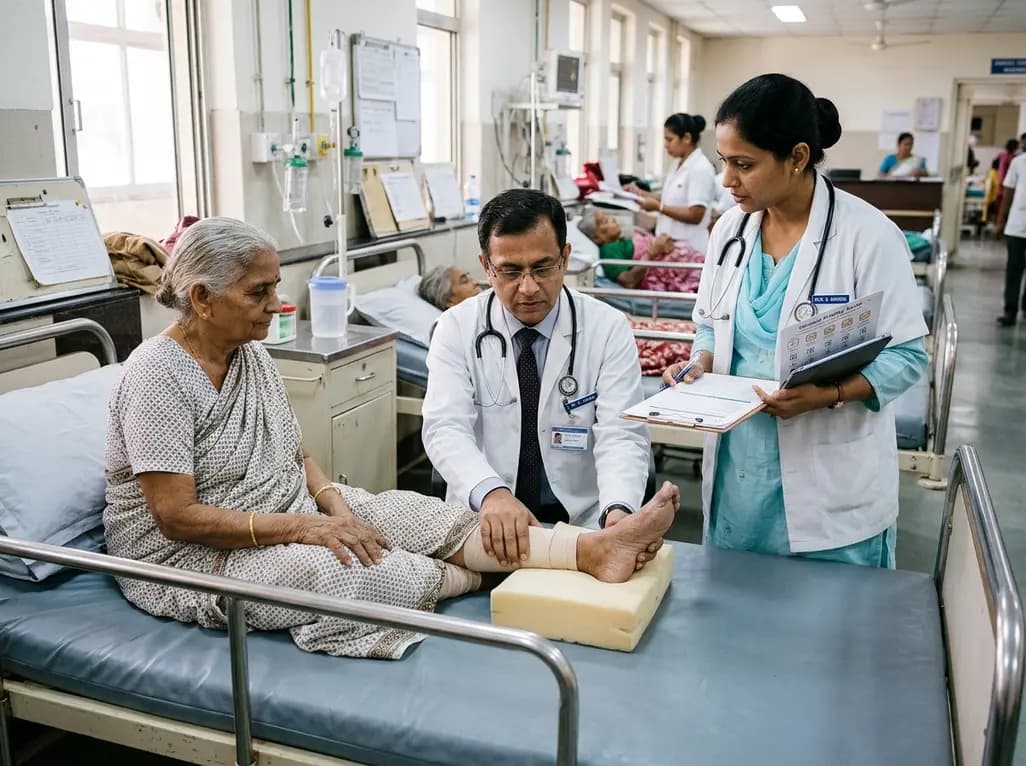
A retrospective cohort study reveals that frailty quadruples the odds of pressure injuries in hospitalized older adults. Integrating the Clinical Frailty Scale with comprehensive geriatric care is crucial for identifying vulnerability early and implementing targeted multidisciplinary prevention.
Today

Occult maternal malignancy accounts for 3.82% of persistent unreportable NIPT results with genomic noise. Multiple chromosomal aberrations, notably on chromosome 18, warrant thorough oncological evaluation and whole-body MRI to ensure timely maternal diagnosis while preserving fetal care.
Today

This article reviews the forensic and clinical complexities of acute myocarditis arising on left ventricular hypertrophy in children, highlighting early diagnostic red flags and multidisciplinary postmortem autopsy protocols.
Today

A randomized controlled trial demonstrates that an eight-week dual-task training intervention significantly improves static and dynamic postural control over standard balance exercises in individuals with chronic ankle instability, addressing critical neurocognitive deficits during athletic and daily activities.
Today

A retrospective cohort study of 7,716 ICU patients from the MIMIC-IV database demonstrates that Gradient Boosting Decision Trees significantly outperform traditional SOFA scores in predicting in-hospital mortality among patients with sepsis and diabetes, with SHAP analysis providing clinical interpretability.
Today
