.webp&w=384&q=75)

Loading, please wait...
Loading, please wait...

The official declaration ending the latest Uganda Ebola outbreak marks a major victory for global health security and infectious disease surveillance. Health Minister Chris Baryomunsi confirmed that the nation successfully completed the mandatory 42-day monitoring period after discharging its last locally transmitted patient. Consequently, this observation window provides high epidemiological confidence that active viral transmission has ended. During this outbreak, authorities recorded 20 confirmed cases within the country. Tragically, two deaths occurred, both involving individuals who crossed the border from the neighboring Democratic Republic of Congo. Furthermore, fifteen of the affected patients initially acquired the virus across the border before entering local medical centers. However, aggressive contact tracing and immediate institutional isolation effectively halted widespread community transmission within Ugandan borders. Ultimately, eighteen patients achieved full clinical recovery and received formal discharge from specialized treatment units. This successful effort underscores the value of early clinical suspicion, rapid isolation, and public health coordination during acute viral hemorrhagic fever outbreaks. Additionally, robust laboratory testing and digital contact tracking allowed epidemiological teams to map every individual transmission chain with extreme precision. Consequently, local communities remained well informed, which prevented widespread panic and ensured prompt presentation of symptomatic individuals to healthcare facilities.
Effective epidemic response requires a multi-layered approach combining rapid diagnostic testing, digital contact tracking, and immediate isolation. Consequently, healthcare authorities in Uganda maintained intensive nationwide surveillance throughout the 42-day observation period to ensure that no undetected cases remained in the community. Furthermore, all secondary contacts of confirmed patients underwent mandatory 21-day institutional quarantine, during which daily clinical evaluations took place. Because Ebola virus spreads primarily through direct contact with infected blood, bodily fluids, and contaminated surfaces, strict adherence to personal protective equipment protocols was maintained across all triage hubs. Additionally, healthcare workers utilized advanced digital tools to map transmission chains in real time, enabling rapid contact identification across rural and urban centers. Meanwhile, cross-border surveillance at key points of entry was significantly intensified to prevent secondary importations from neighboring regions experiencing ongoing disease activity. Therefore, the combination of community engagement, rigorous contact monitoring, and rapid laboratory confirmation proved essential in arresting viral propagation. These systematic containment practices offer a clear template for managing future spillover events in high-risk geographic areas.
Recognizing the clinical signs of viral hemorrhagic fevers is vital for emergency clinicians and primary care physicians. Typically, patients presenting with Ebola virus disease manifest early non-specific symptoms such as sudden onset of fever, severe fatigue, headache, and generalized muscle aches. Subsequently, gastrointestinal signs including persistent vomiting, profuse watery diarrhea, and severe abdominal pain emerge as the infection progresses. In advanced cases, severe vascular permeability leads to mucosal bleeding, hematemesis, melena, and systemic shock. Therefore, clinicians evaluating patients who report recent travel to endemic regions must maintain a high index of suspicion. Rapid diagnostic evaluation using reverse transcription-polymerase chain reaction assays remains the gold standard for laboratory confirmation. However, biosafety protocols must be strictly enforced during sample collection and transport to protect laboratory staff from accidental exposure. Meanwhile, immediate supportive care—including aggressive intravenous fluid resuscitation, electrolyte rebalancing, and empirical antimicrobial therapy for secondary bacterial infections—substantially improves clinical survival rates. Furthermore, early patient isolation in designated negative-pressure or dedicated containment units minimizes nosocomial transmission to healthcare personnel.
Understanding the ecological drivers of filovirus outbreaks is crucial for long-term epidemiological prevention. Tropical forest ecosystems in East and Central Africa host vast populations of fruit bats, which serve as natural reservoir hosts for Ebola viruses. Consequently, spillover events occur when humans come into direct contact with bat secretions, bushmeat, or infected intermediate mammalian hosts such as non-human primates. Furthermore, deforestation and agricultural expansion increasingly encroach upon wildlife habitats, escalating the frequency of human-animal interactions. Therefore, public health campaigns must educate local populations regarding the risks associated with handling wild animals or consuming improperly cooked bushmeat. In addition, routine wildlife surveillance conducted by veterinary and ecological teams helps identify viral circulation in animal populations prior to human spillover events. Meanwhile, climate variations and environmental shifts further influence bat migration patterns, potentially altering the geographic distribution of viral transmission risks. Consequently, adopting a comprehensive One Health approach—integrating human, animal, and environmental health surveillance—remains essential for predicting and preventing future zoonotic outbreaks in vulnerable regions.
The successful containment of this epidemic offers vital insights for healthcare systems and emergency management teams worldwide. First, investing in institutional memory and continuous healthcare worker training ensures rapid deployment during public health emergencies. Because Ugandan health personnel had acquired extensive operational experience during previous filovirus epidemics, they implemented isolation protocols and contact tracing networks without delay. Second, modern diagnostic advancements—such as rapid point-of-care molecular testing and whole-genome sequencing—provide unprecedented epidemiological clarity during active investigations. Consequently, clinicians can rapidly differentiate Ebola cases from other endemic causes of acute febrile illness, such as malaria, typhoid fever, or dengue. Third, effective risk communication fosters strong community trust, ensuring that symptomatic patients seek medical care early rather than hiding in homes. Furthermore, global health agencies must continue supporting research into broad-spectrum antiviral therapies and vaccines targeting various filovirus strains. Ultimately, maintaining high clinical vigilance, robust infection control measures, and international collaborative surveillance protects global populations from emerging infectious threats.
Q1: What protocols were required to officially declare the end of the Ebola outbreak?
To declare the official end of an Ebola outbreak, public health authorities must complete a mandatory 42-day surveillance period without any new confirmed cases. This timeframe represents twice the maximum 21-day incubation period of the virus, confirming that transmission chains have ended. Throughout this period, intensive nationwide clinical surveillance and diagnostic monitoring must be maintained across all healthcare facilities to ensure no hidden cases persist.
Q2: How is Ebola virus disease transmitted among human populations?
Ebola virus spreads through direct contact with blood, secretions, organs, or bodily fluids of infected individuals. Furthermore, contact with contaminated surfaces, clothing, or medical equipment presents a serious transmission risk. The virus enters through broken skin or mucous membranes. Individuals become contagious only after symptoms manifest, with viral load increasing as illness advances. Consequently, strict personal protective equipment is essential during patient care.
Q3: What key diagnostic steps should clinicians take for a suspected case?
Clinicians evaluating a patient with acute fever, fatigue, and travel to affected areas must immediately isolate the individual in a dedicated isolation unit. Strict personal protective equipment protocols must be enforced before physical contact. Diagnostic confirmation relies on reverse transcription-polymerase chain reaction testing performed under high biosafety containment. Meanwhile, healthcare providers must deliver prompt supportive care, including fluid resuscitation, while evaluating for endemic conditions like malaria.
Disclaimer: This content is for informational and educational purposes only. It does not constitute medical advice or replace professional judgment. Refer to the latest local and national guidelines for clinical practice.
References

Read summarized clinical updates, watch expert medical content, and earn CME certifications right from your smartphone.
Open your smartphone camera to scan and install.





Uganda has officially declared the conclusion of its latest Ebola virus disease outbreak following a mandatory 42-day monitoring period without new confirmed cases. This comprehensive review examines the containment strategies, clinical manifestations, diagnostic protocols, and key epidemiological takeaways.
Today

A recent national white paper highlights the need for major policy changes, insurance reforms, and Ayushman Bharat coverage to make fertility care accessible and affordable in India. Experts urge public-private partnerships, male fertility focus, and workplace benefits to bridge the care gap.
Today

A cross-sectional study evaluates post-intensive care syndrome in cardiac patients 2-4 weeks post-ICU discharge, highlighting cognitive, psychological, and functional impairments and the need for structured multidisciplinary rehabilitation.
5 days back
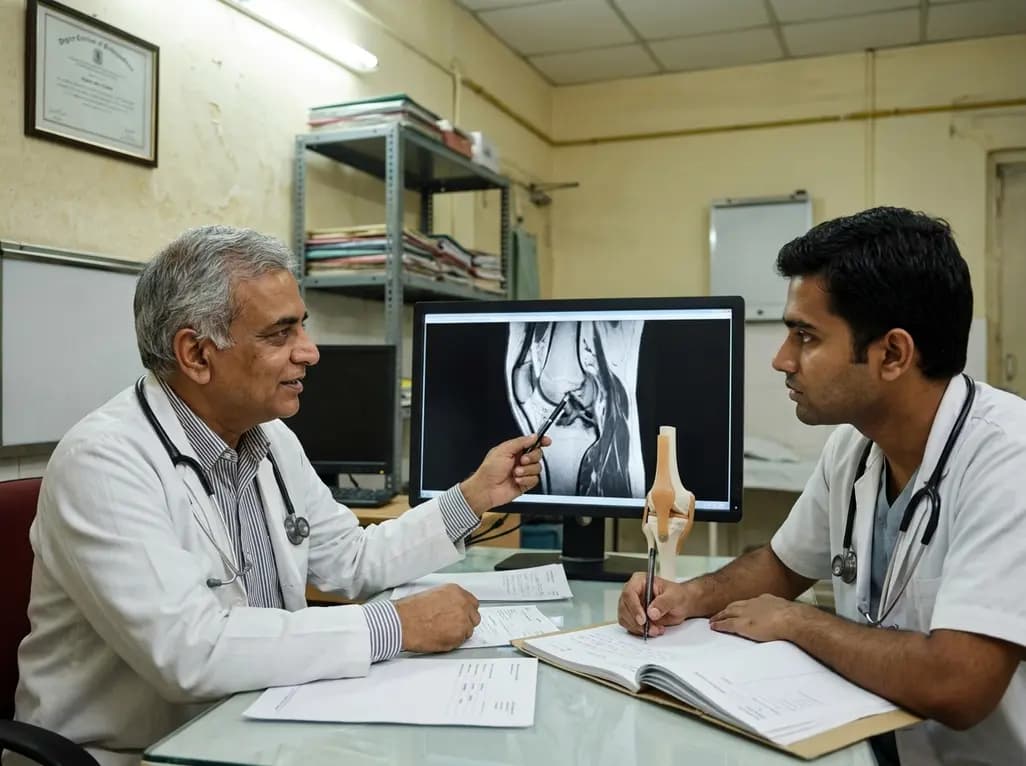
Anterior cruciate ligament reconstruction failure lacks uniform definition. A narrative review proposes an integrative framework incorporating objective and subjective instability, persistent pain, restricted motion, graft rupture, and secondary meniscal injury to standardize clinical reporting.
5 days back

The Delhi High Court has issued a notice to the Centre and FSSAI regarding a plea for an India-specific scientific evaluation of non-sugar sweeteners. The petition highlights concerns over metabolic risks, front-of-pack labeling, and misleading health claims on artificial substitutes.
Today
