.webp&w=384&q=75)

Loading, please wait...
Loading, please wait...

Post-traumatic stress disorder in young populations represents a major public health challenge following natural disasters, interpersonal violence, accidents, and medical crises. Because children and adolescents express distress differently than adults, clinicians require rapid and culturally adapted instruments for effective pediatric PTSD screening. The Children's Revised Impact of Event Scale-13, widely recognized as CRIES-13, has emerged as a premier self-report questionnaire globally. A landmark validation study conducted at the Child and Adolescent Psychiatry Department of Mongi Slim Hospital evaluated the psychometric properties of a newly translated Tunisian Arabic version in a cohort of 300 youth aged 8 to 18 years. The resulting empirical evidence confirms that the translated tool achieves exceptional reliability and diagnostic concordance, providing a robust pathway for early identification of post-traumatic stress in Arabic-speaking pediatric cohorts.
Traumatic life events often produce long-lasting psychological sequelae in developing brains, including pervasive emotional dysregulation, cognitive disruption, and behavioral disturbances. Consequently, routine pediatric PTSD screening is critical to prevent chronic functional impairment in educational, familial, and social environments. When post-traumatic symptoms remain unaddressed, affected youth carry higher risks of secondary mood disorders, substance misuse, and academic failure. Therefore, deploying brief, validated screening measures allows busy healthcare practitioners to promptly identify vulnerable children. Self-report questionnaires empower young patients to articulate distressing internal experiences that parents and teachers might overlook. By establishing reliable cross-cultural psychometric baselines, healthcare systems can implement timely stepped-care trauma interventions that mitigate downstream psychiatric morbidity.
The CRIES-13 instrument evaluates three primary post-traumatic symptom clusters: intrusion, avoidance, and hyperarousal. In the Tunisian validation cohort of 300 children who experienced stressful life events, the translated questionnaire demonstrated high internal consistency, reflected by a Cronbach's alpha of 0.841. Moreover, item-to-subscale correlations remained statistically significant and conceptually coherent across all measured domains. This robust internal consistency highlights that the instrument reliably captures the multifaceted nature of trauma responses in children without creating excessive respondent burden. Because the 13 items use straightforward, child-friendly phrasing, young individuals can complete the assessment independently within minutes, providing objective symptom severity ratings that guide clinical triage.
Translating psychological instruments across linguistic and cultural borders demands rigorous methodological execution to preserve construct equivalence. The research team utilized a comprehensive forward-backward translation protocol, ensuring linguistic clarity and cultural resonance while preserving clinical intent. Confirmatory factor analysis robustly validated the classical three-factor structure of intrusion, avoidance, and arousal. The statistical model demonstrated acceptable fit parameters, including a relative chi-square ratio of 2.78, a root mean square error of approximation of 0.077, and a Goodness-of-Fit Index of 0.918. Furthermore, the Standardized Root Mean Square Residual of 0.092 and Comparative Fit Index of 0.897 confirm that the scale accurately captures underlying psychological constructs across diverse youth populations.
Establishing external validity is essential for validating self-report psychological instruments against comprehensive clinical evaluations. In this validation study, investigators compared the Tunisian CRIES-13 directly against the clinician-administered gold standard, the Clinician-Administered PTSD Scale for Children and Adolescents, Fifth Edition. The findings demonstrated a remarkably high, statistically significant correlation between the self-report scale and the structured diagnostic interview, achieving a Pearson coefficient of r = 0.897. This strong alignment confirms that self-reported scores accurately mirror clinician-rated diagnostic severity. As a result, healthcare professionals can confidently utilize the scale to gauge probable PTSD diagnoses prior to exhaustive diagnostic interviews.
Integrating validated screening scales into routine hospital departments, primary pediatric care, and emergency settings enhances clinical workflow. Clinicians can rapidly administer the CRIES-13 following acute admissions, physical trauma, or referral for acute behavioral shifts. Because pediatric consultations often operate under strict time constraints, a self-completed 13-item scale provides valuable pre-consultation data. Healthcare providers can quickly calculate subscale totals to determine whether intrusion, avoidance, or physiological arousal predominates. Consequently, these individualized symptom profiles enable multidisciplinary teams to select tailored therapeutic approaches, such as trauma-focused cognitive behavioral therapy or specialized parent-child guidance interventions.
Implementing standardized screening instruments facilitates systematic data collection across healthcare institutions, fostering broader epidemiologic awareness of pediatric trauma. When primary pediatricians, emergency physicians, and mental health specialists utilize validated tools like CRIES-13, communication between referral networks improves substantially. Standardized scoring thresholds establish transparent criteria for specialist psychiatric referrals, reducing unnecessary delays in clinical care. In addition, repeated administrations during follow-up visits allow clinicians to monitor treatment trajectories and adjust therapeutic strategies objectively. Ultimately, validating culturally sensitive instruments broadens access to timely psychological support and strengthens long-term resilience among trauma-exposed children.
The CRIES-13 questionnaire evaluates three essential symptom clusters characteristic of post-traumatic stress disorder in youth: intrusion, avoidance, and hyperarousal. Intrusion items measure recurrent memories and distressing flashbacks, while avoidance items capture efforts to evade trauma reminders. Finally, hyperarousal questions assess heightened physiological reactivity, sleep difficulties, and emotional irritability, providing clinicians with a comprehensive understanding of the child's underlying psychological distress.
The CRIES-13 functions as a rapid, self-administered screening questionnaire rather than a standalone diagnostic tool. In clinical studies, it demonstrates exceptional correlation with comprehensive structured assessments, such as the Clinician-Administered PTSD Scale for Children and Adolescents (CAPS-CA-5). Consequently, the scale effectively flags high-risk patients who require in-depth clinical evaluation, optimizing resource allocation while ensuring that vulnerable youth receive prompt psychiatric attention.
Across extensive international literature, a total score of 30 or higher on the CRIES-13 typically signifies a high risk of post-traumatic stress disorder, warranting formal psychiatric assessment. Clinicians evaluate both total scores and distinct subscale totals to understand the relative severity of intrusion, avoidance, and arousal symptoms, thereby tailoring personalized psychological interventions to individual patient needs.
Disclaimer: This content is for informational and educational purposes only and does not constitute medical advice, diagnosis, or treatment. Healthcare professionals should exercise their independent clinical judgment when evaluating psychometric instruments and diagnostic criteria. Refer to the latest local and national guidelines for clinical practice.
References
Baccar M et al. Tunisian validation of the Children's Revised Impact of Event Scale 13. Encephale. 2026 Aug 29. doi: undefined. PMID: 42668253.
Perrin S, Meiser-Stedman R, Smith P. The Children's Revised Impact of Event Scale (CRIES): Validity as a screening instrument for PTSD. Behav Cogn Psychother. 2005;33(4):487-498.
Verlinden E et al. Characteristics of the Children's Revised Impact of Event Scale in a clinically referred Dutch sample. J Trauma Stress. 2014;27(3):338-344.

Read summarized clinical updates, watch expert medical content, and earn CME certifications right from your smartphone.
Open your smartphone camera to scan and install.





A cross-sectional study validated the Tunisian Arabic version of the Children's Revised Impact of Event Scale (CRIES-13) in 300 youth, confirming strong psychometric reliability, construct validity, and correlation with the CAPS-CA-5 gold standard to enhance pediatric PTSD screening in clinical practice.
4 weeks back

UK Research and Innovation is deploying £80 million across the NHS to trial nine cutting-edge technologies. The initiative features seven-minute brain MRIs, blood biomarker assays, and predictive AI tools, aiming to evaluate 92% of suspected cases within 18 weeks and overcome lengthy diagnostic backlogs.
Today

A mixed-methods study identifies key drivers of PMTCT service utilization among adolescent girls and young women aged 15-24. Highlighting age disparities, PrEP uptake, and systemic barriers, the evidence guides clinicians toward adolescent-responsive, integrated maternal HIV prevention protocols.
Today

PepsiCo and Monster Beverage have challenged the FSSAI ban on the energy drink label in Indian courts. While companies highlight supply disruptions, regulatory actions spotlight severe cardiovascular and metabolic risks associated with excessive caffeine, sugar, and taurine consumption, especially in adolescents.
Today
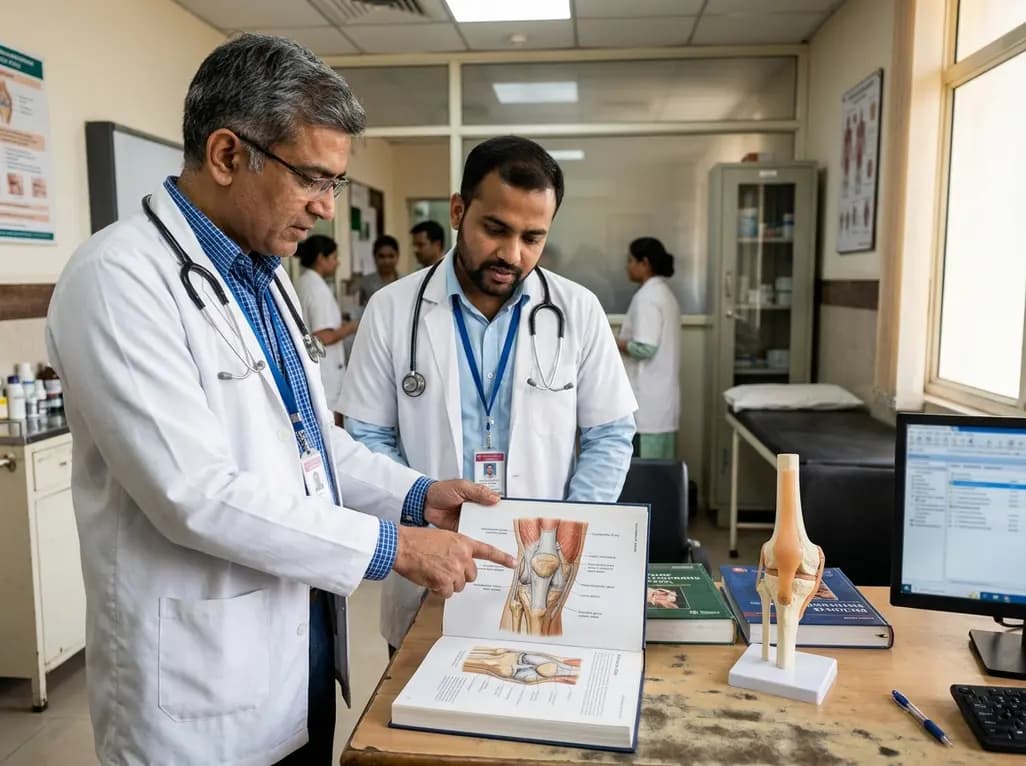
A narrative review investigates whether the articularis genus muscle functions as an independent anatomical entity or blends with the vastus intermedius. We evaluate its morphology, role in retracting the suprapatellar bursa, and direct clinical significance in anterior knee pain and arthroplasty.
Today

A Bayesian multilevel meta-analysis reveals that aerobic training combined with moderate carbohydrate restriction modestly lowers HbA1c in type 2 diabetes. However, sparse data and very low certainty leave incremental benefits over exercise or diet alone unproven, highlighting the need for individualized care.
Today
