.webp&w=384&q=75)

Loading, please wait...
Loading, please wait...
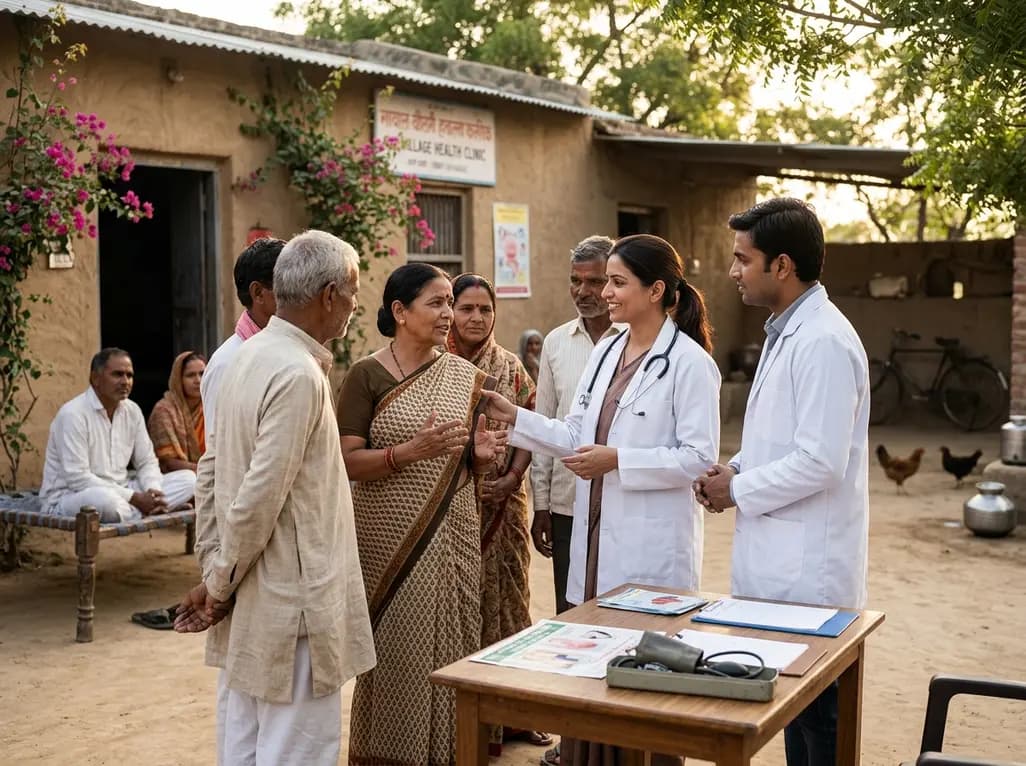
Medical mistrust in rural Appalachia, especially in West Virginia, stems from a deep-seated history of institutional betrayal. For generations, structural neglect—including hospital closures and provider shortages—has fostered a cultural memory of skepticism toward healthcare systems. Consequently, establishing Trust in Clinical Research remains a significant challenge for scientists and policymakers. To address this, the West Virginia Clinical & Translational Science Institute (WVCTSI) developed the Ambassadors for Community Health Research (ACHR) program.
The ACHR program functions as a year-long initiative that trains local residents to act as liaisons between their communities and research teams. Unlike traditional recruitment models, these ambassadors serve as relationship builders. They receive structured training in research ethics and health communication to facilitate a transparent, two-way exchange of concerns and insights. Furthermore, this model ensures that research participation shifts from a transactional encounter into a collaborative partnership. By empowering residents, the program successfully bridges the gap created by historical neglect.
Additionally, the ACHR program adapts elements from successful immersion training models to fit the specific cultural context of rural Appalachia. Ambassadors do not simply find participants; they educate their peers on the relevance and safety of clinical studies. Therefore, the researchers gain better data while the community gains a voice in the scientific process. This sustained, culturally authentic approach offers a vital roadmap for rebuilding Trust in Clinical Research in other underserved regions globally, including rural areas in India.
Ultimately, the ACHR model demonstrates that trust is not built overnight but through consistent, honest engagement. Researchers who use this model can enhance the ethical impact and relevance of their work. Moreover, by addressing the specific fears of the population, institutions can ensure that clinical advancements benefit everyone, not just those in well-served urban centers.
Ambassadors serve as relationship builders who facilitate two-way communication between their community and research teams, ensuring that local concerns are addressed and research is culturally relevant.
Unlike traditional methods that often feel transactional, the ACHR program focuses on long-term relationship building and ethical education, transforming research into a collaborative partnership.
Cultural authenticity helps overcome historical skepticism and institutional mistrust by using familiar, trusted voices to explain the benefits and processes of clinical research.
Disclaimer: This content is for informational and educational purposes only. It does not constitute medical advice or a recommendation for any specific research protocol. Refer to the latest local and national guidelines for clinical practice.
References
Hatfield C et al. Connecting Rural Appalachia to Clinical Research: The Ambassadors for Community Health Research Program as a Model for Trust Building. Health Promot Pract. 2026 Jun 07. doi: 10.1177/15248399261454695. PMID: 42251506.
West Virginia Clinical & Translational Science Institute (WVCTSI). Ambassadors for Community Health Research Program Overview. 2024.
National Institutes of Health (NIH). Principles of Community Engagement. Second Edition.
"
Read summarized clinical updates, watch expert medical content, and earn CME certifications right from your smartphone.
Open your smartphone camera to scan and install.





The Ambassadors for Community Health Research (ACHR) program in West Virginia offers a transformative model for building trust in clinical research....
4 months ago

A retrospective cohort study of 7,716 ICU patients from the MIMIC-IV database demonstrates that Gradient Boosting Decision Trees significantly outperform traditional SOFA scores in predicting in-hospital mortality among patients with sepsis and diabetes, with SHAP analysis providing clinical interpretability.
Today

A prenatal case highlights severe glutaric acidemia type II presenting as bilateral hyperechoic cystic kidneys at 18 weeks. Whole-exome sequencing revealed a novel homozygous ETFDH frameshift variant, demonstrating the power of rapid genetic testing in fetal renal anomalies.
Today
This article reviews the forensic and clinical complexities of acute myocarditis arising on left ventricular hypertrophy in children, highlighting early diagnostic red flags and multidisciplinary postmortem autopsy protocols.
Today

This comparative study evaluates posterior labral tears with and without glenohumeral instability, highlighting distinct demographic patterns, MRI underestimation in stable shoulders, and successful arthroscopic repair outcomes.
Yesterday

A clinical study demonstrates that early intervention with tocilizumab, either as monotherapy or bridged with corticosteroids, achieves significant proptosis reduction and resolves active inflammation in treatment-naive thyroid eye disease.
Yesterday
