.webp&w=384&q=75)

Loading, please wait...
Loading, please wait...

Modern medical facilities demand rapid, effective interventions to address emotional dysregulation and disruptive behaviors in young patients. Hospitalized children and adolescents frequently experience intense distress that manifests as acute hostility, withdrawal, or non-adherence. Under such demanding conditions, clinicians require practical conceptual models to make immediate sense of overwhelming behavioral crises. Manualized psychotherapies provide valuable evidence-based tools that clinicians can readily adapt beyond traditional outpatient clinics. In particular, the triangle of conflict offers an accessible psychodynamic framework that clarifies complex behavioral presentations. By examining how implicit defense mechanisms operate during acute distress, healthcare professionals can transform single clinical encounters into meaningful opportunities for emotional stabilization.
The triangle of conflict originally emerged within short-term psychodynamic traditions to conceptualize the structural tensions underlying human emotional suffering. Historically, psychoanalysts recognized that distressing life experiences provoke intense emotional responses that individuals often find unbearable. When an individual encounters a threatening stimulus, internal impulses and painful affects rapidly emerge. However, these raw emotional states frequently trigger painful anxiety, shame, or guilt. Consequently, the human mind activates defense mechanisms to suppress or deflect the underlying painful feelings. This dynamic process forms a triad composed of true feelings, inhibitory anxiety, and protective defenses.
Within contemporary child psychiatry, Regulation Focused Psychotherapy for Children adapts this classic heuristic for youth presenting with disruptive behaviors. Children commonly lack the cognitive capacity to articulate intense grief, fear, or vulnerability. Therefore, their developing minds rely on externalizing defenses, such as physical aggression or verbal defiance, to ward off uncomfortable internal affects. When physicians observe defiance on a hospital ward, they often witness an automatic defensive reaction rather than intentional malice. Recognizing this triad allows clinicians to look beyond challenging behaviors. Instead of engaging in power struggles, clinicians can recognize the vulnerable feelings driving the child's behavioral outbursts.
To utilize this dynamic model effectively, practitioners must examine each vertex of the conceptual triangle with precision. The first vertex represents the core feeling or impulse, which constitutes an adaptive emotional reaction to environmental triggers. For instance, sadness following an unexpected diagnosis or anger regarding parental absence represents an authentic affective response. Although these feelings are entirely natural, young individuals frequently judge them as dangerous or intolerable.
The second vertex encompasses inhibitory affects, including somatic anxiety, visceral dread, and profound shame. When the authentic feeling begins to surface, the patient experiences somatic arousal and psychological discomfort. For example, a child may notice a racing heartbeat, stomach aches, or a suffocating sense of panic. Consequently, these uncomfortable sensations signal impending danger, forcing the psyche to prevent the raw emotion from reaching conscious awareness.
The third vertex consists of defenses, which represent the observable behaviors deployed to neutralize psychological distress. In pediatric environments, externalizing defenses dominate clinical presentations through hostility, property destruction, or stubborn non-compliance. Alternatively, internalizing defenses may appear as profound dissociation, mutism, or passive avoidance. Therefore, clinicians must realize that the presenting symptom is actually a defensive solution to an internal conflict. Identifying these three distinct points enables healthcare teams to map emotional crises systematically.
Hospital settings frequently present fast-paced, high-stress environments where comprehensive psychotherapy protocols seem impractical. Nevertheless, single-session applications of psychodynamic components offer immense value across inpatient services, pediatric wards, and emergency departments. When an agitated child arrives in an emergency department, medical staff often prioritize rapid physical containment or pharmacological sedation. While safety remains paramount, purely restrictive measures may inadvertently intensify the patient's panic and perceived vulnerability.
By applying this structured framework, the acute care physician rapidly evaluates the patient's emotional balance within minutes. Instead of confronting oppositional behavior directly, the clinician actively identifies the defense and wonders aloud about the underlying distress. For example, a clinician might note that fighting security officers helps the child avoid feeling frightened in an unfamiliar hospital room. Such dynamic interpretations reduce the child's need to maintain aggressive defenses. Furthermore, this approach prevents escalating cycles of confrontation between healthcare staff and distressed families.
Similarly, pediatric floor staff frequently encounter children who refuse life-saving medications or essential intravenous placements. Rather than viewing these patients as uncooperative, nurses and physicians can interpret procedural resistance as an avoidant defense against overwhelming helplessness. Consequently, validating the hidden vulnerability allows the child to regain a sense of agency, transforming resistance into cooperative participation.
Managing explosive anger in clinical environments represents one of the most taxing challenges for healthcare professionals. Traditional behavioral paradigms assume that children act out to obtain rewards or escape undesirable demands. Consequently, behavioral management often focuses heavily on behavioral modification, reward systems, or firm limit-setting. Although these behavioral techniques remain valuable, they frequently fail when intense unconscious affects drive severe emotional dysregulation.
Under the psychodynamic lens, aggression serves as a secondary defense that protects an acutely fragile ego from intolerable affects. When clinicians encounter an adolescent shouting insults, they can immediately conceptualize the behavior through the conflict triad. First, the provider observes the aggressive defense unfolding in real time. Second, the provider recognizes that the patient's autonomic arousal reflects intense inhibitory anxiety. Third, the provider deduces that deep vulnerability or grief lies beneath this intimidating facade.
Therefore, the clinician intervenes by gently addressing the defense before exploring the core emotion. For instance, speaking calmly about how frightening the medical environment feels helps disarm the adolescent's defensive posturing. As the patient feels truly understood rather than judged, the defensive aggression gradually dissipates. Eventually, the young person can safely experience and verbalize the primary sorrow or fear, paving the way for durable emotional regulation.
Integrating psychodynamic heuristics into postgraduate medical education offers substantial pedagogical benefits for psychiatric and pediatric residency programs. Training in acute inpatient psychiatry often emphasizes diagnostic checklists and psychopharmacology, leaving trainees ill-equipped for volatile interpersonal dynamics. However, trainees routinely face moments of acute threat where patient aggression provokes intense countertransference anxiety. Without an organizing theoretical model, residents may react with authoritarian rigidity or therapeutic nihilism.
The conflict triad serves as an immediate cognitive anchor for trainees during high-stress clinical interactions. Specifically, learning to track feelings, anxiety, and defenses in real time allows residents to maintain therapeutic objectivity. When an agitated patient threatens physical violence, the trainee can mentally map the conflict rather than becoming paralyzed by fear. Furthermore, this dynamic perspective fosters empathy by reframing hostile behavior as an expression of profound emotional suffering.
In addition, this shared conceptual language enhances interdisciplinary communication across hospital teams. When psychiatrists, pediatricians, nurses, and social workers collaborate, divergent explanations of disruptive behavior can generate friction. By utilizing this dynamic model, multidisciplinary teams can establish unified behavioral management plans. Consequently, hospital staff replace punitive containment strategies with coordinated, trauma-informed interventions that prioritize emotional safety.
Adopting this psychodynamic approach in daily practice does not require hours of specialized psychoanalytic training. Rather, clinicians can implement several core steps during routine bedside evaluations and consultations. First, healthcare providers must cultivate heightened awareness of their own emotional responses. Because patient defenses frequently evoke frustration or anger in treating staff, identifying countertransference prevents reactive confrontations.
Second, clinicians should name the defensive maneuver respectfully without shaming the patient. For example, a doctor might say, 'I notice you get very angry whenever we discuss discharge plans.' This simple observation brings the defense into conscious awareness while maintaining a supportive therapeutic alliance. Third, practitioners must address the inhibitory anxiety before digging into painful emotional material. Soothing physiological arousal through slow breathing or calm vocal tones enables the patient's nervous system to de-escalate.
Finally, the clinician can gently invite the patient to explore the underlying vulnerable emotion. Once the adolescent realizes that the provider will not judge painful feelings, defensive hostility becomes unnecessary. In summary, applying this tripartite framework empowers clinicians across medical specialties to de-escalate crises rapidly. By transforming combative interactions into opportunities for mutual understanding, physicians foster emotional resilience in vulnerable youth.
Cognitive behavioral models primarily target conscious distorted thoughts and explicit coping mechanisms to alter behavioral responses. In contrast, the triangle of conflict focuses on unconscious emotional conflicts and implicit defense mechanisms. Therefore, clinicians use this dynamic model to help patients tolerate underlying painful affects rather than solely modifying external behaviors or cognitive schemas.
Yes, acute care providers can easily apply this model during brief clinical interactions. Because rapid assessments often involve heightened emotional distress or agitation, identifying defensive reactions provides immediate clarity. Consequently, the clinician can acknowledge the underlying distress without escalating behavioral conflict, which substantially improves therapeutic alliance and patient safety in emergency settings.
Children presenting with externalizing symptoms, severe temper outbursts, or oppositional defiance show substantial benefit from this psychodynamic approach. In addition, pediatric patients experiencing unexplained somatic complaints or acute procedural distress respond favorably. Specifically, decoding implicit defenses allows healthcare teams to understand hidden emotional vulnerabilities, which rapidly facilitates emotional regulation and cooperation.
Disclaimer: This content is for informational and educational purposes only... Refer to the latest local and national guidelines for clinical practice.
References

Read summarized clinical updates, watch expert medical content, and earn CME certifications right from your smartphone.
Open your smartphone camera to scan and install.





Learn how the triangle of conflict from manualized psychodynamic psychotherapy transforms pediatric and psychiatric care. This core heuristic helps clinicians interpret defenses, mitigate acute disruptive behaviors, and foster emotion regulation across inpatient and emergency hospital settings.
Today
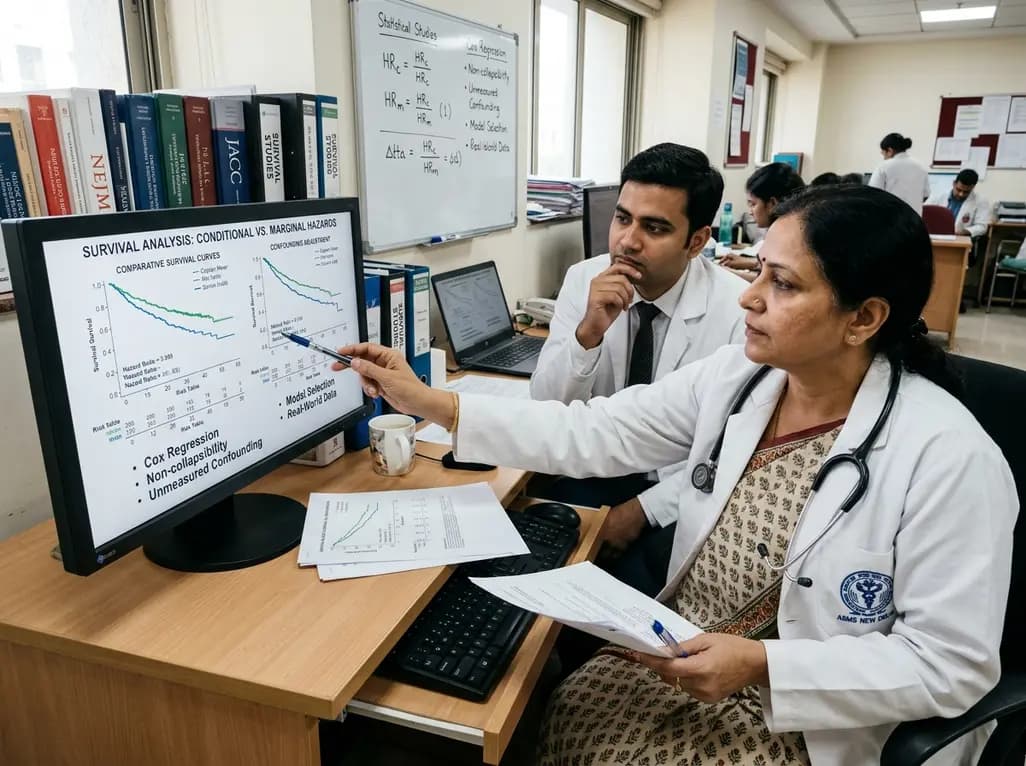
Survival analyses often report hazard ratios, but mathematical non-collapsibility creates crucial differences between conditional and marginal estimates. Clinicians must account for unmeasured confounding and model selection when interpreting trial endpoints and real-world cardiovascular outcomes.
Today

A cross-sectional study of 700 college students highlights significant contraceptive knowledge disparities between sexually active and inactive young adults. The findings demonstrate a critical need for proactive, comprehensive sexual health counseling before sexual debut.
Yesterday

Autologous tissue-engineered vascular graft patches created via in-body tissue architecture show excellent mid-term durability and safety for pulmonary artery reconstruction in congenital heart surgery, particularly for peripheral branch augmentation.
Today

A novel cluster analysis of real-world datasets reveals four distinct CPPD disease phenotypes, validating existing EULAR categories while uncovering previously unrecognized monoarticular and axial presentations to refine patient management.
Today

Recent pharmacokinetic research demonstrates that trace dermal exposure to microgram quantities of trenbolone and metenolone produces detectable urinary metabolites for days to over a week, providing critical objective data for evaluating unintentional contamination claims in sports drug testing.
Today
