

Loading, please wait...
Loading, please wait...

Post-traumatic stress disorder frequently co-occurs with schizophrenia spectrum disorders, yet clinicians routinely withhold evidence-based psychological interventions due to safety concerns. Historically, psychiatric dogma cautioned that trauma confrontation could trigger symptom exacerbations or severe clinical decompensation. However, high-quality evidence confirms that trauma therapy in psychosis is not only viable but highly effective. The multicenter RE.PROCESS trial evaluated whether three distinct trauma-focused modalities could overcome treatment inertia in this vulnerable population. By directly comparing active psychotherapies against a waiting-list control, investigators sought to establish clear clinical benchmarks for trauma recovery in severe mental illness.
Epidemiological research reveals elevated rates of cumulative interpersonal trauma and victimization among patients diagnosed with psychotic disorders. Consequently, post-traumatic stress disorder affects roughly one in six individuals with schizophrenia, markedly aggravating functional impairment. Despite this substantial burden, mental health systems frequently exclude these patients from evidence-based trauma interventions. Clinicians often fear that discussing traumatic events will destabilize fragile cognitive frameworks or provoke acute psychotic crises. Therefore, patients remain locked in cycles of persistent distress, unaddressed intrusions, and frequent rehospitalizations. Furthermore, untreated trauma symptoms often amplify paranoia and exacerbate auditory verbal hallucinations over time. When clinicians withhold targeted psychological care, they inadvertently allow secondary psychiatric disability to compound. As a result, clinical recovery stalls, and therapeutic demoralization deepens across psychiatric settings. Delivering evidence-based trauma care represents an urgent clinical imperative to restore functional autonomy.
The RE.PROCESS study represents a rigorous, multicenter, assessor-masked, four-arm randomized controlled superiority trial designed to resolve long-standing safety questions. Investigators recruited 162 adult participants diagnosed with both post-traumatic stress disorder and a lifetime schizophrenia spectrum psychotic disorder. Subsequently, researchers randomized participants in an equal ratio to Prolonged Exposure, Eye Movement Desensitization and Reprocessing, Cognitive Restructuring, or a waiting-list control. All four groups continued receiving their established psychiatric treatment as usual throughout the intervention period. The active psychotherapy conditions comprised up to sixteen intensive, twice-weekly sixty-minute sessions conducted by trained therapists. Meanwhile, independent, masked assessors administered validated psychiatric instruments at baseline and at six months post-randomization. The researchers established the primary outcome measure as change in trauma severity using the Clinician-Administered PTSD Scale for DSM-5. In addition, the trial monitored secondary psychological endpoints, adverse reactions, and broader psychiatric indices.
At the six-month follow-up evaluation, all three trauma-focused therapies demonstrated significant, large-magnitude superiority over the waiting-list control arm. Specifically, participants undergoing Prolonged Exposure achieved an adjusted difference on the Clinician-Administered PTSD Scale of -9.76 points, yielding an effect size of d = -0.90. Similarly, Eye Movement Desensitization and Reprocessing delivered an adjusted score reduction of -11.74 points with an effect size of d = -1.04. Furthermore, Cognitive Restructuring produced an adjusted reduction of -12.72 points, achieving an impressive effect size of d = -1.00. Consequently, all three active protocols proved remarkably potent in resolving trauma intrusions, persistent hyperarousal, and pervasive emotional avoidance. Statistical analysis confirmed that between-group differences remained highly significant across multiple sensitivity analyses. In addition, secondary measures evaluating post-traumatic cognitions, negative self-evaluations, and depressive affect exhibited parallel therapeutic gains. These consistent findings confirm that structured psychological processing reliably de-escalates post-traumatic pathology in complex patient cohorts.
A primary objective of the RE.PROCESS trial involved examining whether intensive trauma processing adversely affected core psychotic manifestations. Importantly, statistical evaluations revealed no significant therapy-induced increases in positive psychotic symptoms across any of the treatment cohorts. Neither hallucinations nor paranoid delusions intensified during therapy sessions or throughout the subsequent follow-up period. Furthermore, the trial documented no therapy-related crisis decompensations, emergency admissions, or treatment-emergent suicidality linked to trauma recall. Therefore, these outcomes directly contradict traditional assertions that trauma exploration destabilizes psychotic vulnerability. While trauma interventions did not directly eliminate background psychotic symptoms, they effectively removed distressing post-traumatic comorbidities that complicate psychiatric recovery. In contrast to historical clinical fears, patients tolerated active emotional exposure and cognitive processing with high adherence rates. Consequently, active trauma interventions demonstrate an outstanding therapeutic window and an exceptional clinical safety profile.
Given these robust superiority results, mental health practitioners must actively dismantle systemic barriers that restrict trauma therapy access. Specifically, psychiatric teams should incorporate routine, systematic trauma screening using validated assessment tools during initial psychotic episode evaluations. Furthermore, psychiatrists and clinical psychologists must abandon arbitrary stability requirements that delay trauma interventions indefinitely. Because Prolonged Exposure, Eye Movement Desensitization and Reprocessing, and Cognitive Restructuring achieved comparable efficacy, clinicians can tailor modality selection to patient preference. For instance, individuals struggling with severe cognitive disorganization may prefer the sensory-based bilateral processing of eye movement therapies. Conversely, patients presenting with rigid, distressing guilt cognitions might gain greater benefit from structured cognitive restructuring techniques. Moreover, psychiatric facilities must prioritize training multidisciplinary staff to deliver manualized trauma protocols within standard community mental health programs. Expanding specialized therapeutic access will substantially reduce long-term morbidity and foster comprehensive psychiatric rehabilitation.
No, clinical trials confirm that trauma-focused therapies do not exacerbate psychotic symptoms. The RE.PROCESS trial demonstrated that Prolonged Exposure, EMDR, and Cognitive Restructuring safely reduced PTSD symptoms without triggering increases in hallucinations, paranoia, or psychiatric hospitalizations. Clinicians can confidently provide trauma processing to stable outpatients with schizophrenia spectrum disorders.
All three active interventions demonstrated large, statistically significant superiority over the waiting-list control. Prolonged Exposure, EMDR, and Cognitive Restructuring produced comparable reductions on the Clinician-Administered PTSD Scale, with large effect sizes ranging from -0.90 to -1.04. Clinicians should select between these evidence-based modalities based on patient preference and specific presentation.
Clinicians should screen for trauma routinely and offer structured, manualized protocols consisting of up to sixteen twice-weekly sessions alongside standard psychiatric management. Patients do not need to achieve complete remission from psychosis before starting trauma therapy. Multidisciplinary teams can safely deliver these interventions within outpatient community mental health services.
Disclaimer: This content is for informational and educational purposes only... Refer to the latest local and national guidelines for clinical practice.
References
Burger SR et al. Prolonged exposure, eye movement desensitization and reprocessing therapy, and cognitive restructuring versus waiting-list for individuals with PTSD and psychosis (RE.PROCESS): A multicenter, four-arm, assessor-masked, superiority randomized controlled trial. Psychol Med. 2026 Nov 09. doi: 10.1017/S0033291726106291. PMID: 43000852.
van den Berg DPG, de Bont PAJM, van der Vleugel BM, et al. Prolonged exposure vs eye movement desensitization and reprocessing vs waiting list for posttraumatic stress disorder in patients with a psychotic disorder: a randomized clinical trial. JAMA Psychiatry. 2015;72(3):259-267. doi:10.1001/jamapsychiatry.2014.2637.
Burger SR, van der Linden T, Hardy A, et al. Trauma-focused therapies for post-traumatic stress in psychosis: study protocol for the RE.PROCESS randomized controlled trial. Trials. 2022;23(1):851. doi:10.1186/s13063-022-06808-6.

Read summarized clinical updates, watch expert medical content, and earn CME certifications right from your smartphone.
Open your smartphone camera to scan and install.





The landmark RE.PROCESS randomized clinical trial demonstrates that trauma-focused therapies—Prolonged Exposure, EMDR, and Cognitive Restructuring—produce large, durable reductions in PTSD symptoms among individuals with schizophrenia spectrum psychotic disorders, challenging historical treatment exclusion.
Today

A large retrospective cohort study demonstrates that explainable machine learning models, notably XGBoost, accurately predict hospital admission at emergency triage. By analyzing routine triage parameters, hospitals can streamline bed allocation, decrease boarding times, and alleviate acute care overcrowding.
Today

A new quality-improvement initiative reveals that universal maternal mental health screening in the NICU increased screening rates from 29.5% to 95.0%, with nearly 60% of screened mothers requiring psychosocial referrals, highlighting the urgent need for embedded mental health resources.
Today
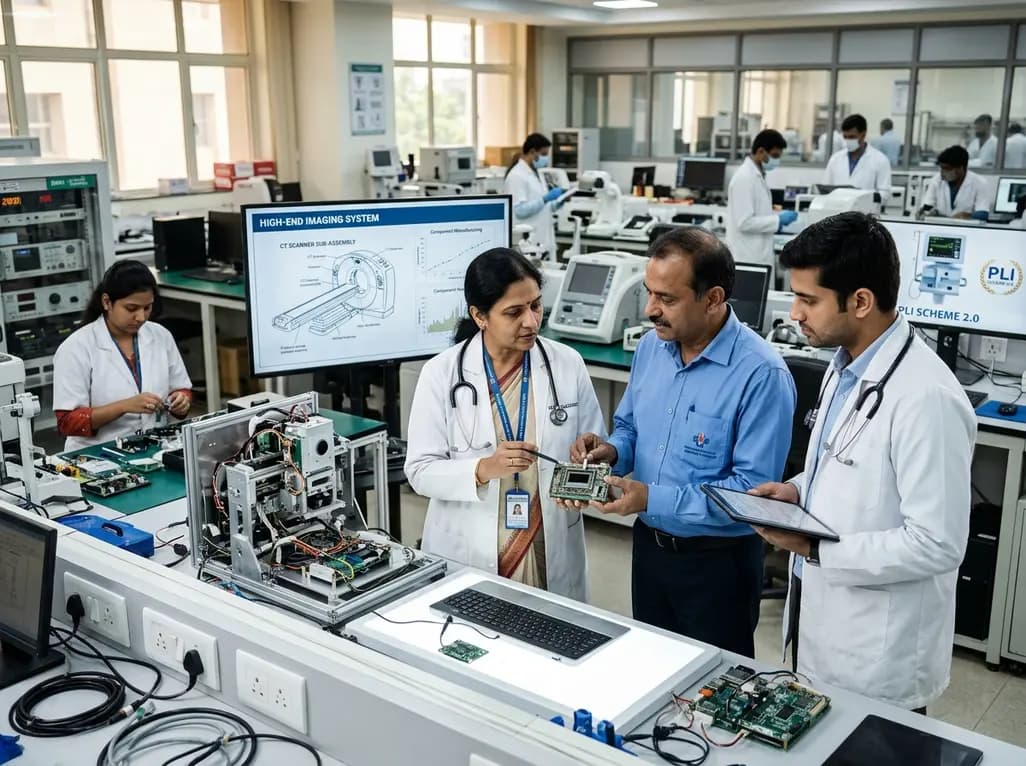
The Department of Pharmaceuticals has extended the medical devices PLI scheme to 2035-36 with a Rs 2,700 crore outlay. Featuring relaxed investment barriers and eliminated sales thresholds, the revised framework targets deep manufacturing, high-end diagnostics, critical MedTech components, and supply resilience.
Today
A metabolomic study reveals that aging delays glutathione synthesis and gamma-glutamylcysteine accumulation following muscle injury. Although precursor supplementation targets this enzymatic bottleneck, in vitro tests show no immediate effect on myogenesis, highlighting the complexity of muscle repair in older adults.
Today

A systematic review evaluates psychological interventions for smoking cessation in diabetes, showing short-term success but highlighting challenges in long-term abstinence.
Today
