.webp&w=384&q=75)

Loading, please wait...
Loading, please wait...

Recent clinical evidence suggests that transdermal estradiol prostate cancer treatment serves as a robust alternative to standard luteinizing hormone-releasing hormone (LHRH) agonists. According to the latest findings from the Phase 3 PATCH trial, this approach provides effective androgen deprivation while significantly altering the toxicity profile for patients. Historically, clinicians used oral estrogen for prostate cancer, but it was largely abandoned due to high cardiovascular and thromboembolic risks. However, transdermal administration avoids the first-pass hepatic metabolism, potentially mitigating these concerns.
In this non-inferiority trial, researchers randomized 1,360 men with locally advanced prostate cancer to receive either transdermal estradiol (tE2) patches or standard LHRH agonists. The results showed a 3-year metastasis-free survival (MFS) of 87.1% in the tE2 group and 85.9% in the LHRH agonist group. Consequently, the study confirmed that tE2 is statistically non-inferior to conventional hormonal therapy. Furthermore, both treatment arms successfully maintained castrate levels of testosterone in 85% of the patients.
While the oncological efficacy was similar, the side-effect profiles varied considerably between the two groups. Men treated with transdermal estradiol prostate cancer patches reported a significantly lower incidence of hot flashes compared to those on LHRH agonists (44% vs. 89%). Additionally, tE2 therapy appeared to preserve bone mineral density and offer better metabolic profiles. Conversely, the incidence of gynecomastia was twice as high in the tE2 arm, affecting 85% of men. Despite this, there were no significant differences in cardiovascular morbidity or mortality between the two groups. Therefore, clinicians can consider tE2 patches as a cost-effective and patient-friendly option, especially for those prioritizing bone health and vasomotor symptom relief.
Yes, the Phase 3 trial demonstrated that 3-year metastasis-free survival was nearly identical between the two groups (87.1% for estradiol vs. 85.9% for LHRH agonists), meeting the criteria for non-inferiority.
Estradiol patches cause fewer hot flashes and help maintain bone density but result in significantly higher rates of gynecomastia compared to LHRH agonists.
No, the study found no evidence of increased cardiovascular mortality or thromboembolic events with patches, as the transdermal route avoids the liver's first-pass effect on clotting factors.
Disclaimer: This content is for informational and educational purposes only. It does not constitute medical advice or a substitute for professional clinical judgment. Refer to the latest local and national guidelines for clinical practice.
References

Read summarized clinical updates, watch expert medical content, and earn CME certifications right from your smartphone.
Open your smartphone camera to scan and install.





A Phase 3 trial confirms that transdermal estradiol patches are a non-inferior, cost-effective alternative to LHRH agonists for locally advanced prostate ca...
6 months ago
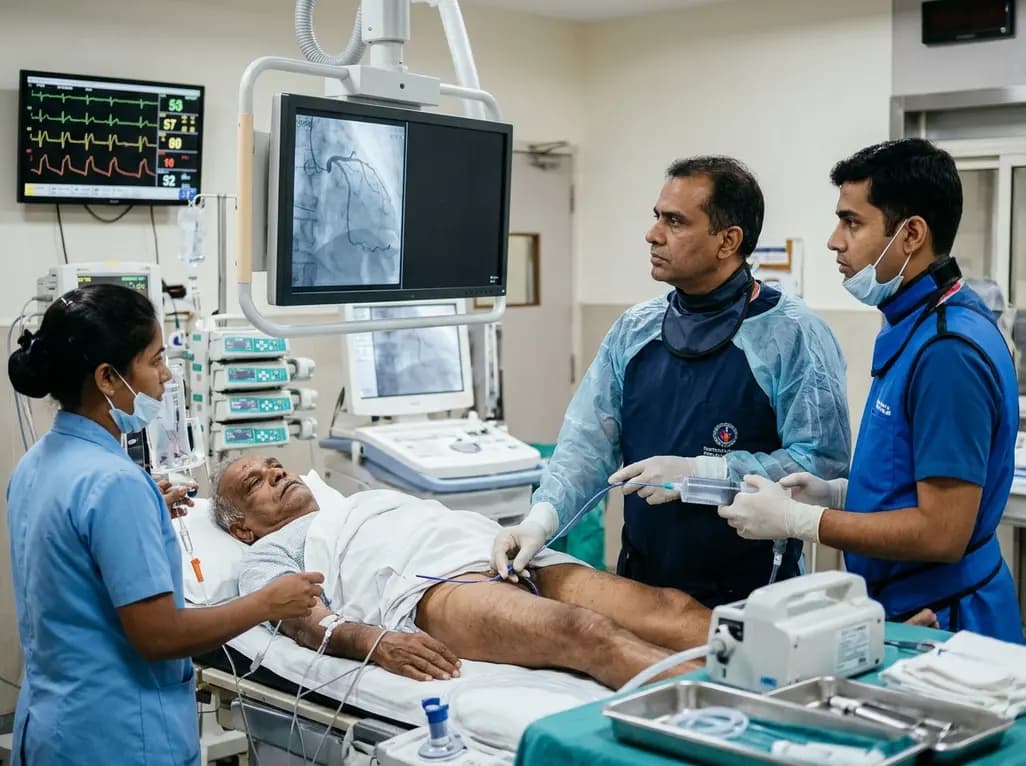
An elderly man with partially repaired Tetralogy of Fallot presented with STEMI caused by coronary embolism rather than atherosclerosis. Successful treatment with sustained mechanical aspiration thrombectomy underscores the vital need for high clinical vigilance in adult congenital heart disease.
Today

Demanding exhaustive hormonal profiling can inadvertently discourage clinical studies involving females. Methodological standards must align with the specific scientific question to expand, not restrict, equitable evidence for women.
Today

A recent study demonstrates that spinal oxygen sensors do not require mitochondrial electron transport to trigger sympathetic excitation during acute hypoxia, revealing new insights into how mitochondrial oxidative stress modulates autonomic tone in cardiovascular and neurological diseases.
Today

A novel calcium polyphosphate coacervate enables injectable bone implants with in situ hierarchical porosity via phase separation and gas foaming, significantly enhancing cell proliferation, energy metabolism, and osteogenic differentiation for minimally invasive bone defect repair.
Today

Following regulatory scrutiny from FSSAI regarding promotional representations and lean muscle preservation claims, Dr. Reddy's Laboratories and Nestlé Health Science are currently reviewing the branding and marketing strategy for their joint nutritional supplement Celevida GLP+.
Today
