.webp&w=384&q=75)

Loading, please wait...
Loading, please wait...

Managing an insular low-grade glioma requires exceptional surgical precision because this complex paralimbic territory neighbors vital vascular structures and essential white matter bundles. Historically, neurosurgeons hesitated to resect tumors in this region due to deep lenticulostriate perforators and critical speech networks. However, modern functional mapping techniques now transform surgical safety and long-term outcomes.
The insula coordinates essential linguistic, motor, visceral, and sensory functions. Furthermore, middle cerebral artery branches directly overlie the insular surface, creating an intimidating vascular network. Consequently, classic surgical doctrine often favored conservative needle biopsies or limited debulking over radical tumor removal. Surgeons feared triggering severe postoperative hemiplegia or permanent expressive dysphasia.
Nevertheless, contemporary neuro-oncological evidence proves that maximizing the extent of resection substantially extends survival and delays malignant transformation. Low-grade gliomas with isocitrate dehydrogenase mutations predominantly affect young, working adults. Therefore, preserving long-term neurological health and baseline cognitive performance remains paramount. Although transsylvian corridors historically dominated insular surgery, extensive Sylvian fissure dissection frequently risks vascular spasm and arterial thrombosis. In contrast, awake functional techniques establish individual boundaries based on continuous patient monitoring rather than anatomical estimates alone. Operating through opercular windows avoids prolonged vascular manipulation. Thus, functional resection permits safe oncological cytoreduction while respecting eloquent cortico-subcortical connectivity across both cerebral hemispheres.
The transcortical approach navigates directly through overlying frontal, temporal, or parietal opercular cortex. Crucially, direct electrical stimulation mapping guides each stage of surgical exposure. During the procedure, the operative team evaluates the awake patient continuously with tailored speech, counting, and motor tasks. If stimulation disrupts task execution, the surgeon halts resection immediately at that physiological boundary.
Conversely, when cortical stimulation reveals non-essential functional regions, surgeons safely traverse the operculum to access the insula. Furthermore, this dynamic strategy shields the internal capsule, pyramidal tract, and arcuate fasciculus from unintended mechanical traction. Subcortical mapping also preserves lateral striate arteries feeding deep basal ganglia structures. Because stimulation detects critical neural tracts dynamically, the surgical team avoids unguided deep exploration. Careful microdissection along sulcal corridors provides comfortable visual exposure. Therefore, this reliable mapping workflow transforms once-hazardous insular corridors into safe operative paths. Ultimately, transcortical access minimizes mechanical manipulation around Sylvian vasculature while ensuring rigorous functional protection during extensive tumor removal.
Clinical data from a consecutive series of 253 patients undergoing 309 awake surgeries validates this functional paradigm. Across this extensive cohort, surgical teams attained an impressive mean resection extent of 89.4 percent. The average residual tumor volume remained low at 9.6 cubic centimeters. These metrics confirm that aggressive cytoreduction remains entirely achievable within complex insular anatomy.
Remarkably, permanent postoperative neurological deficits occurred in only two patients, representing a tiny complication rate of 0.8 percent. Meanwhile, 99.2 percent of patients maintained their functional neurological baseline. The postoperative Karnofsky Performance Scale score averaged 93 points, matching preoperative baseline function. In addition, 96.6 percent of preoperatively active individuals successfully returned to their professional careers. Dedicated postoperative rehabilitation facilitated this remarkable neurocognitive recovery. Moreover, nearly twenty percent of patients underwent subsequent repeat awake surgeries safely. Because low-grade tumors progress slowly, repeated functional resections offer durable disease control. Consequently, staged awake resections prolong overall survival without eroding long-term functional independence or daily vocational engagement.
Glioma growth patterns differ substantially depending on anatomical confinement. In the analyzed series, pure insular tumors accounted for 15.4 percent of cases, whereas multilobar insular-centered gliomas represented 84.6 percent. Notably, pure insular lesions presented far more frequently as incidental discoveries during diagnostic neuroimaging for non-tumor conditions.
In contrast, patients harboring multilobar invasion exhibited larger initial tumor volumes and higher frequencies of intractable seizures. Multilobar tumors invaded the frontal, temporal, or parietal opercula, demanding extensive multi-trajectory resections. Nonetheless, surgeons achieved comparable resection percentages and functional safety across both clinical groups using functional mapping boundaries. Additionally, this comparison underscores that opercular infiltration does not prevent complete oncological cytoreduction. Because functional neuroplasticity frequently reorganizes neural circuitry around slow-growing lesions, surrounding brain tissue compensates for functional shifts. Direct cortical electrostimulation captures this dynamic reorganization accurately in real time. Thus, transcortical mapping empowers surgeons to delineate personalized boundaries according to real-time neural architecture rather than rigid anatomical models.
Beyond tumor cytoreduction and motor preservation, seizure control represents a pivotal determinant of daily quality of life. Before surgical intervention, approximately 84.5 percent of patients suffered from chronic epilepsy, and over 21 percent experienced intractable seizures. However, following functional-guided transcortical resection, only 7.9 percent continued to suffer from intractable seizures.
Furthermore, long-term survival rates emphatically substantiate early awake surgery. Over an average follow-up period exceeding seven years, overall survival reached 80.2 percent across all patients. Histological analysis identified astrocytomas in 65.6 percent of cases and oligodendrogliomas in 34.4 percent. Only twenty percent of patients required immediate postoperative adjuvant chemotherapy or radiation therapy, thereby delaying treatment-related toxicity while maintaining disease control. Consequently, maximal early resection alters the biological behavior of isocitrate dehydrogenase-mutant tumors. By resecting the epileptogenic infiltration zone without compromising eloquent networks, awake surgery simultaneously controls seizures and tumor progression. Therefore, neurosurgical teams should favor early awake functional resection over passive surveillance when treating paralimbic low-grade gliomas.
Awake surgery combines real-time cortical and subcortical electrical mapping to identify critical language and motor boundaries. This proactive mapping allows neurosurgeons to maximize tumor resection while protecting essential functional networks, resulting in minimal permanent neurological deficits and facilitating an early return to normal vocational activities.
The transcortical approach navigates directly through overlying opercular cortex guided by functional mapping, providing broader visual exposure of insular boundaries. Conversely, transsylvian corridors require extensive fissure splitting and vessel manipulation, which increases the risk of vasospasm, vascular injury, and postoperative ischemic injury to delicate deep perforating arteries.
Awake functional resection substantially reduces seizure burden by removing infiltrative tumor tissue alongside adjacent epileptogenic cortex. In clinical cohorts, the prevalence of intractable seizures dropped significantly from over twenty-one percent preoperatively to below eight percent postoperatively, providing durable seizure control and improving overall patient quality of life.
Disclaimer: This content is for informational and educational purposes only and does not substitute professional medical advice, diagnosis, or treatment. Healthcare professionals should rely on their clinical judgment and verify details independently. Refer to the latest local and national guidelines for clinical practice.
References
Duffau H A series of 309 awake surgeries with transcortical approach for IDH-mutant low-grade glioma involving the insula: long-term onco-functional outcomes in 253 consecutive patients. J Neurosurg. 2025 Sep 01. doi: 10.3171/2025.1.JNS242462. PMID: 40250045.
Sanai N, Polley MY, Berger MS. Insular glioma resection: assessment of patient morbidity, survival, and tumor progression. J Neurosurg. 2010;112(1):1-9. doi: 10.3171/2009.6.JNS0962. PMID: 19572807.
Duffau H. Awake surgery for IDH-mutant grade 2 glioma involving the corpus callosum: long-term onco-functional results after callosectomy in 157 consecutive patients. J Neurosurg. 2025;143(5):1280-1289. doi: 10.3171/2025.3.JNS25145. PMID: 40644717.

Read summarized clinical updates, watch expert medical content, and earn CME certifications right from your smartphone.
Open your smartphone camera to scan and install.





A landmark 22-year cohort study of 253 patients demonstrates that awake transcortical surgery for insular low-grade glioma achieves an 89.4% resection extent, 99.2% neurological preservation, and significant seizure reduction, establishing functional mapping as the gold standard in paralimbic neuro-oncology.
Today

The CARE study protocol introduces a multilingual, RAG-powered conversational interface designed by IIT Bombay to support tobacco cessation in India. Evaluating feasibility and behavioral outcomes across three cessation centers, this digital health initiative aims to enhance quitting support for diverse users.
Today

A large UK cohort study of 1.4 million women shows that pregnancy complications, including gestational diabetes, hypertension, and preterm birth, substantially raise long-term risks for hypertension, chronic kidney disease, type 2 diabetes, and cardiovascular events, highlighting early postpartum intervention needs.
Today
A cross-sectional study reveals that hypertension knowledge, illness perceptions, depression, and substance use significantly predict self-care behaviors. Addressing mental health and cognitive beliefs in primary care is crucial for optimal blood pressure control and cardiovascular disease prevention.
Today
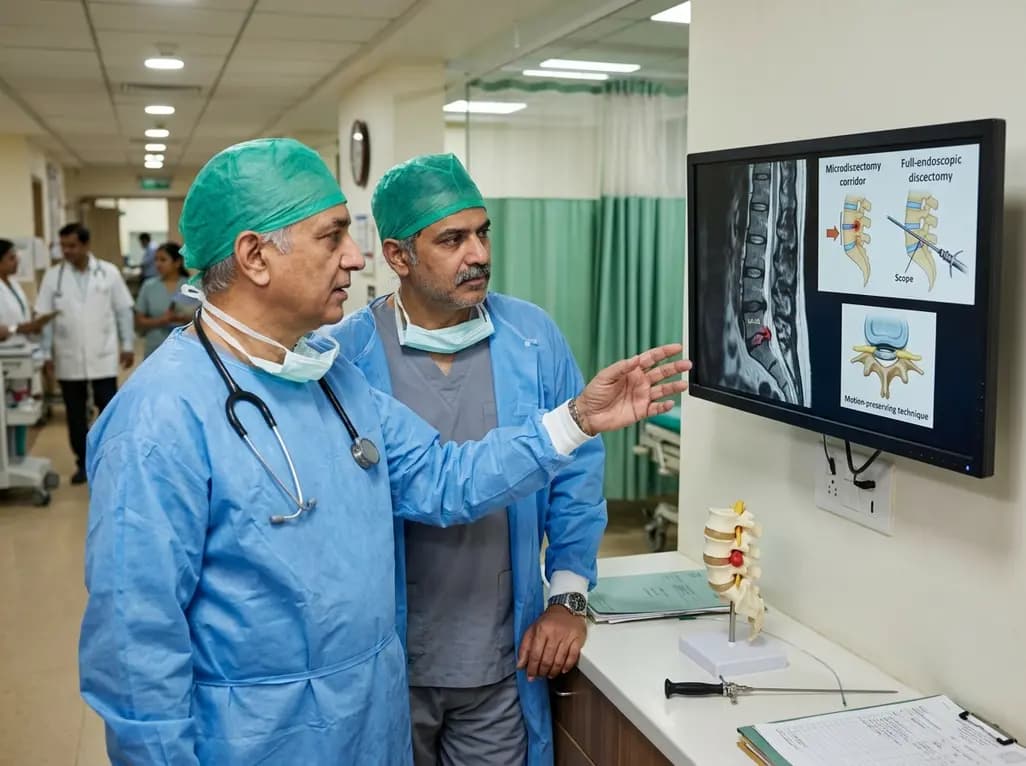
This clinical overview examines recent advancements in lumbar disc herniation surgery, comparing microscopic and full-endoscopic discectomy while highlighting biportal techniques and emerging motion-preserving innovations for spine specialists.
Today

Small interfering RNA (siRNA) therapeutics harness RNA interference to degrade disease-causing messenger RNA. By delivering hepatocyte-targeted, durable gene silencing, agents targeting PCSK9, LPA, and angiotensinogen offer potent cardiovascular risk reduction with infrequent, biannual dosing schedules.
Today
