.webp&w=384&q=75)

Loading, please wait...
Loading, please wait...

Managing relapsed immune thrombocytopenia (ITP) remains a significant challenge in hematology. While thrombopoietin receptor agonists (TPO-RAs) like eltrombopag and hetrombopag are effective second-line options, monotherapy often yields limited sustained results for many patients. Consequently, researchers have sought synergistic combinations to improve clinical outcomes. A recent retrospective analysis published in Hematology evaluated the combination of TPO-RAs and sirolimus as a potential relapsed immune thrombocytopenia treatment. This dual-action approach aims to both stimulate platelet production and modulate the underlying autoimmune response.
The study followed 50 patients with relapsed ITP who received combined therapy. Researchers measured efficacy at multiple intervals to determine the speed and durability of the response. Furthermore, they analyzed various patient subgroups to identify who might benefit most from this novel regimen. Notably, the median time to response was remarkably short, with many patients showing improvement within just seven days of starting the treatment.
The results demonstrate that adding sirolimus to TPO-RA therapy significantly enhances the overall response rate (ORR). Specifically, the ORR improved from 61% at week 4 to a substantial 82% by week 12. Mean platelet counts also showed a consistent upward trend throughout the study duration. Researchers observed no statistically significant difference in efficacy when comparing hetrombopag to eltrombopag, suggesting that the benefits of sirolimus apply across the TPO-RA class.
Additionally, the analysis revealed that patients who had been diagnosed with ITP for less than one year were more likely to benefit from this relapsed immune thrombocytopenia treatment (p = 0.003). Similarly, factors such as ANA status or the line of treatment (second-line vs. third-line) did not significantly alter the efficacy. The regimen maintained a manageable safety profile, making it a viable consideration for clinicians managing refractory cases in India where access to multiple lines of therapy can sometimes be restricted.
The study reported an overall response rate of 82% at 12 weeks of treatment. This is significantly higher than the roughly 60% response rate typically seen with TPO-RA monotherapy in similar patient populations.
Most patients showed a rapid response to the combination therapy. The median time to response recorded in the study was seven days, which is beneficial for patients requiring urgent platelet elevation.
While most subgroups responded well, the research indicates that patients with a shorter disease duration (less than one year) have a higher likelihood of benefiting from this treatment strategy.
Disclaimer: This content is for informational and educational purposes only and does not constitute medical advice or a professional relationship between the reader and the provider. Always seek the advice of a physician or other qualified health provider with any questions you may have regarding a medical condition or treatment. Refer to the latest local and national guidelines for clinical practice.
References
Wang D et al. Efficacy and safety of TPO-RA combined with sirolimus in the treatment of relapsed immune thrombocytopenia. Hematology. 2026 Dec undefined. doi: 10.1080/16078454.2026.2642515. PMID: 41844533.
Feng Y, et al. Sirolimus as Rescue Therapy for Refractory/Relapsed Immune Thrombocytopenia: Results of a Single-Center, Prospective, Single-Arm Study. Front Med (Lausanne). 2020;7:110. doi: 10.3389/fmed.2020.00110.
Neunert C, et al. American Society of Hematology 2019 guidelines for immune thrombocytopenia. Blood Adv. 2019;3(23):3829-3866. doi: 10.1182/bloodadvances.2019000966.

Read summarized clinical updates, watch expert medical content, and earn CME certifications right from your smartphone.
Open your smartphone camera to scan and install.





A retrospective study highlights the efficacy of combining TPO-RAs with sirolimus, showing an 82% overall response rate for relapsed immune thrombocytopenia...
5 months ago

Dendritic cells bridge innate and adaptive immunity in myocardial infarction. This review explores their pathological roles, circulating dynamics, novel tolerogenic interventions, and how standard cardiovascular medications modulate dendritic cells to improve post-infarction myocardial repair and patient outcomes.
Today

A premature neonate developed upper limb compartment syndrome after uterine rupture extruded the arm through a scar defect. Conservative management with continuous monitoring yielded complete functional recovery and normal limb growth at 10-year follow-up, highlighting non-operative safety in selected cases.
Today
Atherosclerosis involves extensive glycometabolic reprogramming across immune and vascular cells. This review examines how glycolysis, the pentose phosphate pathway, and lactate-driven epigenetic shifts fuel plaque vulnerability, while highlighting novel therapeutic targets like PFKFB3 and LDHA.
Today
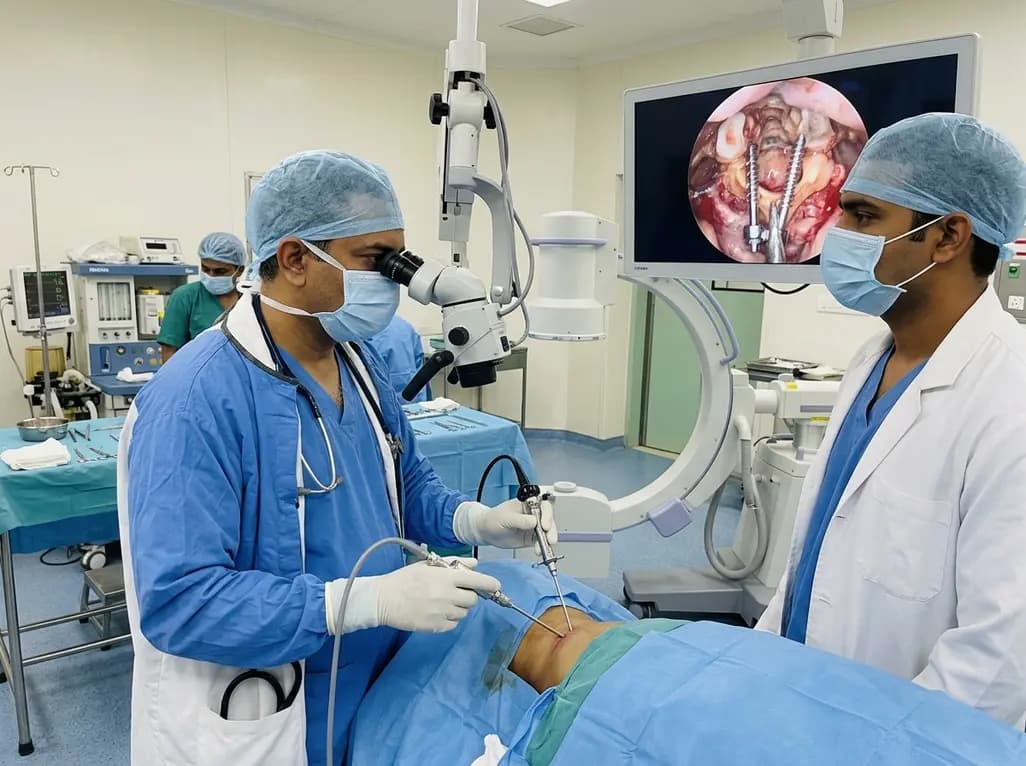
Endoscopic posterior cervical fusion combines minimally invasive decompression, joint preparation, and rigid screw-rod fixation for atlantoaxial pathologies. Early clinical findings demonstrate solid bony union, excellent symptom relief, and minimal soft-tissue morbidity without significant vascular compromise.
Yesterday

The All-India Food Processors' Association has approached the Supreme Court to oppose FSSAI's proposed per-100g benchmark for front-of-pack warning labels, advocating instead for a per-serving threshold. We explore the regulatory showdown, nutritional evidence, and implications for clinical lifestyle counseling.
Today
