.webp&w=384&q=75)

Loading, please wait...
Loading, please wait...
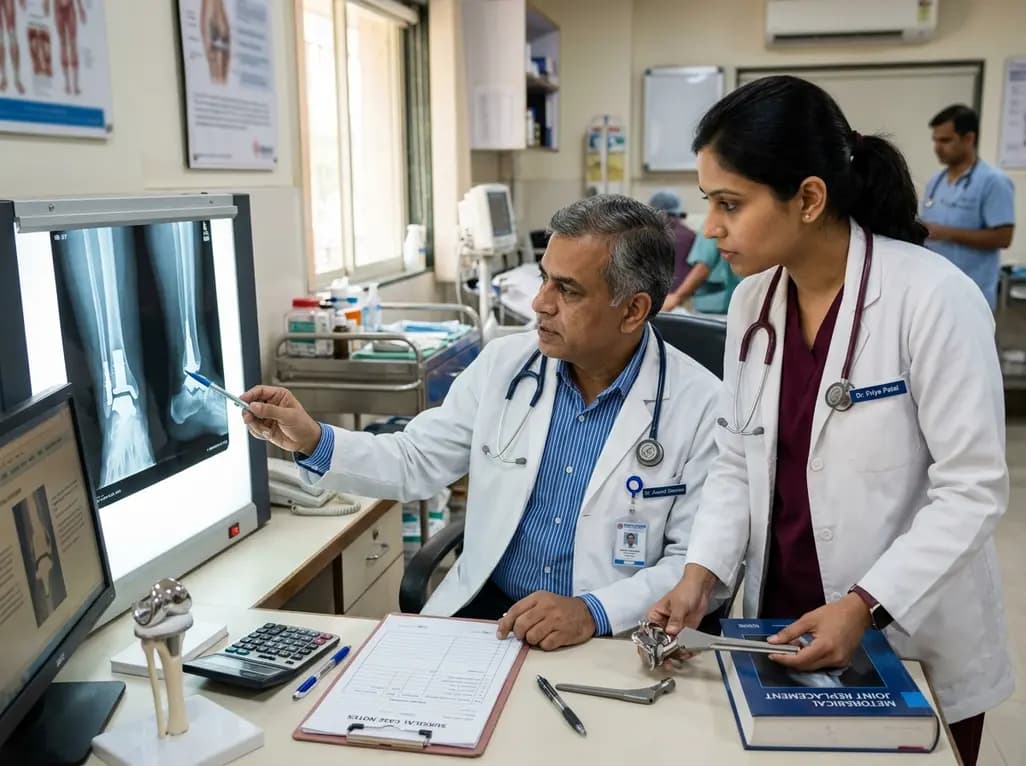
Surgeons increasingly utilize total ankle arthroplasty as a viable motion-sparing intervention for end-stage ankle osteoarthritis. However, managing patients with elevated body mass index presents notable clinical challenges. Recent clinical evidence demonstrates that obesity correlates significantly with earlier mechanical failure following total ankle arthroplasty. Excess mechanical loading across the prosthetic articular interface accelerates wear and increases shear stress at the bone-prosthesis boundary. Consequently, orthopaedic teams must critically assess joint kinetics and systemic factors when evaluating candidates for joint replacement. Although modern implant designs offer improved anatomical congruency, high compressive forces persistently challenge fixation stability. Therefore, surgeons must balance the desire for functional motion preservation against the tangible hazards of premature implant loosening. Clinical counseling should clearly communicate these heightened risks to patients before finalizing the surgical plan.
The human ankle joint transmits immense joint-contact forces during normal human gait. In patients with severe obesity, these ground reaction forces multiply considerably across a comparatively compact surface area. Consequently, mechanical overload frequently leads to early micro-motion between the host bone and prosthetic components. This micro-motion interferes directly with durable biological ingrowth and promotes progressive osteolysis. Furthermore, cyclic loading in high-mass patients generates uneven stress distributions across the mortise. As a result, aseptic loosening develops as a primary driver of mechanical failure in modern prosthetic designs. Surgeons frequently observe component tilting, coronal malalignment, and progressive periprosthetic lucency during routine postoperative radiographic follow-up. Thus, structural failure often necessitates premature complex revision procedures to salvage limb function and alleviate persistent pain.
Orthopaedic engineers introduced stemmed and keeled tibial components to distribute physiological loads more effectively across the distal tibial metaphysis. Many clinicians previously hypothesized that these augmented designs would protect against aseptic loosening in heavier individuals. However, recent long-term cohort data indicate that mechanical failure occurs earlier in obese cohorts regardless of whether surgeons utilize flat, keeled, or stemmed tibial components. Therefore, modern stem extensions do not entirely mitigate the damaging interface stresses induced by excessive body weight. While stems provide reliable immediate initial axial stability, they cannot fully insulate the biological bone interface from ongoing cyclic strain. Consequently, surgeons cannot rely solely on augmented implant geometry to offset obesity-related mechanical failure risks. Implant choice must remain tailored to patient anatomy rather than serving as an assumed defense against mechanical overload.
Given the elevated risk of prosthetic loosening, orthopaedic surgeons must weigh arthroplasty against open or arthroscopic ankle arthrodesis. Arthrodesis has historically served as the definitive surgical standard for end-stage ankle arthrosis in heavier patients. Although fusion eliminates tibiotalar motion, it delivers predictable long-term stability and eliminates the risk of mechanical implant loosening. However, ankle fusion transfers mechanical demands to the adjacent subtalar and midtarsal joints over time. This load transfer frequently causes secondary osteoarthritis in neighboring foot joints. Conversely, total ankle arthroplasty preserves vital sagittal kinematics and improves overall functional gait efficiency. Surgeons must systematically evaluate bone quality, baseline deformity, and patient activity goals when navigating this clinical trade-off. Shared decision-making ensures that patients understand both the longevity benefits of arthrodesis and the functional benefits of joint replacement.
Optimizing modifiable clinical risk factors before surgery represents a fundamental cornerstone of modern surgical practice. Orthopaedic teams should collaborate closely with endocrinologists, dietitians, and bariatric specialists to support meaningful preoperative weight reduction. Specifically, structured weight-loss programs, metabolic management, and GLP-1 receptor agonist therapy offer valuable avenues for improving patient physiology. Reducing total body mass decreases joint contact stress and lowers perioperative wound complication rates. In addition, comprehensive metabolic screening helps identify untreated type 2 diabetes or osteopenia that might further compromise osseointegration. Clinicians must establish clear body mass thresholds to guide elective surgical candidacy. Ultimately, proactive metabolic optimization enhances bone healing, protects joint mechanics, and improves overall surgical survivorship.
Postoperative surveillance protocols must remain rigorous for all high-risk total ankle arthroplasty recipients. Routine weight-bearing radiographs allow clinicians to identify early periprosthetic radiolucent lines and subtle implant migration. Furthermore, advanced imaging modalities such as weight-bearing computed tomography provide detailed three-dimensional assessments of implant seating and bony osteolysis. When mechanical failure occurs, revision surgery presents substantial technical complexity. Surgeons often encounter extensive tibial bone loss, requiring modular revision stems, metal augments, or conversion to a tibiotalocalcaneal fusion. Therefore, early detection of aseptic loosening facilitates timely surgical intervention before massive bone deficits develop. Diligent monitoring, patient education, and prompt management of mechanical symptoms ensure the best achievable outcomes in this challenging demographic.
Obesity increases joint contact forces and cyclic stresses across the ankle joint during daily weight-bearing activities. These heightened mechanical forces induce micro-motion at the bone-implant interface, which disrupts initial osseointegration and accelerates polyethylene wear. Consequently, patients with elevated body mass experience higher rates of aseptic loosening, component migration, and structural failure, frequently necessitating premature revision surgery compared to patients with normal body mass.
Recent high-volume clinical evidence indicates that tibial stems or keel augmentations do not prevent earlier mechanical failure in obese patients. Although stems provide localized mechanical support and initial axial stability, they cannot fully neutralize the immense cyclic shear stresses generated by excessive body mass. Therefore, implant augmentations alone do not shield patients from obesity-driven prosthetic loosening or early joint failure.
Ankle arthrodesis remains a well-established surgical alternative for patients with high body mass index and severe ankle arthritis. Fusion permanently stabilizes the joint, eliminates mechanical prosthetic loosening risks, and provides dependable pain relief. Additionally, structured medical weight management, physical therapy, and custom unloading orthoses serve as effective non-operative or perioperative modalities to optimize joint mechanics and functional outcomes.
Disclaimer: This content is for informational and educational purposes only and is not intended to serve as medical advice, diagnosis, or treatment. It does not replace professional medical judgment. Healthcare professionals must evaluate each patient's individual clinical condition and make independent diagnostic and management decisions. Dosage, indications, and safety information should always be verified against the manufacturer's current prescribing information and established regional clinical protocols. Patients should always consult a qualified healthcare provider with questions regarding medical conditions or treatments. If a medical emergency is suspected, immediate medical attention should be sought. The authors and publishers assume no liability for errors, omissions, or potential adverse outcomes resulting from the application of the information contained herein. Refer to the latest local and national guidelines for clinical practice.
References
Sommi C et al. Obesity Is Associated With Earlier Mechanical Failure Following Total Ankle Arthroplasty Independent of Tibial Stem or Keel Augmentation. Foot Ankle Int. 2026 Aug 29. doi: 10.1177/10711007261471132. PMID: 42668262.
Cody EA, Bejarano-Pineda L, Lachman JR, et al. Risk Factors for Failure of Total Ankle Arthroplasty With a Minimum Five Years of Follow-up. Foot Ankle Int. 2019;40(3):249-258. doi:10.1177/1071100718814522.
Sansosti LE, Van JC, Meyr AJ. Effect of Obesity on Total Ankle Arthroplasty: A Systematic Review of Postoperative Complications Requiring Surgical Revision. J Foot Ankle Surg. 2018;57(2):353-356. doi:10.1053/j.jfas.2017.10.034.

Read summarized clinical updates, watch expert medical content, and earn CME certifications right from your smartphone.
Open your smartphone camera to scan and install.





A comprehensive analysis of how elevated body mass index influences mechanical failure and aseptic loosening in total ankle arthroplasty, demonstrating that tibial stem and keel augmentations do not mitigate obesity-related implant revision risks.
4 weeks back

Health authorities in the Democratic Republic of the Congo report unprecedented mortality from the Bundibugyo virus epidemic. Clinicians worldwide must understand the virological profile, atypical hemorrhagic manifestations, early diagnostic protocols, and containment strategies for this evolving health threat.
Today

A nationwide South Korean study shows underreporting of smoking among women dropped from 57.4% to 36.4% between 2008 and 2021. However, over one-third of female smokers still conceal their habit, highlighting the critical role of cotinine verification in clinical risk assessment.
Today
A scientific statement highlights the crucial role of nutrition in managing chronic heart failure. It emphasizes GLIM-based screening, individualized dietary patterns like the Mediterranean diet, appropriate protein and energy intake, avoiding unnecessary fluid restriction, and targeted iron supplementation.
Today

A new study evaluates the rheological stability of decellularized peripheral nerve matrix hydrogels under varied storage conditions. Findings show -80°C storage and freeze-drying preserve gelation kinetics and mechanical stiffness, offering key insights for shipping and translational clinical applications.
Today

A qualitative meta-synthesis highlights the complex interplay between gender dysphoria, minority stress, and eating disorders in transgender and gender-diverse individuals. Clinicians must recognize these distinct drivers to offer supportive, gender-affirming, and interdisciplinary eating disorder care.
Today
