.webp&w=384&q=75)

Loading, please wait...
Loading, please wait...
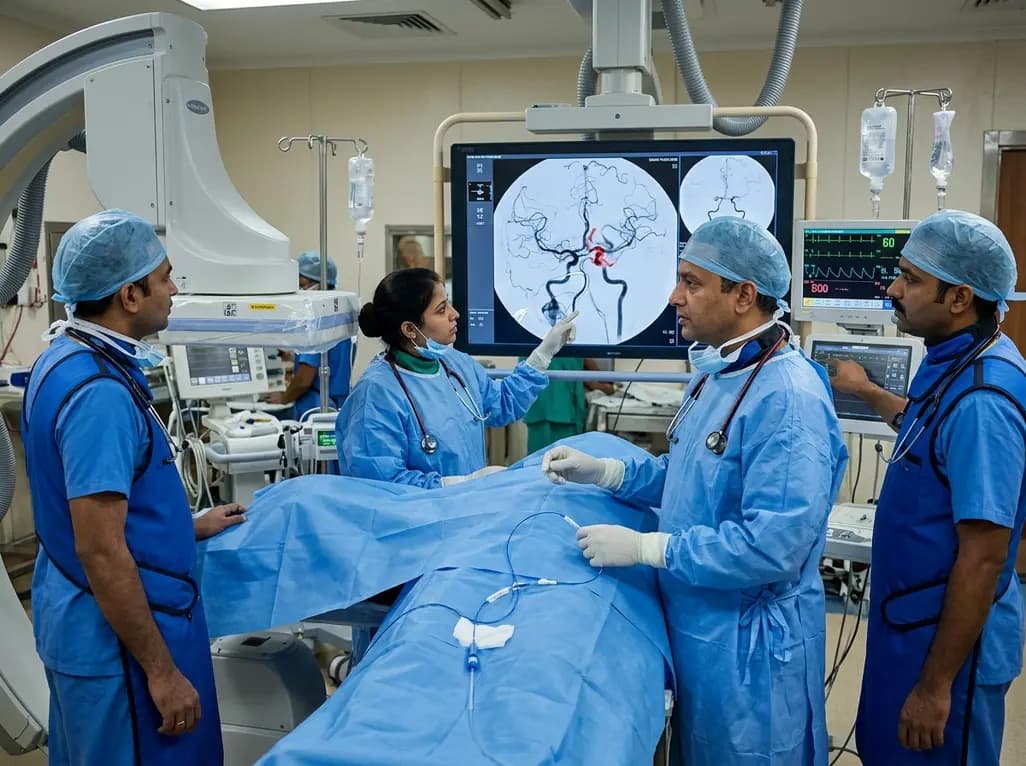
Acute ischemic compromise within the posterior circulation represents one of the most critical emergencies in neurovascular medicine. Specifically, top of the basilar artery syndrome arises from the thromboembolic occlusion of the rostral basilar artery, jeopardizing blood supply to the midbrain, thalami, and posterior cerebral territories. Patients frequently present with rapid fluctuations in vigilance, diverse oculomotor deficits, and profound neurocognitive impairments. Because these symptoms often mimic non-vascular metabolic or toxic encephalopathies, clinical teams face substantial diagnostic hurdles. Recent retrospective evidence from a high-volume comprehensive stroke center provides vital insights into the clinical trajectories, imaging markers, and therapeutic choices for these complex presentations. Evaluating these real-world data allows clinicians to refine triage workflows, optimize interventional therapies, and improve long-term rehabilitation pathways.
The clinical spectrum of rostral posterior circulation ischemia is remarkably heterogeneous. The rostral basilar artery gives rise to perforating arteries supplying the reticular activating system and bilateral paramedian thalamic nuclei. Consequently, significant reductions in consciousness dominate the acute presentation. In large clinical cohorts, the median Glasgow Coma Scale score at admission often falls into severe depression ranges, frequently requiring emergency airway protection. In addition, patients exhibit classical neuro-ophthalmic manifestations, including vertical gaze palsies, skew deviation, pupillomotor abnormalities, and bilateral internuclear ophthalmoplegia. Qualitative cognitive changes, such as acute confusion, visual hallucinations, and severe amnesia, can also emerge abruptly. Furthermore, bulbar dysfunction occurs in over half of affected individuals, complicating acute management. Recognizing this constellation of neurological deficits immediately enables emergency physicians to distinguish acute vascular occlusions from metabolic comas or primary toxicities.
Rapid neuroimaging remains essential to confirm rostral basilar occlusion and assess ischemic core volume. Multimodal computed tomography protocols, incorporating non-contrast CT and CT angiography, serve as the initial standard of care. Non-contrast scans frequently detect subtle hyperdense basilar artery signs and early hypoattenuation in the posterior thalamus or midbrain. However, CT angiography provides definitive visualization of the occlusive clot lodged at the basilar bifurcation. Advanced magnetic resonance imaging, particularly diffusion-weighted sequences, offers superior sensitivity for identifying punctate or bilateral infarcts in the paramedian midbrain, superior cerebellar hemispheres, and occipital lobes. Imaging protocols must also evaluate collateral circulation pathways, such as patent posterior communicating arteries. Robust collateral networks frequently maintain downstream perfusion to vital mesencephalic structures. Therefore, thorough baseline vascular imaging guides interventional teams in determining patient candidacy for rapid mechanical reperfusion therapies.
Prompt vessel recanalization represents the cornerstone of management in acute posterior circulation stroke. Emergency endovascular thrombectomy has revolutionized care for large vessel occlusions, but debates continue regarding optimal bridging strategies. Observational data indicate that administering systemic intravenous thrombolysis before mechanical thrombectomy yields higher rates of complete revascularization than thrombectomy alone. Clinicians quantify this therapeutic success using the Thrombolysis in Cerebral Infarction grading system. Patients treated with combined bridging therapy achieve significantly higher successful reperfusion rates. This synergistic effect likely stems from pharmacological lysis of distal thromboembolic fragments within narrow terminal branches. As a result, patients receiving combined therapy demonstrate lower median modified Rankin scale scores at hospital discharge, confirming the immense clinical value of systemic thrombolytic pre-treatment when no contraindications exist.
Long-term neurological outcomes following rostral basilar occlusion depend heavily on baseline presentation and procedural success. Multivariable regression analyses consistently highlight successful vessel recanalization and initial Glasgow Coma Scale scores as the strongest independent predictors of functional independence. When clinicians fail to restore arterial patency, extensive tissue necrosis ensues throughout the midbrain and bilateral paramedian thalamus, causing persistent coma or severe vegetative dependency. Conversely, achieving complete vessel patency significantly halts core infarct expansion. Beyond initial revascularization, post-stroke functional recovery correlates closely with patient age, baseline comorbidities, and collateral vessel anatomy. Systematic evaluation using validated metrics, such as the modified Rankin scale and the Barthel Index, helps stroke teams anticipate specialized neuro-rehabilitation needs and establish realistic recovery trajectories for families.
Comprehensive neurocritical care plays an indispensable role throughout the post-intervention hospitalization phase. Because severe consciousness impairment is common, many patients require prolonged mechanical ventilation and vigilant monitoring for secondary brain injuries. Elevated intracranial pressure from malignant cerebellar infarction or secondary hydrocephalus requires immediate osmotic therapy or external ventricular drainage. In addition, dysphagia affects more than fifty percent of patients during the acute and subacute phases. This severe swallowing impairment increases the risk of aspiration pneumonia and poor nutritional intake. Consequently, multidisciplinary teams must implement early fiberoptic endoscopic swallowing evaluations. A significant proportion of these individuals require temporary enteral nutrition via nasogastric tubes or percutaneous endoscopic gastrostomy. Proactive airway management, systematic glycemic regulation, blood pressure maintenance, and early physiotherapy collectively reduce secondary in-hospital morbidity.
These observational insights underscore the necessity of high-efficiency posterior circulation stroke protocols. Emergency medical services must recognize basilar artery syndrome symptoms early, avoiding triage delays often associated with atypical coma presentations. Establishing seamless transfer networks to comprehensive stroke centers ensures rapid access to dual recanalization therapies. Clinicians must prioritize rapid administration of intravenous thrombolysis followed immediately by groin puncture for mechanical clot retrieval. Furthermore, standardized stroke pathways should emphasize mandatory early screening for dysphagia and respiratory vulnerability. By standardizing neurointerventional techniques and post-procedural neurocritical care, hospital systems can substantially decrease mortality and long-term functional dependency across this vulnerable patient cohort.
Top of the basilar artery syndrome represents an acute ischemic event caused by thromboembolic occlusion at the rostral basilar bifurcation. This severe vascular compromise interrupts vital blood flow to the midbrain, thalamus, superior cerebellum, and occipital lobes. Consequently, affected patients present with rapid alteration of consciousness, pupillary deficits, and oculomotor dysfunction.
Combining intravenous thrombolysis with mechanical thrombectomy improves microvascular reperfusion and dissolves distal thromboembolic fragments in branch vessels. Consequently, this combined strategy achieves higher Thrombolysis in Cerebral Infarction scores than thrombectomy alone. Improved reperfusion directly preserves critical brainstem and thalamic tissue, thereby significantly reducing long-term post-stroke functional disability and institutional dependence.
Initial vigilance, measured via the Glasgow Coma Scale upon admission, reflects the extent of ischemic injury to the ascending reticular activating system. Lower initial consciousness scores strongly correlate with severe bilateral paramedian tissue damage. Therefore, baseline neurological depression remains a pivotal prognostic determinant, predicting higher post-discharge modified Rankin scale scores and prolonged dependency.
Disclaimer: This content is for informational and educational purposes only and does not constitute medical advice, diagnosis, or treatment recommendations. Refer to the latest local and national guidelines for clinical practice.
References

Read summarized clinical updates, watch expert medical content, and earn CME certifications right from your smartphone.
Open your smartphone camera to scan and install.





A comprehensive stroke center study evaluates top of the basilar artery syndrome, revealing that combining intravenous thrombolysis with mechanical thrombectomy achieves superior recanalization and better functional outcomes compared to endovascular thrombectomy alone.
last month

Red blood cell transfusion is critical in sickle cell disease management but brings significant immunological complexity, including alloimmunisation and iron overload. Extended RBC phenotyping and tailored protocols optimize clinical safety.
Today
Discover the crucial distinctions between mesonephric and mesonephric-like proliferations of the female genital tract. Learn the key histomorphologic, immunohistochemical, and molecular differences essential for accurate diagnosis and clinical management.
Today
A large UK Biobank study reveals that plasma proteomic signatures capture preclinical organ damage and improve multiorgan risk prediction across early CKM syndrome stages 0 to 2 beyond traditional PREVENT clinical models.
Today

A retrospective CBCT study reveals that superior TMJ space asymmetry correlates moderately with occipital condyle-atlas-axis asymmetry in unilateral TMJ osteoarthritis, highlighting an imaging correlate between jaw biomechanics and upper cervical alignment rather than a standalone diagnostic marker.
Today

A Bayesian multilevel meta-analysis reveals that aerobic training combined with moderate carbohydrate restriction modestly lowers HbA1c in type 2 diabetes. However, sparse data and very low certainty leave incremental benefits over exercise or diet alone unproven, highlighting the need for individualized care.
Today
