.webp&w=384&q=75)

Loading, please wait...
Loading, please wait...

Postoperative fluid retention represents a major complication following cardiac interventions, frequently precipitating adverse hemodynamic and pulmonary sequelae. Clinicians routinely use intravenous tolvaptan sodium phosphate as an effective aquaretic prodrug to address severe fluid overload when oral medication cannot be administered. Because conventional loop diuretics frequently cause renal hypoperfusion and electrolyte depletion, selective vasopressin V2 receptor antagonism offers an essential therapeutic alternative. Consequently, recent investigations have systematically evaluated the clinical utility and hemodynamic safety of this intravenous agent in open-heart surgery cohorts.
Patients undergoing cardiopulmonary bypass routinely experience systemic inflammatory responses, capillary leak syndrome, and significant volume overload. Traditional diuretic strategies rely heavily on loop diuretics such as furosemide to mobilize excess extracellular fluid. However, high doses of loop diuretics often exacerbate neurohormonal activation, provoke hypokalemia, and worsen renal hemodynamics. In contrast, tolvaptan sodium phosphate functions as an aquaretic prodrug that converts rapidly into active tolvaptan within the circulation. It selectively blocks arginine vasopressin V2 receptors in the renal collecting ducts without stimulating the renin-angiotensin-aldosterone axis. Furthermore, this targeted mechanism promotes the clearance of electrolyte-free water while preserving intravascular volume and essential serum ions. Because early postoperative cardiac patients frequently suffer from gastrointestinal hypoperfusion or delayed gastric emptying, an intravenous formulation provides reliable bioavailability. Therefore, intravenous aquaresis bridges a vital clinical gap in the intensive care unit by ensuring rapid decongestion without destabilizing systemic vascular resistance or worsening renal function.
To establish the efficacy and safety of this therapy, researchers conducted an observational study involving 103 consecutive adult patients who underwent open-heart surgery. The cohort included 31 women, and the overall mean age was 70.5 years. Following the completion of surgery, clinicians administered intravenous tolvaptan sodium phosphate to treat postoperative fluid overload. Investigators monitored hourly urine output meticulously, recording baseline parameters one hour before drug administration and tracking hourly excretion patterns through six hours post-infusion. To quantify the therapeutic magnitude, researchers calculated the cumulative excess urine output, defined as the sum of hourly urine volumes from hours one through six minus the baseline volume. Subsequently, investigators ranked patients according to their net fluid response, comparing the top 25 marked responders with the bottom 25 poor responders. Additionally, the medical team tracked serial electrolyte levels, serum creatinine concentrations, and hemodynamic measurements throughout the perioperative window. This granular hourly assessment provided key insights into the exact time course and physiological determinants of intravenous aquaretic response in surgical patients.
The clinical study demonstrated significant and predictable aquaretic efficacy across the patient cohort. Hourly urine output increased markedly within one to three hours following intravenous administration of the prodrug. Specifically, the aquaretic effect peaked between two and three hours post-dose and remained significantly above baseline throughout the entire six-hour observation window. Moreover, systemic hemodynamic parameters remained remarkably stable throughout the active diuresis phase. Unlike conventional loop diuretics, which often induce sudden intravascular depletion and arterial hypotension, the selective excretion of free water avoided abrupt blood pressure declines. Furthermore, cardiac filling pressures decreased smoothly as excessive interstitial fluid shifted back into the vascular tree. Consequently, patients achieved substantial fluid elimination without requiring escalated inotropic support or vasopressor therapy. In addition, oxygenation parameters and ventilatory weaning metrics showed favorable trajectories among patients who achieved rapid decongestion. These findings confirm that the rapid conversion of the prodrug generates dependable, time-dependent fluid clearance during critical postoperative recovery phases.
Electrolyte stability remains a paramount clinical consideration when managing cardiac surgery patients in the intensive care unit. In this study, tolvaptan sodium phosphate exhibited an outstanding safety profile without inducing dangerous electrolyte imbalances. Traditional diuretics frequently waste potassium and magnesium, thereby increasing the risk of lethal atrial and ventricular arrhythmias. In contrast, this selective aquaretic agent maintained stable serum potassium levels throughout the monitoring interval. Furthermore, the therapy did not trigger severe hypernatremia or acute renal impairment among treated individuals. Although aquaretic agents naturally elevate serum sodium by removing pure water, sodium increments remained gradual and clinically manageable. Serum creatinine and blood urea nitrogen levels remained stable, indicating preservation of renal perfusion. Additionally, no patient experienced drug-related hepatotoxicity or unexpected idiosyncratic adverse reactions during the acute postoperative phase. Therefore, the favorable tolerability profile makes intravenous aquaresis a secure option for vulnerable surgical patients with borderline renal reserve.
A critical aspect of the study involved comparing the physiological characteristics of marked responders against poor responders. The top quartile of patients achieved substantial cumulative urine output, whereas the lowest quartile demonstrated attenuated aquaretic responses. Notably, baseline renal function, effective circulating volume, and preoperative neurohormonal tone significantly influenced individual drug responsiveness. Patients with preserved baseline glomerular filtration rates and moderate systemic congestion showed the greatest aquaretic gains. Conversely, individuals with advanced chronic kidney disease or severe preexisting capillary damage exhibited reduced free-water clearance. Furthermore, baseline urinary osmolality and baseline sodium excretion served as potential predictive indicators of clinical responsiveness. Identifying these patient-specific factors enables clinicians to personalize postoperative fluid management protocols. Consequently, intensifying baseline hemodynamic support before administering aquaretics may rescue responsiveness in borderline patients. Moreover, combining low-dose loop diuretics with aquaretic agents could offer synergistic benefits for patients categorized as poor responders.
The findings from this trial carry substantial implications for cardiothoracic surgeons, critical care specialists, and anesthesiologists managing postoperative patients. Fluid overload after cardiac surgery strongly correlates with prolonged mechanical ventilation, acute kidney injury, and extended hospital lengths of stay. Therefore, achieving rapid, safe decongestion remains an essential perioperative objective. Intravenous tolvaptan sodium phosphate offers a reliable pharmacologic tool for patients who cannot absorb oral tablets during early recovery. Furthermore, its ability to promote aquaresis without compromising electrolyte homeostasis reduces the need for frequent electrolyte replacement protocols. Intensive care teams can administer this intravenous formulation promptly upon detecting fluid accumulation, circumventing delays associated with gastrointestinal ileus. Additionally, the predictability of peak urine output within two to three hours allows precise volume balancing in fluid-restricted protocols. In conclusion, integrating intravenous vasopressin antagonists into postoperative pathways optimizes fluid balance, stabilizes renal function, and accelerates recovery after complex cardiac surgery.
Tolvaptan sodium phosphate acts as a selective vasopressin V2 receptor antagonist that promotes aquaresis, which is the excretion of electrolyte-free water. In contrast, loop diuretics promote natriuresis by blocking sodium-potassium-chloride transporters, which frequently causes significant electrolyte wasting, hypokalemia, and neurohormonal activation. Furthermore, this intravenous prodrug preserves serum potassium and maintains hemodynamic stability without compromising renal blood flow during postoperative recovery.
Following intravenous infusion, the prodrug rapidly converts into active tolvaptan, inducing a significant increase in urine volume within one to three hours. The peak aquaretic effect typically occurs between two and three hours after administration. Importantly, increased urine output remains significantly above baseline levels throughout a six-hour period, providing predictable and sustained fluid clearance for critically ill patients.
Patients with significant postoperative fluid overload who cannot tolerate oral medications benefit most from this intravenous formulation. It is particularly valuable for individuals at high risk of electrolyte disturbances or those who exhibit resistance to conventional loop diuretics. Furthermore, patients recovering from valve replacement or coronary bypass with borderline renal function achieve effective decongestion without worsening renal hemodynamics.
Disclaimer: This content is for informational and educational purposes only and is intended solely for healthcare professionals. It does not constitute medical advice, diagnosis, or treatment recommendations. Clinical decisions should be guided by individualized patient assessment, institutional protocols, and official product labeling. Refer to the latest local and national guidelines for clinical practice.
References

Read summarized clinical updates, watch expert medical content, and earn CME certifications right from your smartphone.
Open your smartphone camera to scan and install.





Intravenous tolvaptan sodium phosphate demonstrates potent aquaretic efficacy and hemodynamic safety in open-heart surgery patients. Peak urine output occurs within 2-3 hours without inducing electrolyte imbalance, preserving renal function and systemic stability.
4 weeks back

A systematic review of 41 preclinical studies reveals that baicalin dampens systemic inflammation, inhibits NF-κB and NLRP3 pathways, and improves organ preservation in sepsis models. However, substantial study heterogeneity and a complete lack of human clinical trials highlight the need for further translational research.
Today
Discover the crucial distinctions between mesonephric and mesonephric-like proliferations of the female genital tract. Learn the key histomorphologic, immunohistochemical, and molecular differences essential for accurate diagnosis and clinical management.
Today
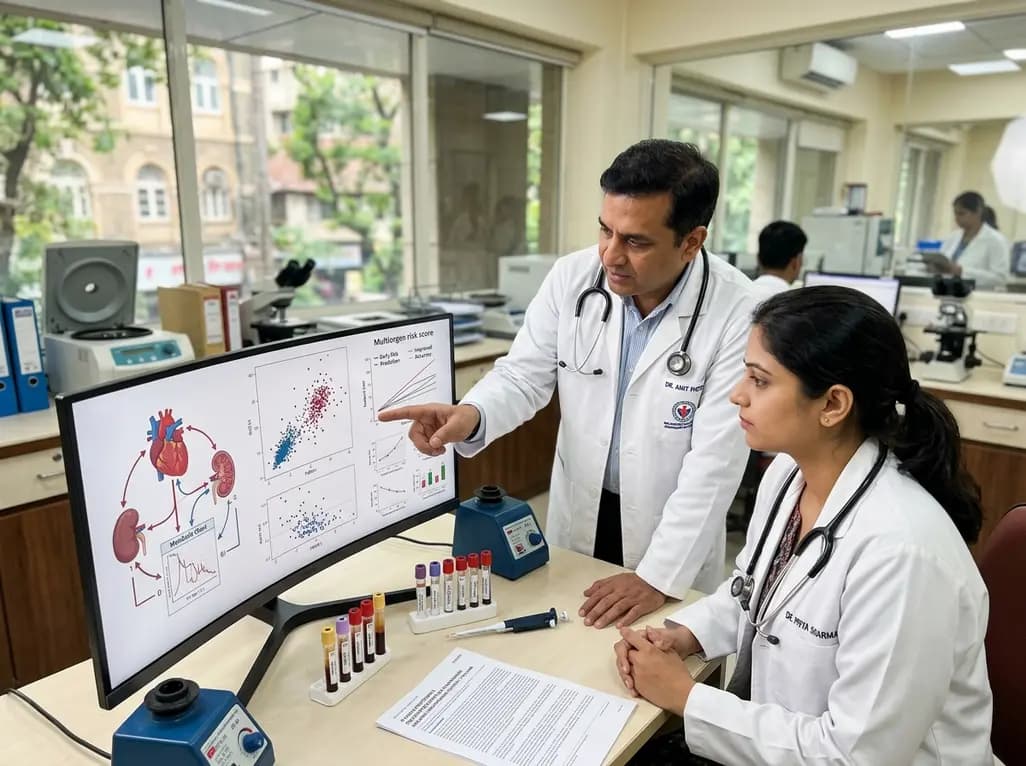
A large UK Biobank study reveals that plasma proteomic signatures capture preclinical organ damage and improve multiorgan risk prediction across early CKM syndrome stages 0 to 2 beyond traditional PREVENT clinical models.
Today
A narrative review investigates whether the articularis genus muscle functions as an independent anatomical entity or blends with the vastus intermedius. We evaluate its morphology, role in retracting the suprapatellar bursa, and direct clinical significance in anterior knee pain and arthroplasty.
Today

A Bayesian multilevel meta-analysis reveals that aerobic training combined with moderate carbohydrate restriction modestly lowers HbA1c in type 2 diabetes. However, sparse data and very low certainty leave incremental benefits over exercise or diet alone unproven, highlighting the need for individualized care.
Today
