.webp&w=384&q=75)

Loading, please wait...
Loading, please wait...

Recent research highlights how specific genetic variations at the Toll-like receptor 2 (TLR2) locus influence TLR2 immune responsiveness. TLR2 serves as a vital pattern recognition receptor that identifies lipoproteins from various bacteria. While many studies focus on protein structure, this new analysis investigates how regulatory regions control the intensity of the immune defense. Consequently, understanding these genetic drivers provides a clearer picture of why some individuals are more susceptible to infections than others.
The study found that divergent haplotypes at the TLR2 gene are directly linked to the strength of the proinflammatory response. Specifically, researchers observed that protective haplotypes produce a more robust reaction to Borrelia afzelii compared to susceptibility-linked variants. Furthermore, similar effects were noted regarding Streptococcus pyogenes, a common pathogen in clinical practice. Therefore, the data suggests that balancing selection targets the general responsiveness of the receptor rather than just its ability to bind specific ligands. This higher expression level in protective haplotypes essentially "primes" the innate immune system for a more effective counter-attack.
Moreover, the strongest genetic signals were located 4.6 kb upstream of the coding sequence. This region likely acts as an enhancer, regulating how much TLR2 protein the body produces. In addition, the study confirmed allele-specific expression, showing that the protective variant naturally maintains higher activity levels. Ultimately, these findings indicate that the evolution of our immune system often prioritizes fine-tuning the quantity of receptors rather than changing their fundamental shape.
These insights are particularly relevant for understanding host susceptibility to bacterial pathogens. Since Streptococcus pyogenes remains a significant health burden globally, including in India, identifying these regulatory markers could help predict patient outcomes. Physicians should recognize that innate immune strength is often genetically predetermined by these cis-regulatory elements. However, further research is necessary to determine if these genetic patterns can be used to develop personalized immunomodulatory therapies.
Protein-coding variation changes the actual structure of the receptor. In contrast, cis-regulatory variation affects the amount of the receptor produced by the cell, which directly impacts the intensity of the immune response.
TLR2 is a key component of the innate immune system. It detects bacterial cell wall components and triggers signaling pathways that lead to inflammation and pathogen clearance.
Understanding genetic susceptibility through TLR2 expression levels may eventually help doctors identify patients at higher risk for severe infections or guide the use of immune-boosting treatments.
Disclaimer: This content is for informational and educational purposes only. It does not constitute medical advice, diagnosis, or treatment. Always seek the advice of your physician or other qualified health provider with any questions you may have regarding a medical condition. Refer to the latest local and national guidelines for clinical practice.
References
Nandakumar M et al. Divergent cis-regulatory haplotypes at Tlr2 are associated with immune responsiveness. Mol Biol Evol. 2026 Apr 29. doi: undefined. PMID: 42052896.
Tschirren B et al. Polymorphisms at the innate immune receptor TLR2 are associated with Borrelia infection in a wild rodent population. Proc Biol Sci. 2013;280(1759):20130364.
Oliveira-Nascimento L et al. The role of TLR2 in infection and immunity. Front Immunol. 2012;3:79.
"
Read summarized clinical updates, watch expert medical content, and earn CME certifications right from your smartphone.
Open your smartphone camera to scan and install.





New research shows that TLR2 immune responsiveness is driven by cis-regulatory variation, influencing how the body reacts to diverse bacterial pathogens....
5 months ago

Recent epidemiological data reveals a dramatic surge in summer heat mortality driven by human-induced climate warming. This analysis explores the pathophysiological impacts on cardiac and renal systems, diagnostic dilemmas in death certification, and essential emergency cooling protocols for acute clinical care.
Today
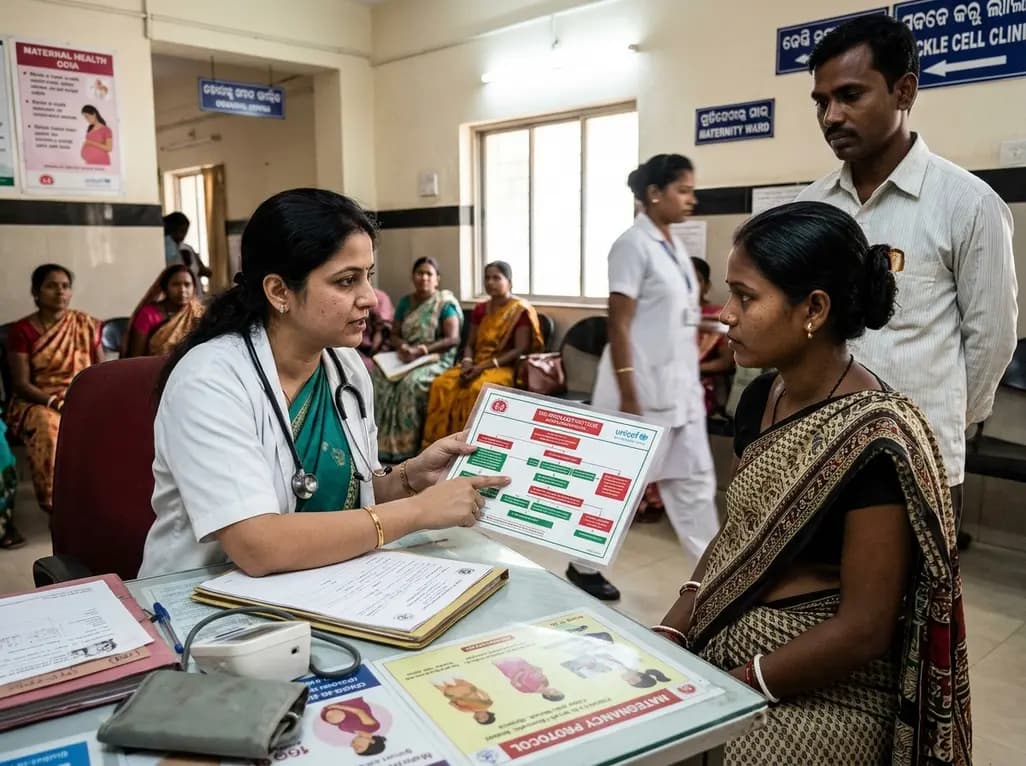
Odisha has established India's first state-level clinical protocol specifically tailored for pregnant women with sickle cell disease. Developed with NHM and UNICEF, the framework provides structured antenatal screening, crisis mitigation, standardized referral pathways, and specialized interdisciplinary care.
Today

India is advancing preventive healthcare by integrating genomics, artificial intelligence, and quantum technologies. With the SANGAM programme sequencing one million Indian genomes, clinicians can unlock personalized therapies, detect cardiometabolic risks early, and curb the burden of diabetes and heart disease.
Today

A randomized controlled trial demonstrates that an eight-week dual-task training intervention significantly improves static and dynamic postural control over standard balance exercises in individuals with chronic ankle instability, addressing critical neurocognitive deficits during athletic and daily activities.
Today

A retrospective cohort study of 7,716 ICU patients from the MIMIC-IV database demonstrates that Gradient Boosting Decision Trees significantly outperform traditional SOFA scores in predicting in-hospital mortality among patients with sepsis and diabetes, with SHAP analysis providing clinical interpretability.
Today
