.webp&w=384&q=75)

Loading, please wait...
Loading, please wait...

Researchers recently conducted a comprehensive study on thymic epithelial tumours to better understand their complex tumour microenvironment (TME). These rare thoracic malignancies exhibit significant heterogeneity, ranging from indolent thymomas to highly aggressive thymic carcinomas (TC). Consequently, clinicians often face challenges in prognostic assessment and treatment stratification. By analyzing tissue samples and genetic data from multiple cohorts, the research team identified distinct genetic relationships and metabolic activities across World Health Organization (WHO) subtypes.
The study's mutation tree analysis demonstrated clear evolutionary divergence among the various histological subtypes. Specifically, type B3 thymomas and thymic carcinomas were the most genetically distinct. These aggressive subtypes cluster together due to their shared malignant potential and poorer clinical outcomes. In contrast, type A and AB thymomas showed closer genetic proximity, reflecting their typically indolent behavior. Furthermore, the profiling effort identified three main TME clusters that align with these clinical characteristics, providing a clearer biological framework for the disease.
Moreover, the metabolic landscape of these tumours reveals critical insights into their progression. Patients with TC or type B3 thymoma showed significantly enhanced amino acid and fatty acid metabolism. Additionally, these aggressive subtypes exhibited high levels of macrophage infiltration and reduced numbers of resting dendritic cells. Immunohistochemistry confirmed that biomarkers like CD68, GLS2, and ARG2 are overexpressed in these high-risk cases. Therefore, these immunometabolic markers could serve as vital tools for future personalised therapy in aggressive malignancies.
Aggressive subtypes, particularly thymic carcinoma and type B3 thymomas, show enhanced amino acid and fatty acid metabolism. These metabolic shifts support the high energy demands and rapid growth characteristic of malignant tumours.
The study identifies CD68, GLS2, and ARG2 as key biomarkers for aggressive subtypes. These markers reflect increased macrophage infiltration and altered metabolic activity, providing potential targets for prognostic assessment and treatment stratification.
Disclaimer: This content is for informational and educational purposes only. It does not constitute professional medical advice, diagnosis, or treatment. Always seek the advice of your physician or other qualified health provider with any questions you may have regarding a medical condition. Refer to the latest local and national guidelines for clinical practice.
References

Read summarized clinical updates, watch expert medical content, and earn CME certifications right from your smartphone.
Open your smartphone camera to scan and install.





New research identifies genetic divergence and immunometabolic biomarkers in thymic epithelial tumours, offering new paths for prognostic assessment....
8 months ago
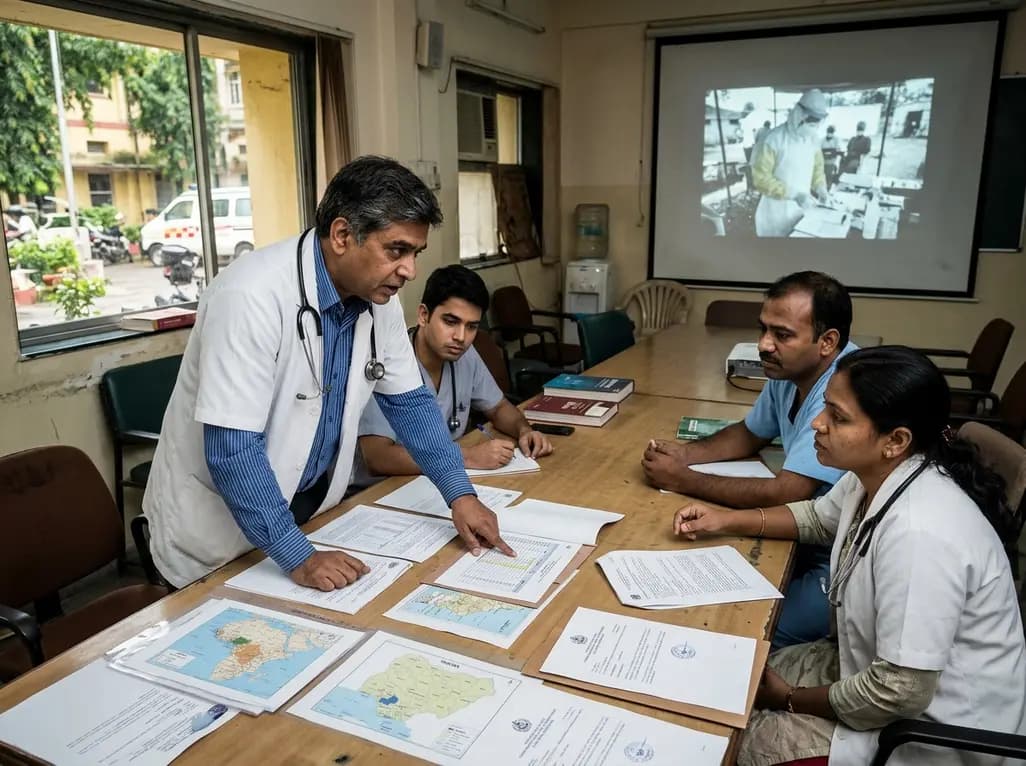
Following Nigeria's first recorded Ebola case linked to regional travel, the Africa CDC has convened an emergency ministerial summit. This alert underscores critical clinical priorities for healthcare professionals, including differentiating early viral infection from malaria, implementing barrier nursing, and triage.
Today

Leucine Rich Bio has introduced South Asia's first comprehensive vaginal microbiome test, BugSpeaks. By profiling microbial dysbiosis, pathogens, and antimicrobial resistance, this next-generation diagnostic platform provides clinicians with deeper insights into recurrent infections, fertility, and reproductive health.
Today

Review how tailored exercise programs benefit frail older patients with heart failure. Explore pathophysiological mechanisms, individualized training prescriptions, and strategies to overcome adherence barriers in clinical practice.
Today

This comparative study evaluates posterior labral tears with and without glenohumeral instability, highlighting distinct demographic patterns, MRI underestimation in stable shoulders, and successful arthroscopic repair outcomes.
Today

A clinical study demonstrates that early intervention with tocilizumab, either as monotherapy or bridged with corticosteroids, achieves significant proptosis reduction and resolves active inflammation in treatment-naive thyroid eye disease.
Today
