

Loading, please wait...
Loading, please wait...

Vaccine distribution across remote healthcare landscapes frequently faces substantial logistical bottlenecks and severe personnel shortages. Dissolving microneedle applicators offer a revolutionary solution by transforming standard cutaneous vaccination into a reliable, dose-sparing, and cold-chain independent clinical process. However, manual application often produces inconsistent penetration because human push force varies widely among administrators. To solve this problem, bioengineers have developed specialized applicators that standardize insertion dynamics. Consequently, these mechanical platforms ensure consistent intradermal immunization even when administered by minimally trained community health workers.
Human skin presents a formidable mechanical barrier composed of an elastic, rate-dependent stratum corneum. Therefore, the tissue deforms and absorbs low-velocity energy when an operator pushes slowly against it. If health workers apply patches using gentle manual pressure, the microscopic needle projections often bend or fail to penetrate the epidermal barrier entirely. Dissolving microneedle applicators solve this biophysical challenge by converting low-velocity manual exertion into high-speed mechanical impacts. Furthermore, high insertion speeds easily exceed the relaxation time of viscoelastic tissue, which drastically reduces skin deflection. As a result, the rapid impact forces the microscopic needles to puncture the stratum corneum cleanly before the tissue stretches out of reach. Additionally, this sudden mechanical energy ensures uniform insertion depth across the entire array of needles. Clinicians observe that standardized insertion yields consistent contact with interstitial fluids, which allows rapid matrix dissolution. Thus, proper kinetic velocity guarantees that patients receive the intended pharmaceutical payload without therapeutic waste. Moreover, eliminating insertion variability creates uniform intradermal depot formation across diverse patient populations.
To achieve user-independent velocity, medical device engineers utilize threshold-triggered architectures. Specifically, these mechanisms prevent premature needle movement while the operator gradually applies downward compressive pressure. The applicator stores this incoming physical energy until the applied load reaches a predetermined mechanical resistance threshold. Once the force surpasses this exact critical limit, an internal bistable beam, latch, or buckling ring suddenly buckles or releases. Consequently, the stored mechanical potential instantaneously discharges, driving the microneedle patch forward into the cutaneous tissue at several meters per second. This snap-through transition completely decouples insertion dynamics from operator technique or physical hand strength. Therefore, whether a seasoned physician or a village health volunteer operates the tool, the patch strikes the skin with identical velocity. Furthermore, designers increasingly avoid pre-loaded springs because stored internal strain degrades polymer materials during lengthy tropical storage. Instead, on-demand force storage utilizes only the energy provided during the direct administration stroke. Thus, threshold-triggered architectures maximize operational reliability while preserving long shelf-life in demanding field conditions.
Global vaccination programs in low- and middle-income nations frequently stumble over cold-chain disruptions and critical healthcare workforce shortages. Most regions maintain fewer than one trained health worker for every four hundred citizens. Consequently, routine immunization campaigns place immense logistical strain on local clinics and outreach workers. Dissolving microneedles address these obstacles by replacing liquid vials with ambient-stable solid polymer matrices. In addition, the epidermal and dermal layers house dense populations of Langerhans cells and conventional dendritic cells. Delivering antigens directly to these cutaneous immune sentinels stimulates robust immunological responses while sparing substantial antigen volume. However, successful dose-sparing requires full microneedle dissolution within the viable epidermis. If an applicator fails to insert the needles completely, residual antigen remains on the stratum corneum surface. Therefore, low-cost, fail-safe mechanical applicators serve as the linchpin for global vaccine deployment. By eliminating the necessity for skilled intramuscular technique, these devices permit community frontline workers to administer vaccines safely. Furthermore, eliminating sharps waste drastically lowers the risk of accidental bloodborne pathogens.
Although engineering literature showcases numerous innovative applicator designs, clinical translation continues to lag significantly behind mechanical testing. Most existing studies validate insertion performance only on synthetic skin models, rodent skin, or excised porcine tissue. However, living human skin exhibits distinct biomechanical characteristics, including underlying adipose compliance and natural muscle movement. Furthermore, pediatric skin differs markedly from geriatric tissue regarding hydration, elastic fiber density, and stratum corneum thickness. Consequently, an actuation threshold calibrated for adult skin might displace excessively when pressed against compliant infant tissue. Device developers must therefore conduct extensive clinical validation in diverse human populations to ensure uniform vaccine delivery. In addition, researchers must examine how varying insertion depth influences localized tissue trauma, erythema, and immune cell recruitment. When engineering teams neglect physiological variability, clinical trial outcomes may demonstrate erratic seroconversion rates. Thus, closing this translational divide requires bridging mechanical prototyping with rigorous clinical immunogenicity trials. Establishing standardized clinical benchmarks will accelerate the transition of threshold applicators from academic laboratories to public health reality.
Widespread adoption of microneedle vaccination ultimately depends on commercial scalability and affordable unit economics. Mass immunization campaigns cannot accommodate bulky, expensive multi-component applicators that require complex assembly lines. Therefore, manufacturers must prioritize single-piece injection-molded components made from sustainable, medical-grade thermoplastics. Furthermore, designers must integrate the threshold-trigger mechanism directly into the patch packaging to reduce total volume and transport costs. Bulky packaging increases shipping footprints, which directly erodes the economic advantages of cold-chain elimination. In addition, developers must eliminate complex metal springs and power-dependent electronic parts from primary applicator devices. Removing external energy sources ensures absolute functional readiness in rural clinics lacking electrical infrastructure. Meanwhile, intuitive ergonomic designs will minimize administration errors during high-throughput immunization drives. When public health agencies combine user-independent applicators with room-temperature stable vaccines, equitable immunization coverage becomes attainable. Consequently, international partnerships among engineers, pharmaceutical manufacturers, and global health bodies will decide the eventual triumph of this transformative delivery platform.
Human skin behaves viscoelastically, deforming and absorbing low-speed manual pressure during patch application. Therefore, threshold-triggered applicators restrain mechanical motion until user force meets a calibrated resistance point. Once this force threshold is crossed, a bistable element rapidly releases stored potential energy. Consequently, the patch impacts the skin at high velocity, puncturing the stratum corneum cleanly before the tissue can deflect. This mechanism guarantees standardized penetration depth regardless of the operator hand strength.
Mass immunization campaigns in developing countries often target remote rural regions that lack reliable electrical infrastructure. Furthermore, battery-dependent injection tools introduce significant costs, logistical maintenance hurdles, and electronic component disposal hazards. In contrast, power-independent threshold applicators utilize purely mechanical energy generated during the manual compression stroke. Consequently, frontline healthcare workers can deploy these devices anywhere without relying on battery charging or electrical power. This design ensures robust operational longevity and affordable high-volume deployment worldwide.
Conventional hypodermic needles bypass the upper cutaneous layers to deposit vaccine antigens into deeper subcutaneous or muscular tissue. However, the skin epidermis and dermis contain rich networks of antigen-presenting cells, including Langerhans cells and dermal dendritic cells. Dissolving microneedles deposit antigens directly into these immune-dense cellular microenvironments. Consequently, cutaneous vaccination frequently elicits equivalent or superior protective immune responses while using significantly lower antigen doses. This potent dose-sparing effect broadens global immunization supply during critical epidemic outbreaks.
Disclaimer: This content is for informational and educational purposes only. It is not intended to be a substitute for professional medical advice, diagnosis, or treatment. Always seek the advice of your physician or other qualified health provider with any questions you may have regarding a medical condition. Refer to the latest local and national guidelines for clinical practice.
References
Lee Y et al. Threshold-triggered microneedle applicators: converting user-applied force into reproducible dissolving microneedle insertion for global vaccination. Expert Opin Drug Deliv. 2026 Nov 13. doi: 10.1080/17425247.2026.2764429. PMID: 43021720.
Arya J, Prausnitz MR. Microneedle patches for vaccination in developing countries. J Control Release. 2016;240:135-141.
Kim Y, Min HS, Shin J, et al. Film-Trigger Applicator (FTA) for Improved Skin Penetration of Microneedle Using Punching Force of Carboxymethyl Cellulose Film Acting as a Microneedle Applicator. Biomater Res. 2022;26:53.

Read summarized clinical updates, watch expert medical content, and earn CME certifications right from your smartphone.
Open your smartphone camera to scan and install.





Threshold-triggered applicators standardize dissolving microneedle insertion by converting user force into high-velocity impacts. This innovation overcomes skin viscoelasticity, enabling reproducible, power-independent immunization by frontline health workers in resource-limited settings.
Today
Microdosing, fractional dosing, and split dosing of GLP-1 receptor agonists have emerged as popular off-label strategies to manage gastrointestinal side effects. However, these methods carry risks of dosing inaccuracy, peptide degradation, and lack regulatory endorsement.
Today
Perimenopause brings erratic hormonal surges and metabolic shifts that significantly affect breast tissue. This comprehensive clinical review examines benign breast conditions, cancer risk stratification, mammographic density challenges, and endocrine therapy transitions in midlife women.
Today
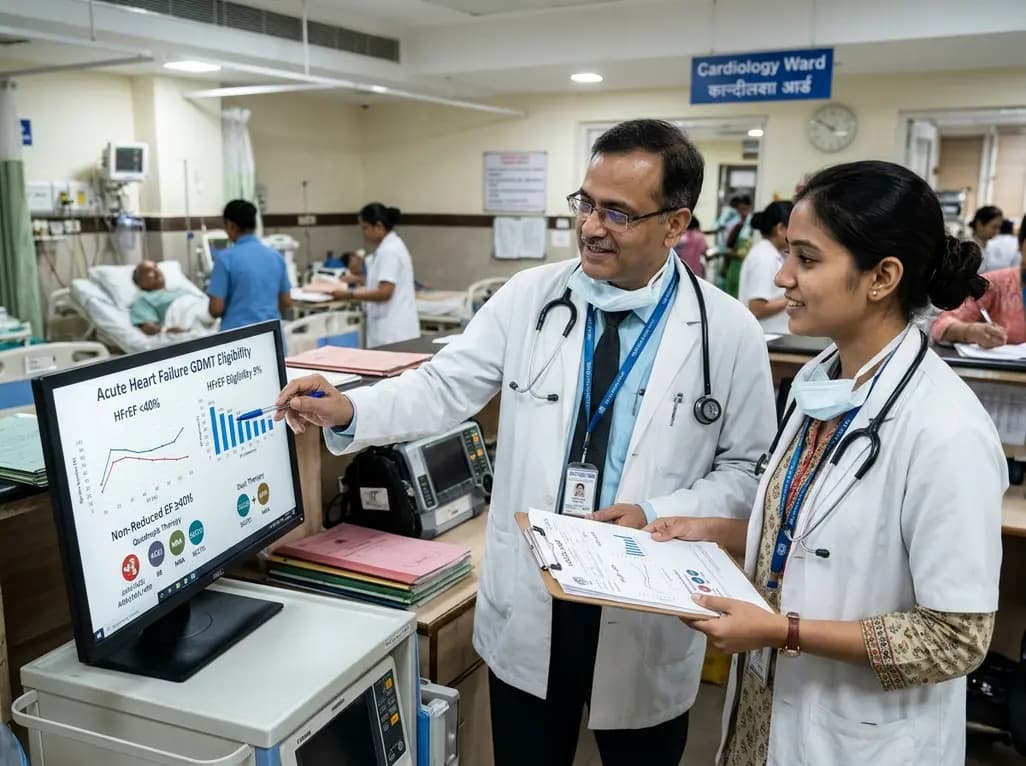
The VOCAL-AHF study reveals that most acute heart failure patients across reduced and non-reduced ejection fraction categories are eligible for in-hospital GDMT initiation. Notably, nearly two-thirds of HFrEF patients qualify for quadruple therapy, while non-reduced EF patients show high eligibility for dual therapy.
Today

A comprehensive scoping review synthesizes conservative and postsurgical carpal instability rehabilitation strategies, highlighting immobilization, targeted muscle recruitment, and proprioception to restore wrist stability.
Today

A novel fluorine-functionalized near-infrared copper fluorescent probe selectively illuminates lung tissue, revealing critical links between hyperglycemia, ER stress, and pulmonary malignancy for improved early diagnosis.
Today
